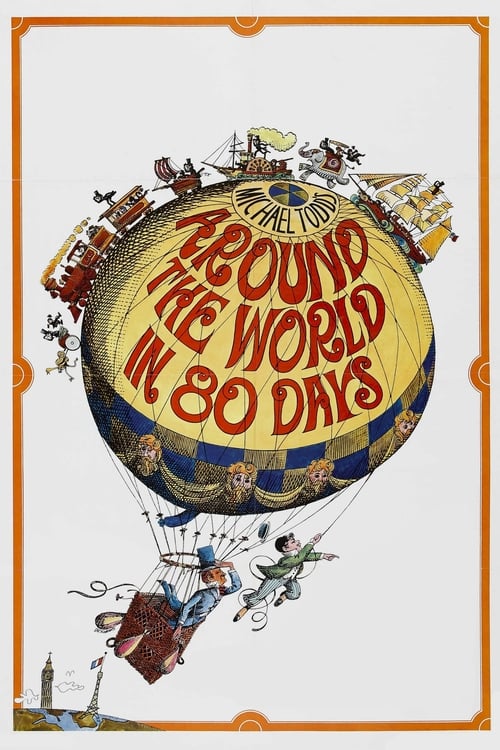
Around the World in 80 Days
Based on the famous book by Jules Verne the movie follows Phileas Fogg on his journey around the world. Which has to be completed within 80 days, a very short period for those days.
Despite its tight budget of $6.0M, Around the World in 80 Days became a commercial juggernaut, earning $42.0M worldwide—a remarkable 600% return. The film's fresh perspective resonated with audiences, confirming that strong storytelling can transcend budget limitations.
5 Oscars. 15 wins & 5 nominations


Plot Structure
Story beats plotted across runtime


Narrative Arc
Emotional journey through the story's key moments
Story Circle
Blueprint 15-beat structure
Arcplot Score Breakdown
Weighted: Precision (70%) + Arc (15%) + Theme (15%)
Around the World in 80 Days (1956) showcases strategically placed plot construction, characteristic of Michael Anderson's storytelling approach. This structural analysis examines how the film's 15-point plot structure maps to proven narrative frameworks across 3 hours and 2 minutes. With an Arcplot score of 7.4, the film balances conventional beats with creative variation.
Characters
Cast & narrative archetypes

Phileas Fogg
Passepartout
Inspector Fix
Princess Aouda
Main Cast & Characters
Phileas Fogg
Played by David Niven
A wealthy, punctual English gentleman who wagers he can circumnavigate the globe in 80 days. Reserved and methodical, driven by honor and precision.
Passepartout
Played by Cantinflas
Fogg's loyal French valet and traveling companion. Resourceful, warm-hearted, and adaptable, he aids Fogg through numerous adventures.
Inspector Fix
Played by Robert Newton
A Scotland Yard detective who mistakenly believes Fogg is a bank robber. Persistent and duty-bound, he pursues Fogg around the world.
Princess Aouda
Played by Shirley MacLaine
An Indian princess rescued from suttee by Fogg and Passepartout. Grateful, dignified, and courageous, she becomes Fogg's love interest.
Structural Analysis
The Status Quo at 4 minutes (2% through the runtime) establishes Phileas Fogg lives as a precise, mechanical gentleman in Victorian London, his entire life governed by clockwork routine and mathematical certainty. His world is one of absolute order, control, and isolation from human warmth.. Of particular interest, this early placement immediately immerses viewers in the story world.
The inciting incident occurs at 21 minutes when During a card game at the Reform Club, fellow members challenge Fogg's assertion that one can circle the globe in 80 days. The debate escalates, disrupting his comfortable routine and forcing him to defend his mathematical certainty against their skepticism.. At 12% through the film, this Disruption aligns precisely with traditional story structure. This beat shifts the emotional landscape, launching the protagonist into the central conflict.
The First Threshold at 45 minutes marks the transition into Act II, occurring at 25% of the runtime. This indicates the protagonist's commitment to Fogg makes the active choice to accept the wager, betting half his fortune (£20,000) that he can circumnavigate the globe in exactly 80 days. He and Passepartout board the train to Dover, irreversibly committing to the adventure and leaving the safety of routine behind., moving from reaction to action.
At 91 minutes, the Midpoint arrives at 50% of the runtime—precisely centered, creating perfect narrative symmetry. The analysis reveals that this crucial beat Crossing the Pacific, Fogg appears ahead of schedule and likely to win the wager—a false victory. He begins showing signs of caring for Aouda, revealing cracks in his mechanical exterior. However, Inspector Fix continues closing in, and unexpected American obstacles loom., fundamentally raising what's at risk. The emotional intensity shifts, dividing the narrative into clear before-and-after phases.
The Collapse moment at 137 minutes (75% through) represents the emotional nadir. Here, Upon reaching London, Inspector Fix arrests Fogg for bank robbery mere minutes before the deadline. Fogg's dream dies—he has literally circled the globe but will lose the wager, his fortune, and his reputation due to wrongful imprisonment., demonstrates the protagonist at their lowest point. This beat's placement in the final quarter sets up the climactic reversal.
The Second Threshold at 145 minutes initiates the final act resolution at 80% of the runtime. Passepartout discovers they've gained a day by traveling eastward across the International Date Line—they still have time! This new information, combined with Fogg's newfound understanding that love matters more than precision, gives him the synthesis to rush to the Reform Club., demonstrating the transformation achieved throughout the journey.
Emotional Journey
Around the World in 80 Days's emotional architecture traces a deliberate progression across 15 carefully calibrated beats.
Narrative Framework
This structural analysis employs structural analysis methodology used to understand storytelling architecture. By mapping Around the World in 80 Days against these established plot points, we can identify how Michael Anderson utilizes or subverts traditional narrative conventions. The plot point approach reveals not only adherence to structural principles but also creative choices that distinguish Around the World in 80 Days within the adventure genre.
Michael Anderson's Structural Approach
Among the 3 Michael Anderson films analyzed on Arcplot, the average structural score is 7.0, reflecting strong command of classical structure. Around the World in 80 Days represents one of the director's most structurally precise works. For comparative analysis, explore the complete Michael Anderson filmography.
Comparative Analysis
Additional adventure films include The Black Stallion, The Bad Guys and Puss in Boots. For more Michael Anderson analyses, see Logan's Run, Orca.
Plot Points by Act
Act I
SetupStatus Quo
Phileas Fogg lives as a precise, mechanical gentleman in Victorian London, his entire life governed by clockwork routine and mathematical certainty. His world is one of absolute order, control, and isolation from human warmth.
Theme
At the Reform Club, a member remarks that "there's more to life than schedules and precision" during a discussion about human progress versus scientific advancement. The theme of embracing spontaneity and human connection versus rigid control is introduced.
Worldbuilding
Establishment of Victorian London society, the Reform Club gentlemen, Fogg's mathematical lifestyle, his hiring of Passepartout as his new valet, and the introduction of the £20,000 bank robbery mystery that will later intersect with Fogg's journey.
Disruption
During a card game at the Reform Club, fellow members challenge Fogg's assertion that one can circle the globe in 80 days. The debate escalates, disrupting his comfortable routine and forcing him to defend his mathematical certainty against their skepticism.
Resistance
Fogg debates the feasibility of the journey, consults railway timetables and steamship schedules, while Passepartout tries to dissuade him from the reckless wager. Inspector Fix begins pursuing Fogg as the suspected bank robber, adding pressure to abandon London.
Act II
ConfrontationFirst Threshold
Fogg makes the active choice to accept the wager, betting half his fortune (£20,000) that he can circumnavigate the globe in exactly 80 days. He and Passepartout board the train to Dover, irreversibly committing to the adventure and leaving the safety of routine behind.
Mirror World
In India, Fogg rescues Princess Aouda from a suttee funeral pyre. She represents everything Fogg lacks: passion, emotion, spontaneity, and the capacity for love. Their relationship becomes the thematic heart showing that human connection matters more than schedules.
Premise
The promise of the premise: traveling around the world via train, steamship, elephant, balloon, and various exotic modes of transport. Adventures through France, Italy, Egypt, India, Japan, and across the Pacific, encountering diverse cultures and escalating obstacles.
Midpoint
Crossing the Pacific, Fogg appears ahead of schedule and likely to win the wager—a false victory. He begins showing signs of caring for Aouda, revealing cracks in his mechanical exterior. However, Inspector Fix continues closing in, and unexpected American obstacles loom.
Opposition
Crossing America, obstacles intensify: hostile Sioux attacks, a collapsed bridge requiring a dangerous locomotive jump, Passepartout's kidnapping forcing a rescue mission, and Inspector Fix's relentless pursuit. Each delay threatens the wager while Fogg's feelings for Aouda deepen.
Collapse
Upon reaching London, Inspector Fix arrests Fogg for bank robbery mere minutes before the deadline. Fogg's dream dies—he has literally circled the globe but will lose the wager, his fortune, and his reputation due to wrongful imprisonment.
Crisis
Fogg sits in despair at his home, believing he has lost everything. The real thief is caught and Fogg is released, but he thinks he's too late—he's missed the deadline. In his darkness, he realizes his feelings for Aouda matter more than the wager.
Act III
ResolutionSecond Threshold
Passepartout discovers they've gained a day by traveling eastward across the International Date Line—they still have time! This new information, combined with Fogg's newfound understanding that love matters more than precision, gives him the synthesis to rush to the Reform Club.
Synthesis
Fogg races to the Reform Club in a frantic, joyous rush—the opposite of his earlier mechanical precision. He arrives exactly on time, wins the wager, and claims victory. However, his true prize is Aouda's love and his transformation into a feeling human being.
Transformation
Fogg and Aouda embrace warmly, surrounded by celebrating friends. The once-rigid mathematician now smiles freely, having learned that human connection, adventure, and love are worth more than all the punctual schedules and calculated certainties in the world.