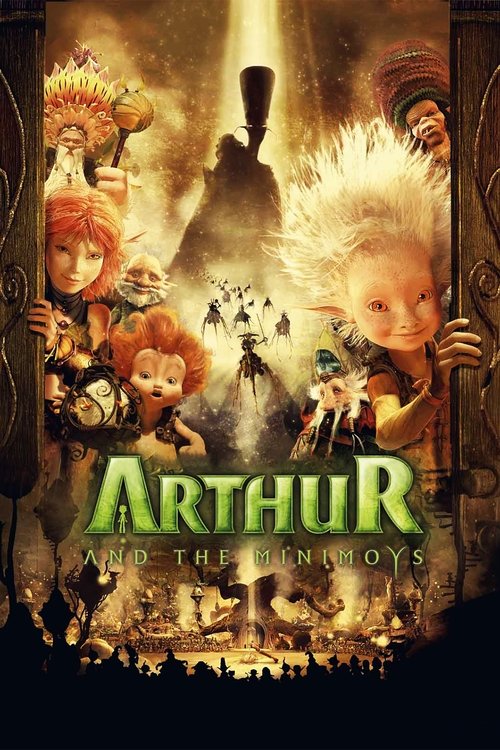
Arthur and the Invisibles
Arthur is a spirited ten-year old whose parents are away looking for work, whose eccentric grandfather has been missing for several years, and who lives with his grandmother in a country house that, in two days, will be repossessed, torn down, and turned into a block of flats unless Arthur's grandfather returns to sign some papers and pay off the family debt. Arthur discovers that the key to success lies in his own descent into the land of the Minimoys, creatures no larger than a tooth, whom his grandfather helped relocate to their garden. Somewhere among them is hidden a pile of rubies, too. Can Arthur be of stout heart and save the day? Romance beckons as well, and a villain lurks.
Working with a significant budget of $86.0M, the film achieved a modest success with $108.6M in global revenue (+26% profit margin).
1 win & 4 nominations


Plot Structure
Story beats plotted across runtime


Narrative Arc
Emotional journey through the story's key moments
Story Circle
Blueprint 15-beat structure
Arcplot Score Breakdown
Weighted: Precision (70%) + Arc (15%) + Theme (15%)
Arthur and the Invisibles (2006) exemplifies carefully calibrated narrative architecture, characteristic of Luc Besson's storytelling approach. This structural analysis examines how the film's 15-point plot structure maps to proven narrative frameworks across 1 hour and 34 minutes. With an Arcplot score of 6.8, the film balances conventional beats with creative variation.
Characters
Cast & narrative archetypes

Arthur
Princess Selenia
Betameche
Maltazard (The Evil M)
Grandma
Grandpa Archibald
Mino
King
Main Cast & Characters
Arthur
Played by Freddie Highmore
A 10-year-old boy who shrinks down to join the Minimoys and save his grandmother's home from developers.
Princess Selenia
Played by Madonna
A brave and headstrong Minimoy princess who becomes Arthur's guide and ally in the adventure.
Betameche
Played by Jimmy Fallon
Selenia's younger brother, a quirky and comedic Minimoy who joins the quest.
Maltazard (The Evil M)
Played by David Bowie
The villainous fallen Minimoy warrior seeking to conquer both the Minimoy world and the human world.
Grandma
Played by Mia Farrow
Arthur's kind grandmother whose home is threatened by foreclosure, inspiring Arthur's quest.
Grandpa Archibald
Played by Ron Crawford
Arthur's missing grandfather who discovered the Minimoys and left clues for Arthur to follow.
Mino
Played by Jason Bateman
A loyal Minimoy warrior and ally who helps guide Arthur and the princess.
King
Played by Robert De Niro
The Minimoy king and father of Selenia and Betameche, who initially doubts Arthur.
Structural Analysis
The Status Quo at 1 minutes (1% through the runtime) establishes Ten-year-old Arthur lives with his grandmother in a rural Connecticut farmhouse, spending his days immersed in his absent grandfather Archibald's journals and African artifacts, dreaming of adventure while missing his parents who work in the city.. The analysis reveals that this early placement immediately immerses viewers in the story world.
The inciting incident occurs at 11 minutes when Developer Ernest Davido arrives with a legal notice: the family has two days to pay their mortgage or lose the house. Arthur's grandmother reveals that Archibald hid rubies somewhere on the property before disappearing four years ago, but no one knows where.. At 12% through the film, this Disruption aligns precisely with traditional story structure. This beat shifts the emotional landscape, launching the protagonist into the central conflict.
The First Threshold at 24 minutes marks the transition into Act II, occurring at 25% of the runtime. This indicates the protagonist's commitment to Arthur completes the ritual using Archibald's telescope and the African key, activating the portal. He chooses to shrink down to Minimoy size and descend through the garden into the magical underground world, leaving his normal life behind to save his family., moving from reaction to action.
At 47 minutes, the Midpoint arrives at 50% of the runtime—precisely centered, creating perfect narrative symmetry. Significantly, this crucial beat Arthur and Selenia share a kiss that transfers power between them - a Minimoy tradition that marks them as betrothed. This false victory gives Arthur confidence and binds him to the Minimoy world, but also raises the stakes as Maltazard now sees Arthur as a threat to his plans to conquer both worlds., fundamentally raising what's at risk. The emotional intensity shifts, dividing the narrative into clear before-and-after phases.
The Collapse moment at 71 minutes (75% through) represents the emotional nadir. Here, Maltazard imprisons Arthur, Selenia, and Betameche, revealing that Archibald is also his prisoner - alive but trapped for four years. The evil lord prepares to destroy the Minimoy kingdom and threatens to keep Arthur tiny forever. All seems lost as Arthur has failed both to save the rubies and to return home., illustrates the protagonist at their lowest point. This beat's placement in the final quarter sets up the climactic reversal.
The Second Threshold at 75 minutes initiates the final act resolution at 80% of the runtime. Arthur discovers that Maltazard's mechanical control room can be sabotaged using knowledge from his grandfather's journals. Combining what Archibald taught him with his own cleverness and Selenia's warrior skills, Arthur devises a plan to escape, stop the flood, and defeat Maltazard., demonstrating the transformation achieved throughout the journey.
Emotional Journey
Arthur and the Invisibles's emotional architecture traces a deliberate progression across 15 carefully calibrated beats.
Narrative Framework
This structural analysis employs systematic plot point analysis that identifies crucial turning points. By mapping Arthur and the Invisibles against these established plot points, we can identify how Luc Besson utilizes or subverts traditional narrative conventions. The plot point approach reveals not only adherence to structural principles but also creative choices that distinguish Arthur and the Invisibles within the adventure genre.
Luc Besson's Structural Approach
Among the 12 Luc Besson films analyzed on Arcplot, the average structural score is 7.0, reflecting strong command of classical structure. Arthur and the Invisibles takes a more unconventional approach compared to the director's typical style. For comparative analysis, explore the complete Luc Besson filmography.
Comparative Analysis
Additional adventure films include The Black Stallion, The Bad Guys and Puss in Boots. For more Luc Besson analyses, see The Fifth Element, The Family and Léon: The Professional.
Plot Points by Act
Act I
SetupStatus Quo
Ten-year-old Arthur lives with his grandmother in a rural Connecticut farmhouse, spending his days immersed in his absent grandfather Archibald's journals and African artifacts, dreaming of adventure while missing his parents who work in the city.
Theme
Grandmother tells Arthur that his grandfather always said "The greatest treasures are invisible to the eye but found by the heart," establishing the theme that true value lies in connection and love rather than material wealth.
Worldbuilding
Arthur's world is established through his grandmother's stories about Archibald's adventures in Africa, where he befriended the Bogo Matassalai tribe and learned of the Minimoys, tiny magical beings living in the garden. Arthur studies his grandfather's clues and mechanisms while the family faces financial hardship.
Disruption
Developer Ernest Davido arrives with a legal notice: the family has two days to pay their mortgage or lose the house. Arthur's grandmother reveals that Archibald hid rubies somewhere on the property before disappearing four years ago, but no one knows where.
Resistance
Arthur desperately searches through his grandfather's journals and the attic for clues to the treasure. He discovers that the rubies are with the Minimoys in the garden, and uses Archibald's riddles to determine that passage to their world opens only once every ten lunar cycles. He prepares the ritual on the full moon night.
Act II
ConfrontationFirst Threshold
Arthur completes the ritual using Archibald's telescope and the African key, activating the portal. He chooses to shrink down to Minimoy size and descend through the garden into the magical underground world, leaving his normal life behind to save his family.
Mirror World
Arthur meets Princess Selenia, a fierce warrior princess of the Minimoys who initially dismisses him. Her younger brother Betameche becomes Arthur's guide. Selenia embodies everything Arthur lacks - courage, decisiveness, and self-assurance - and will teach him to believe in himself through their journey together.
Premise
Arthur explores the wondrous Minimoy kingdom, experiencing the magic of being tiny in his own backyard. He forms a party with Selenia and Betameche to journey to Necropolis, the dark city ruled by the evil Maltazard, where the rubies are held. They travel through the spectacular underground world, facing adventure and danger.
Midpoint
Arthur and Selenia share a kiss that transfers power between them - a Minimoy tradition that marks them as betrothed. This false victory gives Arthur confidence and binds him to the Minimoy world, but also raises the stakes as Maltazard now sees Arthur as a threat to his plans to conquer both worlds.
Opposition
The journey to Necropolis becomes increasingly perilous as Maltazard's forces close in. The group faces deadly traps, creatures, and separation. Maltazard captures them and reveals his plan to flood the Minimoy kingdom using the garden's irrigation system. Time runs short as the deadline for the house payment approaches in the human world.
Collapse
Maltazard imprisons Arthur, Selenia, and Betameche, revealing that Archibald is also his prisoner - alive but trapped for four years. The evil lord prepares to destroy the Minimoy kingdom and threatens to keep Arthur tiny forever. All seems lost as Arthur has failed both to save the rubies and to return home.
Crisis
Imprisoned in Maltazard's dungeon, Arthur reunites with his grandfather Archibald. Arthur expresses despair at having failed everyone, but Archibald shares wisdom about courage and reminds Arthur that he has already proven himself by making the journey. Arthur realizes the treasure was never just about rubies.
Act III
ResolutionSecond Threshold
Arthur discovers that Maltazard's mechanical control room can be sabotaged using knowledge from his grandfather's journals. Combining what Archibald taught him with his own cleverness and Selenia's warrior skills, Arthur devises a plan to escape, stop the flood, and defeat Maltazard.
Synthesis
Arthur leads the rebellion against Maltazard, using his unique knowledge of both the human and Minimoy worlds. The heroes escape, reverse the flood mechanism, and Arthur confronts Maltazard. With the rubies recovered and Maltazard defeated, Arthur returns to normal size in the garden just as dawn breaks on the final day.
Transformation
Arthur emerges from the garden transformed - no longer a dreamer hiding in his grandfather's stories but a hero in his own right. Archibald returns with him. The rubies save the house, Arthur's parents return, and Arthur now knows the Minimoys are real. He has found the invisible treasure: family, courage, and love.