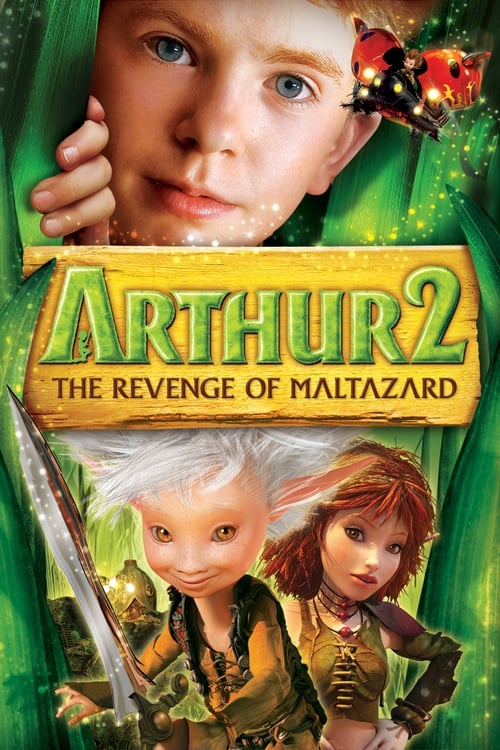
Arthur and the Revenge of Maltazard
Arthur answers a distress call from Princess Selenia, who is menaced by the nefarious Maltazard.
The film struggled financially against its significant budget of $87.0M, earning $52.4M globally (-40% loss). While initial box office returns were modest, the film has gained appreciation for its compelling narrative within the adventure genre.


Plot Structure
Story beats plotted across runtime


Narrative Arc
Emotional journey through the story's key moments
Story Circle
Blueprint 15-beat structure
Arcplot Score Breakdown
Weighted: Precision (70%) + Arc (15%) + Theme (15%)
Arthur and the Revenge of Maltazard (2009) showcases meticulously timed story structure, characteristic of Luc Besson's storytelling approach. This structural analysis examines how the film's 15-point plot structure maps to proven narrative frameworks across 1 hour and 33 minutes. With an Arcplot score of 7.4, the film balances conventional beats with creative variation.
Characters
Cast & narrative archetypes

Arthur
Maltazard
Princess Selenia
Betameche
Darkos
Archibald
Main Cast & Characters
Arthur
Played by Freddie Highmore
A brave 10-year-old boy who enters the Minimoy world to save his grandfather's garden and stop the evil Maltazard.
Maltazard
Played by Lou Reed
The primary antagonist, an evil Minimoy ruler seeking to conquer both the Minimoy and human worlds.
Princess Selenia
Played by Selena Gomez
A fierce and independent Minimoy princess who fights alongside Arthur and serves as his love interest.
Betameche
Played by Jimmy Fallon
Selenia's younger brother, a comic relief character who accompanies Arthur on his adventures.
Darkos
Played by Iggy Pop
Maltazard's son and enforcer, a conflicted antagonist torn between loyalty to his father and his own conscience.
Archibald
Played by Mia Farrow
Arthur's missing grandfather, an adventurer who first discovered the Minimoy world.
Structural Analysis
The Status Quo at 1 minutes (1% through the runtime) establishes Arthur waits anxiously in his human form for the moment he can return to the Minimoy world. He counts down the days until the next full moon when he can rejoin Princess Selenia, showing his longing for adventure and his miniature friends.. The analysis reveals that this early placement immediately immerses viewers in the story world.
The inciting incident occurs at 11 minutes when A tiny spider delivers an urgent message: Maltazard has survived and launched an attack on the Minimoy village. Selenia is in danger. Arthur realizes his friends need him immediately, but he's stuck in his human form until the next full moon alignment.. At 12% through the film, this Disruption aligns precisely with traditional story structure. This beat shifts the emotional landscape, launching the protagonist into the central conflict.
The First Threshold at 23 minutes marks the transition into Act II, occurring at 24% of the runtime. This illustrates the protagonist's commitment to Arthur makes the active choice to use an untested and dangerous method to shrink himself before the full moon, risking being trapped in miniature form forever. He drinks the transformation potion and commits to returning to the Minimoy world no matter the cost., moving from reaction to action.
At 47 minutes, the Midpoint arrives at 51% of the runtime—precisely centered, creating perfect narrative symmetry. Of particular interest, this crucial beat False defeat: Arthur discovers that Maltazard has grown to human size and crossed into the human world. The villain is no longer confined to the miniature realm—he now threatens both worlds. The stakes suddenly multiply, and Arthur realizes he may be powerless to stop him., fundamentally raising what's at risk. The emotional intensity shifts, dividing the narrative into clear before-and-after phases.
The Collapse moment at 69 minutes (75% through) represents the emotional nadir. Here, Arthur is captured by Maltazard. His friends are scattered and imprisoned. Maltazard reveals his full plan to conquer the human world and enslave humanity. Arthur faces the "death" of his heroic self-image as he realizes his bravado has led his friends into a trap., illustrates the protagonist at their lowest point. This beat's placement in the final quarter sets up the climactic reversal.
The Second Threshold at 75 minutes initiates the final act resolution at 81% of the runtime. Arthur has a breakthrough: he realizes that Maltazard's weakness is his arrogance and need for recognition. Arthur formulates a plan that combines his miniature perspective with human-world knowledge, synthesizing both worlds to outsmart the villain., demonstrating the transformation achieved throughout the journey.
Emotional Journey
Arthur and the Revenge of Maltazard's emotional architecture traces a deliberate progression across 15 carefully calibrated beats.
Narrative Framework
This structural analysis employs systematic plot point analysis that identifies crucial turning points. By mapping Arthur and the Revenge of Maltazard against these established plot points, we can identify how Luc Besson utilizes or subverts traditional narrative conventions. The plot point approach reveals not only adherence to structural principles but also creative choices that distinguish Arthur and the Revenge of Maltazard within the adventure genre.
Luc Besson's Structural Approach
Among the 12 Luc Besson films analyzed on Arcplot, the average structural score is 7.0, reflecting strong command of classical structure. Arthur and the Revenge of Maltazard represents one of the director's most structurally precise works. For comparative analysis, explore the complete Luc Besson filmography.
Comparative Analysis
Additional adventure films include The Black Stallion, The Bad Guys and Puss in Boots. For more Luc Besson analyses, see The Fifth Element, The Family and Léon: The Professional.
Plot Points by Act
Act I
SetupStatus Quo
Arthur waits anxiously in his human form for the moment he can return to the Minimoy world. He counts down the days until the next full moon when he can rejoin Princess Selenia, showing his longing for adventure and his miniature friends.
Theme
Arthur's grandmother reminds him that "true courage is knowing when to fight and when to show mercy." This plants the thematic seed about distinguishing between revenge and justice, and the importance of compassion even toward enemies.
Worldbuilding
Establishment of Arthur's human world and his obsession with returning to the Minimoy realm. We see his strained relationship with his parents, his connection to his grandmother, and his desperate attempts to communicate with Selenia through various failed methods.
Disruption
A tiny spider delivers an urgent message: Maltazard has survived and launched an attack on the Minimoy village. Selenia is in danger. Arthur realizes his friends need him immediately, but he's stuck in his human form until the next full moon alignment.
Resistance
Arthur frantically searches for a way to shrink and return to the Minimoy world before the full moon. His grandmother helps him decipher clues from his grandfather's notes. Arthur debates whether he can actually make the dangerous journey work without proper preparation.
Act II
ConfrontationFirst Threshold
Arthur makes the active choice to use an untested and dangerous method to shrink himself before the full moon, risking being trapped in miniature form forever. He drinks the transformation potion and commits to returning to the Minimoy world no matter the cost.
Mirror World
Arthur reunites with Princess Selenia, who embodies the film's theme. While Arthur is driven by heroic impulses and desire for adventure, Selenia demonstrates tactical wisdom and restraint, teaching him that leadership requires more than bravery—it requires judgment.
Premise
The fun and games of being miniature again. Arthur, Selenia, and Betameche navigate the Minimoy world, encountering exotic creatures and challenges. They investigate Maltazard's plot, discover his army of giant mosquito-like creatures, and experience the adventure the audience came for.
Midpoint
False defeat: Arthur discovers that Maltazard has grown to human size and crossed into the human world. The villain is no longer confined to the miniature realm—he now threatens both worlds. The stakes suddenly multiply, and Arthur realizes he may be powerless to stop him.
Opposition
Everything gets harder. Maltazard's forces close in from all sides. Arthur's impulsive decisions backfire, causing friction with Selenia. The heroes are hunted through dangerous territory. Arthur's flaws—his recklessness and desire for glory—begin to endanger his friends and mission.
Collapse
Arthur is captured by Maltazard. His friends are scattered and imprisoned. Maltazard reveals his full plan to conquer the human world and enslave humanity. Arthur faces the "death" of his heroic self-image as he realizes his bravado has led his friends into a trap.
Crisis
Arthur sits in darkness, imprisoned and alone. He processes his failure and remembers his grandmother's words about true courage. He realizes that defeating Maltazard isn't about being the hero—it's about protecting those he loves through wisdom, not just strength.
Act III
ResolutionSecond Threshold
Arthur has a breakthrough: he realizes that Maltazard's weakness is his arrogance and need for recognition. Arthur formulates a plan that combines his miniature perspective with human-world knowledge, synthesizing both worlds to outsmart the villain.
Synthesis
The finale. Arthur escapes, reunites with Selenia and Betameche, and executes his plan. The trio confronts Maltazard in the human world. Through cleverness rather than force, Arthur tricks Maltazard and prevents his conquest, showing growth from impulsive hero to strategic leader.
Transformation
Final image mirrors the opening: Arthur once again in the human world, but transformed. Instead of desperately longing to escape to adventure, he stands content, having learned that true heroism is about responsibility and wisdom. He smiles knowingly, no longer needing to prove himself.