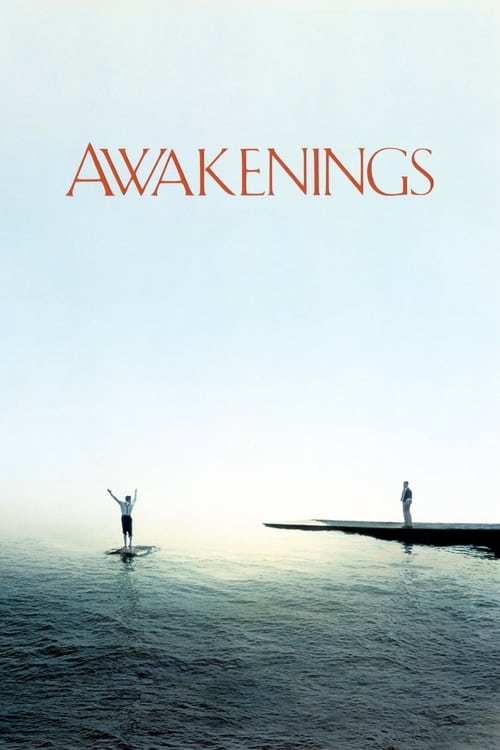
Awakenings
Dr. Malcolm Sayer, a shy research physician, uses an experimental drug to "awaken" the catatonic victims of a rare disease. Leonard is the first patient to receive the controversial treatment. His awakening, filled with awe and enthusiasm, proves a rebirth for Sayer too, as the exuberant patient reveals life's simple but unutterably sweet pleasures to the introverted doctor.
Working with a moderate budget of $31.0M, the film achieved a respectable showing with $52.1M in global revenue (+68% profit margin).
Nominated for 3 Oscars. 6 wins & 11 nominations


Plot Structure
Story beats plotted across runtime


Narrative Arc
Emotional journey through the story's key moments
Story Circle
Blueprint 15-beat structure
Arcplot Score Breakdown
Weighted: Precision (70%) + Arc (15%) + Theme (15%)
Awakenings (1990) showcases deliberately positioned narrative design, characteristic of Penny Marshall's storytelling approach. This structural analysis examines how the film's 15-point plot structure maps to proven narrative frameworks across 2 hours. With an Arcplot score of 7.1, the film balances conventional beats with creative variation.
Characters
Cast & narrative archetypes

Dr. Malcolm Sayer
Leonard Lowe
Eleanor Costello
Paula
Mrs. Lowe
Dr. Kaufman
Main Cast & Characters
Dr. Malcolm Sayer
Played by Robin Williams
A shy, research-focused neurologist who discovers a treatment to awaken catatonic patients and learns to connect with humanity through his work.
Leonard Lowe
Played by Robert De Niro
A catatonic patient for 30 years who awakens and experiences life with intense passion before facing the tragedy of regression.
Eleanor Costello
Played by Julie Kavner
A dedicated hospital nurse who assists Dr. Sayer and develops a bond with the awakened patients.
Paula
Played by Penelope Ann Miller
A young woman who visits her father at the hospital and develops a romantic connection with Leonard during his awakening.
Mrs. Lowe
Played by Ruth Nelson
Leonard's devoted mother who has visited him faithfully for three decades and witnesses his miraculous awakening.
Dr. Kaufman
Played by John Heard
The hospital administrator who is initially skeptical of Dr. Sayer's experimental treatment approach.
Structural Analysis
The Status Quo at 1 minutes (1% through the runtime) establishes Young Leonard as a child in 1926, showing early symptoms of encephalitis lethargica, withdrawing from normal life. Establishes the "frozen" state that will define these patients.. The analysis reveals that this early placement immediately immerses viewers in the story world.
The inciting incident occurs at 14 minutes when Sayer discovers that patient Leonard Lowe can catch a ball thrown at him, revealing that these "statues" are actually conscious and aware inside their frozen bodies. This shatters the assumption that they are vegetables.. At 12% through the film, this Disruption aligns precisely with traditional story structure. This beat shifts the emotional landscape, launching the protagonist into the central conflict.
The First Threshold at 29 minutes marks the transition into Act II, occurring at 25% of the runtime. This shows the protagonist's commitment to Sayer makes the active decision to administer L-DOPA to Leonard Lowe, despite uncertainty and risk. Leonard's mother gives permission. This irreversible choice launches the experiment that will transform everyone., moving from reaction to action.
At 61 minutes, the Midpoint arrives at 51% of the runtime—precisely centered, creating perfect narrative symmetry. The analysis reveals that this crucial beat Leonard develops the first tic—an involuntary hand tremor. False victory becomes false defeat. The miracle cure is revealed to be temporary. The stakes raise dramatically as we realize the awakening cannot last., fundamentally raising what's at risk. The emotional intensity shifts, dividing the narrative into clear before-and-after phases.
The Collapse moment at 89 minutes (75% through) represents the emotional nadir. Here, Leonard, in full crisis with violent dyskinesia, has a final lucid moment where he tells Sayer to learn from this: "Learn from me." Leonard returns to his catatonic state, "dying" back into his frozen prison. The miracle is lost., demonstrates the protagonist at their lowest point. This beat's placement in the final quarter sets up the climactic reversal.
The Second Threshold at 97 minutes initiates the final act resolution at 81% of the runtime. Sayer has the realization that Leonard's message—"learn from me"—means he must apply the lesson to his own life. He must stop being a statue himself, frozen by fear and social awkwardness. He must awaken and truly live., demonstrating the transformation achieved throughout the journey.
Emotional Journey
Awakenings's emotional architecture traces a deliberate progression across 15 carefully calibrated beats.
Narrative Framework
This structural analysis employs systematic plot point analysis that identifies crucial turning points. By mapping Awakenings against these established plot points, we can identify how Penny Marshall utilizes or subverts traditional narrative conventions. The plot point approach reveals not only adherence to structural principles but also creative choices that distinguish Awakenings within the drama genre.
Penny Marshall's Structural Approach
Among the 7 Penny Marshall films analyzed on Arcplot, the average structural score is 7.0, demonstrating varied approaches to story architecture. Awakenings represents one of the director's most structurally precise works. For comparative analysis, explore the complete Penny Marshall filmography.
Comparative Analysis
Additional drama films include After Thomas, South Pacific and Dirty Dancing: Havana Nights. For more Penny Marshall analyses, see Renaissance Man, Big and A League of Their Own.
Plot Points by Act
Act I
SetupStatus Quo
Young Leonard as a child in 1926, showing early symptoms of encephalitis lethargica, withdrawing from normal life. Establishes the "frozen" state that will define these patients.
Theme
Dr. Kaufman tells Dr. Sayer: "The human spirit is more powerful than any drug." This encapsulates the film's central theme about awakening to life, connection, and what it means to truly live versus merely exist.
Worldbuilding
Dr. Malcolm Sayer, a shy research physician, takes a clinical job at Bainbridge Hospital. We see the chronic care ward filled with catatonic post-encephalitic patients who have been "statues" for decades. Sayer is awkward with patients but curious about their condition.
Disruption
Sayer discovers that patient Leonard Lowe can catch a ball thrown at him, revealing that these "statues" are actually conscious and aware inside their frozen bodies. This shatters the assumption that they are vegetables.
Resistance
Sayer researches the patients, discovers patterns, and learns about L-DOPA treatment for Parkinson's. He debates whether to try this experimental treatment. He fights hospital administration for funding and permission to try L-DOPA on Leonard.
Act II
ConfrontationFirst Threshold
Sayer makes the active decision to administer L-DOPA to Leonard Lowe, despite uncertainty and risk. Leonard's mother gives permission. This irreversible choice launches the experiment that will transform everyone.
Mirror World
Leonard awakens and meets Paula, a woman visiting her father at the hospital. Their relationship becomes the emotional core that teaches both Leonard and Sayer about connection, risk, and truly living. Paula represents life and love beyond clinical observation.
Premise
The promise of the premise: Leonard experiences life for the first time in 30 years. He reads, walks, talks, laughs. Sayer successfully treats all the catatonic patients with L-DOPA. Joy spreads through the ward as the "statues" come alive. Sayer and Leonard bond. Leonard falls in love with Paula.
Midpoint
Leonard develops the first tic—an involuntary hand tremor. False victory becomes false defeat. The miracle cure is revealed to be temporary. The stakes raise dramatically as we realize the awakening cannot last.
Opposition
Leonard's symptoms worsen despite increased dosages. He experiences violent tics and psychological deterioration. Other patients begin to decline. Leonard's desperation grows as he realizes he's losing his brief window of life. He demands Sayer let him enjoy what time he has left.
Collapse
Leonard, in full crisis with violent dyskinesia, has a final lucid moment where he tells Sayer to learn from this: "Learn from me." Leonard returns to his catatonic state, "dying" back into his frozen prison. The miracle is lost.
Crisis
Sayer processes the devastating loss. All the patients have returned to their catatonic states. He sits in darkness with the weight of having given them life only to watch them lose it again. The ward returns to silence.
Act III
ResolutionSecond Threshold
Sayer has the realization that Leonard's message—"learn from me"—means he must apply the lesson to his own life. He must stop being a statue himself, frozen by fear and social awkwardness. He must awaken and truly live.
Synthesis
Sayer takes action on his awakening. He asks the nurse Eleanor out to coffee, breaking through his own paralysis of fear. He continues to care for the patients with renewed purpose and presence, no longer just observing but truly connecting.
Transformation
Final image mirrors the opening: Sayer dances with Eleanor at a hospital event, fully present and alive, while Leonard and the other patients sit frozen but honored. Sayer has awakened. The human spirit has indeed proven more powerful than any drug.