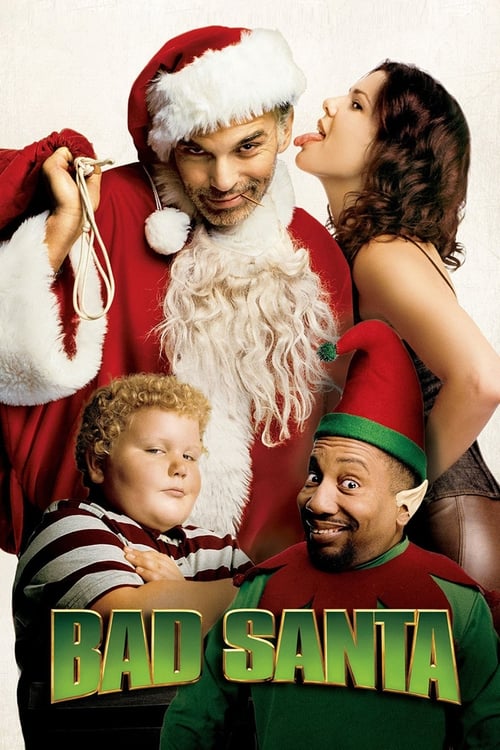
Bad Santa
You'd better watch out - Santa Claus Willie T. Soke is coming to town, and he doesn't care if you've been naughty or nice. Wille's favorite holiday tradition is to fill his sacks with loot lifted from shopping malls across the country. But this year his plot gets derailed by a wisecracking store detective, a sexy bartender, and a kid who's convinced Willie is the real Santa Claus.
Despite a respectable budget of $23.0M, Bad Santa became a commercial success, earning $76.5M worldwide—a 233% return.
1 win & 12 nominations


Plot Structure
Story beats plotted across runtime


Narrative Arc
Emotional journey through the story's key moments
Story Circle
Blueprint 15-beat structure
Arcplot Score Breakdown
Weighted: Precision (70%) + Arc (15%) + Theme (15%)
Bad Santa (2003) exemplifies strategically placed plot construction, characteristic of Terry Zwigoff's storytelling approach. This structural analysis examines how the film's 15-point plot structure maps to proven narrative frameworks across 1 hour and 32 minutes. With an Arcplot score of 7.4, the film balances conventional beats with creative variation.
Characters
Cast & narrative archetypes

Willie T. Stokes
Thurman Merman
Marcus Skidmore
Sue
Bob Chipeska
Gin Slagel
Main Cast & Characters
Willie T. Stokes
Played by Billy Bob Thornton
A miserable, alcoholic con man who works as a department store Santa to rob malls each Christmas.
Thurman Merman
Played by Brett Kelly
An awkward, overweight boy from a broken home who befriends Willie despite his cruelty.
Marcus Skidmore
Played by Tony Cox
Willie's cynical dwarf partner who works as an elf and keeps the con operation running.
Sue
Played by Lauren Graham
A bartender with a Santa fetish who becomes Willie's sexual partner.
Bob Chipeska
Played by John Ritter
The nervous mall manager who suspects Willie and Marcus are up to something.
Gin Slagel
Played by Bernie Mac
The mall security chief investigating Willie and Marcus for their criminal activities.
Structural Analysis
The Status Quo at 1 minutes (1% through the runtime) establishes Willie Stokes drunk in a Santa suit, having sex in a dressing room, vomiting - establishing his debauched, self-destructive lifestyle as a criminal posing as a mall Santa.. Notably, this early placement immediately immerses viewers in the story world.
The inciting incident occurs at 11 minutes when The Kid first approaches Willie at the mall, persistent and needy. Willie is disturbed by the child's attention, which threatens his usual pattern of isolation and self-destruction.. At 12% through the film, this Disruption aligns precisely with traditional story structure. This beat shifts the emotional landscape, launching the protagonist into the central conflict.
The First Threshold at 22 minutes marks the transition into Act II, occurring at 24% of the runtime. This demonstrates the protagonist's commitment to Willie moves into the Kid's house after discovering he lives alone with his senile grandmother. Willie actively chooses to exploit the situation for free housing, crossing into a world where he must interact with genuine innocence daily., moving from reaction to action.
At 46 minutes, the Midpoint arrives at 50% of the runtime—precisely centered, creating perfect narrative symmetry. Structural examination shows that this crucial beat False victory: Willie gets the Kid a present (skateboard) and genuinely connects with him. For a moment, Willie experiences what it feels like to care about someone else. But this raises the stakes - he now has something to lose., fundamentally raising what's at risk. The emotional intensity shifts, dividing the narrative into clear before-and-after phases.
The Collapse moment at 67 minutes (73% through) represents the emotional nadir. Here, Marcus and his girlfriend plot to kill Willie after the heist. Willie, drunk and despairing, realizes he's destroyed any chance at redemption. The Kid finds Willie at his lowest, and Willie cruelly tells him there's no Santa - destroying the boy's innocence. Death of hope., shows the protagonist at their lowest point. This beat's placement in the final quarter sets up the climactic reversal.
The Second Threshold at 73 minutes initiates the final act resolution at 79% of the runtime. Willie takes the Kid's wish list (a pink elephant and submarine for the pool) and decides to fulfill it before the heist. For the first time, he actively chooses someone else's happiness over his own gain - true transformation moment., demonstrating the transformation achieved throughout the journey.
Emotional Journey
Bad Santa's emotional architecture traces a deliberate progression across 15 carefully calibrated beats.
Narrative Framework
This structural analysis employs proven narrative structure principles that track dramatic progression. By mapping Bad Santa against these established plot points, we can identify how Terry Zwigoff utilizes or subverts traditional narrative conventions. The plot point approach reveals not only adherence to structural principles but also creative choices that distinguish Bad Santa within the drama genre.
Terry Zwigoff's Structural Approach
Among the 2 Terry Zwigoff films analyzed on Arcplot, the average structural score is 7.3, reflecting strong command of classical structure. Bad Santa represents one of the director's most structurally precise works. For comparative analysis, explore the complete Terry Zwigoff filmography.
Comparative Analysis
Additional drama films include After Thomas, South Pacific and Dirty Dancing: Havana Nights. For more Terry Zwigoff analyses, see Ghost World.
Plot Points by Act
Act I
SetupStatus Quo
Willie Stokes drunk in a Santa suit, having sex in a dressing room, vomiting - establishing his debauched, self-destructive lifestyle as a criminal posing as a mall Santa.
Theme
The Kid tells Willie "You're not Santa" but continues to believe anyway - theme of redemption through innocence and unconditional acceptance despite seeing someone's flaws.
Worldbuilding
Willie and Marcus's annual con is revealed: pose as Santa and elf at a mall, then rob it on Christmas Eve. We see Willie's alcoholism, Marcus's ruthless pragmatism, and their dysfunctional partnership. Willie is hired at a Phoenix mall.
Disruption
The Kid first approaches Willie at the mall, persistent and needy. Willie is disturbed by the child's attention, which threatens his usual pattern of isolation and self-destruction.
Resistance
Willie tries to maintain his con while increasingly harassed by the Kid, suspicious mall manager Bob Chipeska, and his own alcoholism. He meets Sue at a bar. The Kid won't leave him alone, testing Willie's commitment to remaining emotionally disconnected.
Act II
ConfrontationFirst Threshold
Willie moves into the Kid's house after discovering he lives alone with his senile grandmother. Willie actively chooses to exploit the situation for free housing, crossing into a world where he must interact with genuine innocence daily.
Mirror World
The Kid begins to open up to Willie about being bullied, looking to him for guidance. This relationship becomes the thematic heart - the Kid's unconditional need for a father figure mirrors what Willie himself needs: connection.
Premise
The "fun and games" of watching Willie be the worst Santa ever while slowly, reluctantly developing a relationship with the Kid. Willie teaches him to fight back against bullies, has sex with Sue in various locations, drinks constantly, but shows small moments of humanity toward the boy.
Midpoint
False victory: Willie gets the Kid a present (skateboard) and genuinely connects with him. For a moment, Willie experiences what it feels like to care about someone else. But this raises the stakes - he now has something to lose.
Opposition
Bob Chipeska hires a private investigator. Marcus grows suspicious of Willie's attachment to the Kid and plans to cut him out. Willie's drinking worsens. The walls close in as his two worlds - the con and his new connection - become incompatible.
Collapse
Marcus and his girlfriend plot to kill Willie after the heist. Willie, drunk and despairing, realizes he's destroyed any chance at redemption. The Kid finds Willie at his lowest, and Willie cruelly tells him there's no Santa - destroying the boy's innocence. Death of hope.
Crisis
Willie wallows in self-loathing on Christmas Eve, knowing he's become exactly what he feared. The heist looms. He must decide whether to save himself or do something good for once in his miserable life.
Act III
ResolutionSecond Threshold
Willie takes the Kid's wish list (a pink elephant and submarine for the pool) and decides to fulfill it before the heist. For the first time, he actively chooses someone else's happiness over his own gain - true transformation moment.
Synthesis
Willie steals the pink elephant and gifts, delivers them to the Kid in full Santa suit. Police arrive. Willie is shot multiple times but survives because he wore the Kid's wooden Santa gift under his suit. Marcus is arrested. Willie goes to prison but maintains contact with the Kid.
Transformation
Willie in prison writes letters to the Kid, reflecting on how this relationship saved him. The closing image: Willie is still crude and broken, but now connected to another human being - redeemed not through perfection but through choosing love over isolation.