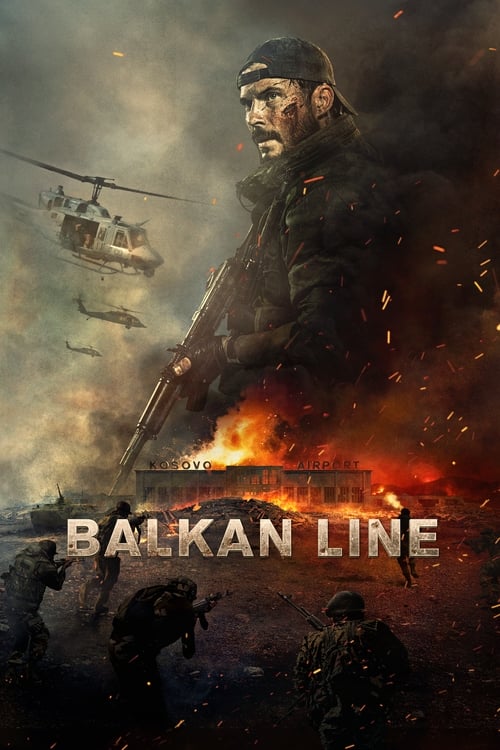
Balkan Line
After the NATO bombing of Yugoslavia in 1999, the Yugoslav army pulls out of Kosovo region, leaving Serbian people at the mercy of the Albanian UCK. A small band of soldiers must take over the Slatina airport, and hold it until the Russian peacekeepers arrive.
Working with a tight budget of $3.5M, the film achieved a modest success with $4.9M in global revenue (+41% profit margin).


Plot Structure
Story beats plotted across runtime


Narrative Arc
Emotional journey through the story's key moments
Story Circle
Blueprint 15-beat structure
Arcplot Score Breakdown
Weighted: Precision (70%) + Arc (15%) + Theme (15%)
Balkan Line (2019) reveals deliberately positioned story structure, characteristic of Andrey Volgin's storytelling approach. This structural analysis examines how the film's 15-point plot structure maps to proven narrative frameworks across 2 hours and 10 minutes. With an Arcplot score of 7.4, the film balances conventional beats with creative variation.
Characters
Cast & narrative archetypes

Andrey Shatalov
Oleg Simonov
Vera
Stanislav
Kir
Vuk
Yanis
Main Cast & Characters
Andrey Shatalov
Played by Anton Pampushnyy
Russian special forces commander leading the rescue mission at Pristina Airport during the Kosovo conflict.
Oleg Simonov
Played by Gosha Kutsenko
Experienced senior officer and mentor figure within the special forces unit.
Vera
Played by Milena Radulovic
Local Serbian woman caught in the conflict who assists the Russian soldiers.
Stanislav
Played by Yuriy Kutsenko
Young Russian soldier and skilled sniper in the special forces team.
Kir
Played by Aleksandr Aliseychik
Tough and loyal member of the Russian special forces unit.
Vuk
Played by Milos Bikovic
Serbian resistance fighter working against Albanian militants.
Yanis
Played by Gojko Mitic
Albanian militant commander and primary antagonist of the mission.
Structural Analysis
The Status Quo at 2 minutes (1% through the runtime) establishes Russian peacekeepers stationed at Pristina Airport, maintaining order during tense Kosovo operations. Andrey Shatalov leads his unit in routine checkpoint duties, showing discipline and brotherhood among soldiers.. The analysis reveals that this early placement immediately immerses viewers in the story world.
The inciting incident occurs at 15 minutes when Intelligence reveals that Serbian civilians are trapped at the airport, surrounded by hostile Albanian forces. A massacre is imminent. The peacekeepers' mission suddenly becomes a rescue operation with severe time constraints.. At 12% through the film, this Disruption aligns precisely with traditional story structure. This beat shifts the emotional landscape, launching the protagonist into the central conflict.
The First Threshold at 32 minutes marks the transition into Act II, occurring at 25% of the runtime. This illustrates the protagonist's commitment to Shatalov makes the active decision to lead his unit on the unauthorized rescue mission, defying direct orders. They leave the safety of their base to enter hostile territory, crossing into the Mirror World of active combat., moving from reaction to action.
At 64 minutes, the Midpoint arrives at 49% of the runtime—precisely centered, creating perfect narrative symmetry. Significantly, this crucial beat False defeat: The evacuation convoy is ambushed and pinned down by superior forces. Communication is lost with command. The team is trapped with the civilians, ammunition running low. The stakes dramatically escalate., fundamentally raising what's at risk. The emotional intensity shifts, dividing the narrative into clear before-and-after phases.
The Collapse moment at 97 minutes (74% through) represents the emotional nadir. Here, A key team member is killed protecting civilians during an overwhelming assault. The whiff of death: Shatalov realizes they cannot win through combat alone. The mission appears doomed, and his decision to come may have killed them all., reveals the protagonist at their lowest point. This beat's placement in the final quarter sets up the climactic reversal.
The Second Threshold at 104 minutes initiates the final act resolution at 80% of the runtime. Breakthrough: Intelligence reveals an alternate escape route through abandoned industrial area. Shatalov synthesizes military tactics with humanitarian mission—they will use deception and sacrifice to create an opening for civilians, not for military victory., demonstrating the transformation achieved throughout the journey.
Emotional Journey
Balkan Line's emotional architecture traces a deliberate progression across 15 carefully calibrated beats.
Narrative Framework
This structural analysis employs structural analysis methodology used to understand storytelling architecture. By mapping Balkan Line against these established plot points, we can identify how Andrey Volgin utilizes or subverts traditional narrative conventions. The plot point approach reveals not only adherence to structural principles but also creative choices that distinguish Balkan Line within the drama genre.
Comparative Analysis
Additional drama films include After Thomas, South Pacific and Dirty Dancing: Havana Nights.
Plot Points by Act
Act I
SetupStatus Quo
Russian peacekeepers stationed at Pristina Airport, maintaining order during tense Kosovo operations. Andrey Shatalov leads his unit in routine checkpoint duties, showing discipline and brotherhood among soldiers.
Theme
Commander discusses duty versus politics: "We're soldiers, not politicians. Our job is to protect people, not borders." The theme of honor and duty in morally complex warfare is established.
Worldbuilding
Introduction to the multinational peacekeeping force, tensions between NATO and Russian units, the fragile ceasefire, and the complex ethnic conflicts in Kosovo. Character relationships and command structure established.
Disruption
Intelligence reveals that Serbian civilians are trapped at the airport, surrounded by hostile Albanian forces. A massacre is imminent. The peacekeepers' mission suddenly becomes a rescue operation with severe time constraints.
Resistance
Shatalov debates accepting the dangerous mission with limited resources. Political complications arise as NATO command refuses support. The team prepares equipment and strategy, facing opposition from higher command about violating protocols.
Act II
ConfrontationFirst Threshold
Shatalov makes the active decision to lead his unit on the unauthorized rescue mission, defying direct orders. They leave the safety of their base to enter hostile territory, crossing into the Mirror World of active combat.
Mirror World
The team encounters Jasna, a Serbian doctor trying to protect civilians. She represents the humanitarian cost of the conflict and embodies the theme—civilians caught between political forces, needing protection regardless of ethnic identity.
Premise
The promise of a military action film delivers: tactical urban warfare, evacuating civilians under fire, navigating through hostile checkpoints, and outsmarting enemy forces. The team uses skill and brotherhood to overcome obstacles.
Midpoint
False defeat: The evacuation convoy is ambushed and pinned down by superior forces. Communication is lost with command. The team is trapped with the civilians, ammunition running low. The stakes dramatically escalate.
Opposition
Pressure intensifies from all sides: enemy forces close in, civilians panic, ammunition depletes, casualties mount. Political forces work against them. Internal conflicts arise about whether to surrender or fight. Shatalov's leadership is tested.
Collapse
A key team member is killed protecting civilians during an overwhelming assault. The whiff of death: Shatalov realizes they cannot win through combat alone. The mission appears doomed, and his decision to come may have killed them all.
Crisis
Dark night of the soul: Shatalov grieves the fallen while facing the terrified civilians they promised to save. He contemplates surrender, but Jasna reminds him why they came—to protect innocent lives regardless of the cost.
Act III
ResolutionSecond Threshold
Breakthrough: Intelligence reveals an alternate escape route through abandoned industrial area. Shatalov synthesizes military tactics with humanitarian mission—they will use deception and sacrifice to create an opening for civilians, not for military victory.
Synthesis
The finale: A coordinated last stand where soldiers sacrifice themselves to draw fire while civilians escape. Brotherhood and tactical expertise combine. Final confrontation with enemy commander. The rescue succeeds through courage and sacrifice.
Transformation
Surviving team members escort rescued civilians to safety. Shatalov, transformed from following orders to understanding true duty, salutes his fallen brothers. The closing image mirrors the opening but shows soldiers who chose honor over politics.