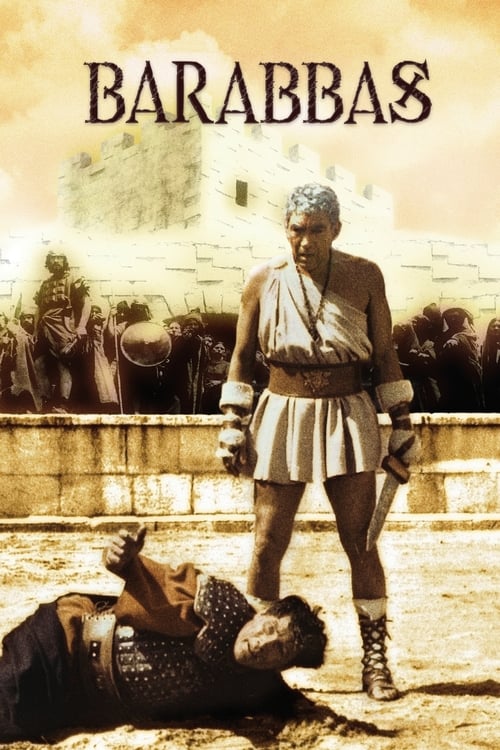
Barabbas
Epic account of the thief Barabbas, who was pardoned for his crimes and spared crucifixion when Pilate offered the Israelites a choice to pardon Barabbas or Jesus. Struggling with his spirituality, Barabbas goes through many ordeals leading him to the gladiatorial arena, where he tries to win his freedom and confront his inner demons, ultimately becoming a follower of the man who was crucified in his place.
The film earned $5.8M at the global box office.


Plot Structure
Story beats plotted across runtime


Narrative Arc
Emotional journey through the story's key moments
Story Circle
Blueprint 15-beat structure
Arcplot Score Breakdown
Weighted: Precision (70%) + Arc (15%) + Theme (15%)
Barabbas (1961) showcases deliberately positioned story structure, characteristic of Richard Fleischer's storytelling approach. This structural analysis examines how the film's 15-point plot structure maps to proven narrative frameworks across 2 hours and 17 minutes. With an Arcplot score of 7.0, the film balances conventional beats with creative variation.
Characters
Cast & narrative archetypes

Barabbas
Rachel
Pontius Pilate
Sahak
Julia
Lucius
Torvald
Main Cast & Characters
Barabbas
Played by Anthony Quinn
A criminal and thief released instead of Jesus Christ, who struggles with faith and meaning after his pardon.
Rachel
Played by Silvana Mangano
A Christian woman and former lover of Barabbas who shows him compassion and represents faith.
Pontius Pilate
Played by Arthur Kennedy
The Roman governor who condemns Jesus and pardons Barabbas, embodying political pragmatism.
Sahak
Played by Vittorio Gassman
A fellow Christian slave in the sulfur mines who becomes Barabbas's mentor in faith.
Julia
Played by Katy Jurado
The wife of a Roman senator who develops an interest in Barabbas during his time as a gladiator.
Lucius
Played by Jack Palance
A Roman officer who supervises Barabbas in the sulfur mines and later as a gladiator.
Torvald
Played by Ernest Borgnine
A massive gladiator who fights against Barabbas in the arena.
Structural Analysis
The Status Quo at 2 minutes (1% through the runtime) establishes Barabbas sits in a dark prison cell, a condemned murderer and thief awaiting execution, embodying a life of violence and spiritual emptiness.. Of particular interest, this early placement immediately immerses viewers in the story world.
The inciting incident occurs at 17 minutes when Pontius Pilate offers the crowd a choice between releasing Jesus or Barabbas. The crowd chooses Barabbas, and he is unexpectedly freed while Jesus is condemned to crucifixion.. At 13% through the film, this Disruption is delayed, allowing extended setup of the story world. This beat shifts the emotional landscape, launching the protagonist into the central conflict.
The First Threshold at 34 minutes marks the transition into Act II, occurring at 25% of the runtime. This indicates the protagonist's commitment to Barabbas witnesses Rachel's stoning for her Christian faith. Unable to save her or deny what he's witnessed, he is forced into a new reality where he can no longer live his old life unchanged., moving from reaction to action.
At 69 minutes, the Midpoint arrives at 50% of the runtime—precisely centered, creating perfect narrative symmetry. Structural examination shows that this crucial beat Barabbas's gladiatorial prowess wins him fame and the favor of the Emperor, earning his freedom. This false victory seems like salvation but leaves his spiritual emptiness unresolved., fundamentally raising what's at risk. The emotional intensity shifts, dividing the narrative into clear before-and-after phases.
The Collapse moment at 103 minutes (75% through) represents the emotional nadir. Here, Rome burns, and Christians are blamed. Barabbas is captured with the Christians, and in the arena, he watches believers martyred for their faith, confronting the cost of belief and his own spiritual cowardice., indicates the protagonist at their lowest point. This beat's placement in the final quarter sets up the climactic reversal.
The Second Threshold at 110 minutes initiates the final act resolution at 80% of the runtime. As he is raised on the cross, Barabbas makes his confession of faith, finally accepting Christ and the meaning of his substitution, choosing belief in his final moments., demonstrating the transformation achieved throughout the journey.
Emotional Journey
Barabbas's emotional architecture traces a deliberate progression across 15 carefully calibrated beats.
Narrative Framework
This structural analysis employs systematic plot point analysis that identifies crucial turning points. By mapping Barabbas against these established plot points, we can identify how Richard Fleischer utilizes or subverts traditional narrative conventions. The plot point approach reveals not only adherence to structural principles but also creative choices that distinguish Barabbas within the history genre.
Richard Fleischer's Structural Approach
Among the 8 Richard Fleischer films analyzed on Arcplot, the average structural score is 7.0, demonstrating varied approaches to story architecture. Barabbas represents one of the director's most structurally precise works. For comparative analysis, explore the complete Richard Fleischer filmography.
Comparative Analysis
Additional history films include The Attacks Of 26/11, Joyeux Noel and Rob Roy. For more Richard Fleischer analyses, see Red Sonja, Conan the Destroyer and Amityville 3-D.
Plot Points by Act
Act I
SetupStatus Quo
Barabbas sits in a dark prison cell, a condemned murderer and thief awaiting execution, embodying a life of violence and spiritual emptiness.
Theme
A guard or fellow prisoner speaks about the man being crucified in Barabbas's place, hinting at the film's central question: what does a man owe when another dies in his stead?
Worldbuilding
Establishment of first-century Jerusalem during Passover, the Roman occupation, Barabbas's criminal life, his relationship with Rachel, and the political tensions that lead to the crowd's choice.
Disruption
Pontius Pilate offers the crowd a choice between releasing Jesus or Barabbas. The crowd chooses Barabbas, and he is unexpectedly freed while Jesus is condemned to crucifixion.
Resistance
Barabbas struggles with his freedom, compelled to witness the crucifixion and the solar eclipse. He seeks out Rachel, who has become a Christian, and debates whether Jesus's sacrifice has meaning.
Act II
ConfrontationFirst Threshold
Barabbas witnesses Rachel's stoning for her Christian faith. Unable to save her or deny what he's witnessed, he is forced into a new reality where he can no longer live his old life unchanged.
Mirror World
In the sulfur mines, Barabbas meets Sahak, a gentle Christian slave who becomes his companion and spiritual mirror, representing the faith and grace Barabbas cannot yet embrace.
Premise
Barabbas endures years of slavery in the sulfur mines and later as a gladiator in Rome, his physical strength keeping him alive while he observes Sahak's unwavering faith and wrestles with belief.
Midpoint
Barabbas's gladiatorial prowess wins him fame and the favor of the Emperor, earning his freedom. This false victory seems like salvation but leaves his spiritual emptiness unresolved.
Opposition
As a free man in Rome, Barabbas encounters the growing Christian community and the intensifying persecution. His past as the man freed instead of Christ and his connection to Christians draws dangerous attention.
Collapse
Rome burns, and Christians are blamed. Barabbas is captured with the Christians, and in the arena, he watches believers martyred for their faith, confronting the cost of belief and his own spiritual cowardice.
Crisis
Facing his own crucifixion, Barabbas experiences his dark night of the soul, finally confronting whether the man who died in his place and the faith of Rachel and Sahak hold ultimate truth.
Act III
ResolutionSecond Threshold
As he is raised on the cross, Barabbas makes his confession of faith, finally accepting Christ and the meaning of his substitution, choosing belief in his final moments.
Synthesis
Barabbas dies on the cross as a believer, his death completing the spiritual journey that began when Christ died in his place, achieving the transformation he resisted for a lifetime.
Transformation
Barabbas's body on the cross, his face peaceful in death, transformed from the hardened criminal in the opening to a martyr who finally understood grace and redemption.