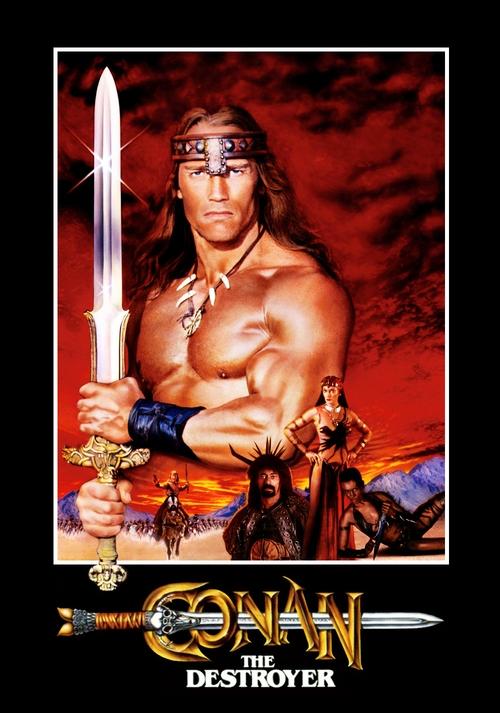
Conan the Destroyer
Conan is commissioned by the evil queen Taramis to safely escort a teen princess and her powerful bodyguard to a far away castle to retrieve the magic Horn of Dagoth. Unknown to Conan, the queen plans to sacrifice the princess when she returns and inherit her kingdom after the bodyguard kills Conan. The queen's plans fail to take into consideration Conan's strength and cunning and the abilities of his sidekicks: the eccentric wizard Akiro, the warrior woman Zula, and the inept Malak. Together the hero and his allies must defeat both mortal and supernatural foes in this voyage to sword-and-sorcery land.
Working with a moderate budget of $18.0M, the film achieved a steady performer with $31.0M in global revenue (+72% profit margin).
1 win & 3 nominations


Plot Structure
Story beats plotted across runtime


Narrative Arc
Emotional journey through the story's key moments
Story Circle
Blueprint 15-beat structure
Arcplot Score Breakdown
Weighted: Precision (70%) + Arc (15%) + Theme (15%)
Conan the Destroyer (1984) exhibits precise narrative architecture, characteristic of Richard Fleischer's storytelling approach. This structural analysis examines how the film's 15-point plot structure maps to proven narrative frameworks across 1 hour and 43 minutes. With an Arcplot score of 6.6, the film balances conventional beats with creative variation.
Characters
Cast & narrative archetypes

Conan
Princess Jehnna
Zula
Queen Taramis
Akiro
Bombaata
Malak
Main Cast & Characters
Conan
Played by Arnold Schwarzenegger
A powerful barbarian warrior forced to escort a princess on a quest to retrieve a magical artifact and resurrect an ancient god.
Princess Jehnna
Played by Olivia d'Abo
A young virgin princess destined to retrieve a sacred horn and key, unknowingly part of a sacrificial plot by her guardian.
Zula
Played by Grace Jones
A fierce warrior woman who joins Conan's quest after he saves her life, seeking redemption and purpose.
Queen Taramis
Played by Sarah Douglas
The manipulative queen who forces Conan to protect her niece, secretly planning to sacrifice the princess to resurrect the god Dagoth.
Akiro
Played by Mako
The wise wizard and chronicler who accompanies Conan, providing magical assistance and narration.
Bombaata
Played by Wilt Chamberlain
The queen's loyal captain assigned to protect the princess but secretly ordered to kill Conan when the quest is complete.
Malak
Played by Tracey Walter
A bumbling thief and comic relief who attaches himself to Conan's group, providing humor and occasional assistance.
Structural Analysis
The Status Quo at 1 minutes (1% through the runtime) establishes Conan and Malak camp in the wilderness. Conan is a wandering barbarian mercenary living by his sword, still haunted by the loss of Valeria.. Of particular interest, this early placement immediately immerses viewers in the story world.
The inciting incident occurs at 13 minutes when Queen Taramis offers Conan the impossible: she will bring Valeria back from the dead if he protects Princess Jehnna on her quest. His deepest desire is suddenly within reach.. At 12% through the film, this Disruption aligns precisely with traditional story structure. This beat shifts the emotional landscape, launching the protagonist into the central conflict.
The First Threshold at 26 minutes marks the transition into Act II, occurring at 26% of the runtime. This demonstrates the protagonist's commitment to The party departs the palace gates and enters the wilderness on the quest for the horn. Conan commits to the journey, choosing to pursue the promise of Valeria's resurrection., moving from reaction to action.
At 52 minutes, the Midpoint arrives at 50% of the runtime—precisely centered, creating perfect narrative symmetry. Of particular interest, this crucial beat The party successfully obtains the jeweled horn from the temple. A false victory - they have the prize, but don't yet know the queen's true dark intentions or that Bombaata has orders to kill Conan., fundamentally raising what's at risk. The emotional intensity shifts, dividing the narrative into clear before-and-after phases.
The Collapse moment at 78 minutes (76% through) represents the emotional nadir. Here, Bombaata knocks Conan unconscious and Jehnna is taken to be sacrificed. Conan awakens imprisoned, helpless, having been betrayed. The dream of Valeria's resurrection dies - it was all a lie., indicates the protagonist at their lowest point. This beat's placement in the final quarter sets up the climactic reversal.
The Second Threshold at 83 minutes initiates the final act resolution at 81% of the runtime. Conan chooses to fight to save Jehnna not for the false promise of resurrection, but because it's right. He lets go of Valeria and embraces protecting the living. New resolve, new purpose., demonstrating the transformation achieved throughout the journey.
Emotional Journey
Conan the Destroyer's emotional architecture traces a deliberate progression across 15 carefully calibrated beats.
Narrative Framework
This structural analysis employs structural analysis methodology used to understand storytelling architecture. By mapping Conan the Destroyer against these established plot points, we can identify how Richard Fleischer utilizes or subverts traditional narrative conventions. The plot point approach reveals not only adherence to structural principles but also creative choices that distinguish Conan the Destroyer within the adventure genre.
Richard Fleischer's Structural Approach
Among the 8 Richard Fleischer films analyzed on Arcplot, the average structural score is 7.0, demonstrating varied approaches to story architecture. Conan the Destroyer takes a more unconventional approach compared to the director's typical style. For comparative analysis, explore the complete Richard Fleischer filmography.
Comparative Analysis
Additional adventure films include The Black Stallion, The Bad Guys and Puss in Boots. For more Richard Fleischer analyses, see Red Sonja, Amityville 3-D and Fantastic Voyage.
Plot Points by Act
Act I
SetupStatus Quo
Conan and Malak camp in the wilderness. Conan is a wandering barbarian mercenary living by his sword, still haunted by the loss of Valeria.
Theme
Queen Taramis tells Conan, "I need someone who lives outside the law, beyond the reach of conscience." The theme: what price do you put on your honor versus your desires?
Worldbuilding
Conan's world as a mercenary is established. Queen Taramis captures him, reveals her niece Princess Jehnna, and explains the quest for the horn of Dagoth. Conan learns he can have Valeria resurrected as payment.
Disruption
Queen Taramis offers Conan the impossible: she will bring Valeria back from the dead if he protects Princess Jehnna on her quest. His deepest desire is suddenly within reach.
Resistance
Conan assembles the quest team: retrieving Zula the warrior, recruiting Bombaata (secretly ordered to kill Conan), and the wizard Akiro. The group forms and prepares for the journey.
Act II
ConfrontationFirst Threshold
The party departs the palace gates and enters the wilderness on the quest for the horn. Conan commits to the journey, choosing to pursue the promise of Valeria's resurrection.
Mirror World
Princess Jehnna expresses curiosity about Conan and begins to represent a new possibility for connection, contrasting with his obsession over dead Valeria. Their relationship develops as a thematic counterpoint.
Premise
Adventure sequences: the party battles creatures, survives the hall of mirrors to retrieve the horn, fights the beast-man guardians, and escapes the wizard's trap. Classic sword-and-sorcery action.
Midpoint
The party successfully obtains the jeweled horn from the temple. A false victory - they have the prize, but don't yet know the queen's true dark intentions or that Bombaata has orders to kill Conan.
Opposition
The party seeks the jeweled key at the lake castle. Jehnna is kidnapped by Toth-Amon's men. After rescuing her and obtaining the key, they return to the palace where the true conspiracy unfolds.
Collapse
Bombaata knocks Conan unconscious and Jehnna is taken to be sacrificed. Conan awakens imprisoned, helpless, having been betrayed. The dream of Valeria's resurrection dies - it was all a lie.
Crisis
Conan breaks free with Zula's help. He realizes the queen never intended to honor her promise. He must choose: abandon the quest or fight to save Jehnna for her own sake, not for his reward.
Act III
ResolutionSecond Threshold
Conan chooses to fight to save Jehnna not for the false promise of resurrection, but because it's right. He lets go of Valeria and embraces protecting the living. New resolve, new purpose.
Synthesis
Conan and allies battle through the palace. He fights Bombaata to the death, destroys the awakening god Dagoth in spectacular combat, and saves Jehnna from sacrifice, preventing the ritual.
Transformation
Jehnna offers Conan her kingdom and herself. He declines both, choosing the freedom of the road. Transformed from a man obsessed with the past into one who lives for honor in the present.