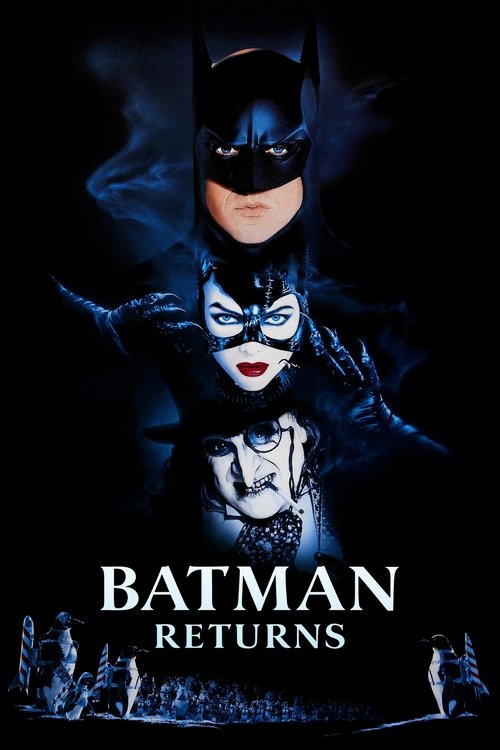
Batman Returns
The monstrous Penguin, who dwells in the sewers beneath Gotham, joins up with corrupt mayoral candidate Max Shreck to topple the Batman once and for all. But when Shreck's timid assistant Selina Kyle finds out, and Shreck tries to kill her, she's transformed into the sexy Catwoman. She teams up with the Penguin and Shreck to destroy Batman, but sparks fly unexpectedly when she confronts the caped crusader.
Despite a significant budget of $80.0M, Batman Returns became a solid performer, earning $280.0M worldwide—a 250% return.
Nominated for 2 Oscars. 2 wins & 29 nominations


Plot Structure
Story beats plotted across runtime


Narrative Arc
Emotional journey through the story's key moments
Story Circle
Blueprint 15-beat structure
Arcplot Score Breakdown
Weighted: Precision (70%) + Arc (15%) + Theme (15%)
Batman Returns (1992) demonstrates meticulously timed story structure, characteristic of Tim Burton's storytelling approach. This structural analysis examines how the film's 15-point plot structure maps to proven narrative frameworks across 2 hours and 6 minutes. With an Arcplot score of 6.8, the film balances conventional beats with creative variation.
Characters
Cast & narrative archetypes

Batman / Bruce Wayne
Catwoman / Selina Kyle
The Penguin / Oswald Cobblepot
Max Shreck
Alfred Pennyworth
Main Cast & Characters
Batman / Bruce Wayne
Played by Michael Keaton
Gotham's brooding vigilante protector struggling with duality and isolation while facing new threats during Christmas.
Catwoman / Selina Kyle
Played by Michelle Pfeiffer
A meek secretary transformed into a confident, chaotic antihero seeking revenge against those who wronged her.
The Penguin / Oswald Cobblepot
Played by Danny DeVito
A deformed outcast seeking acceptance and revenge on Gotham's elite while leading a criminal underground empire.
Max Shreck
Played by Christopher Walken
A ruthless corporate mogul willing to destroy anything and anyone to expand his power in Gotham City.
Alfred Pennyworth
Played by Michael Gough
Bruce Wayne's loyal butler and confidant who provides wisdom and grounding throughout his dual life.
Structural Analysis
The Status Quo at 1 minutes (1% through the runtime) establishes The Cobblepots, wealthy Gotham aristocrats, throw their deformed infant son into the sewer on Christmas, establishing a world of darkness, rejection, and the monstrous consequences of parental abandonment.. Notably, this early placement immediately immerses viewers in the story world.
The inciting incident occurs at 15 minutes when The Penguin emerges from the sewers, kidnapping Max Shreck and blackmailing him with evidence of his crimes. This alliance between the deformed outcast and the corrupt elite sets the plot in motion, forcing all parties into conflict.. At 12% through the film, this Disruption aligns precisely with traditional story structure. This beat shifts the emotional landscape, launching the protagonist into the central conflict.
The First Threshold at 32 minutes marks the transition into Act II, occurring at 25% of the runtime. This demonstrates the protagonist's commitment to Catwoman makes her explosive debut, destroying Shreck's department store. Batman now faces two new adversaries—Penguin seeks political power while Catwoman seeks revenge—transforming Gotham into a three-way battlefield of damaged souls., moving from reaction to action.
At 63 minutes, the Midpoint arrives at 50% of the runtime—precisely centered, creating perfect narrative symmetry. The analysis reveals that this crucial beat Batman exposes Penguin's true monstrous nature by broadcasting his hateful rants during a campaign speech. Penguin's political aspirations collapse publicly, but this victory is false—it pushes the Penguin toward his genocidal backup plan to kill Gotham's firstborn sons., fundamentally raising what's at risk. The emotional intensity shifts, dividing the narrative into clear before-and-after phases.
The Collapse moment at 95 minutes (75% through) represents the emotional nadir. Here, At the masquerade ball, Bruce and Selina discover each other's secret identities, their romance seemingly doomed. The Penguin crashes the party and kidnaps Max Shreck's son, announcing his plan to drown Gotham's children. Bruce loses both love and must face his darkest hour., reveals the protagonist at their lowest point. This beat's placement in the final quarter sets up the climactic reversal.
The Second Threshold at 101 minutes initiates the final act resolution at 80% of the runtime. Batman chooses to save Gotham's children first, jamming the Penguin's signal to his penguin army and redirecting them back to the Penguin's lair. He commits fully to being the hero Gotham needs, even at the cost of his personal happiness with Selina., demonstrating the transformation achieved throughout the journey.
Emotional Journey
Batman Returns's emotional architecture traces a deliberate progression across 15 carefully calibrated beats.
Narrative Framework
This structural analysis employs structural analysis methodology used to understand storytelling architecture. By mapping Batman Returns against these established plot points, we can identify how Tim Burton utilizes or subverts traditional narrative conventions. The plot point approach reveals not only adherence to structural principles but also creative choices that distinguish Batman Returns within the action genre.
Tim Burton's Structural Approach
Among the 19 Tim Burton films analyzed on Arcplot, the average structural score is 6.9, demonstrating varied approaches to story architecture. Batman Returns takes a more unconventional approach compared to the director's typical style. For comparative analysis, explore the complete Tim Burton filmography.
Comparative Analysis
Additional action films include The Bad Guys, Puss in Boots and Venom: The Last Dance. For more Tim Burton analyses, see Beetlejuice, Dark Shadows and Pee-wee's Big Adventure.
Plot Points by Act
Act I
SetupStatus Quo
The Cobblepots, wealthy Gotham aristocrats, throw their deformed infant son into the sewer on Christmas, establishing a world of darkness, rejection, and the monstrous consequences of parental abandonment.
Theme
Max Shreck tells his son Chip that the true measure of a man is what he does with power, foreshadowing the film's exploration of how rejected outcasts and powerful elites alike abuse or seek power to fill their emptiness.
Worldbuilding
Gotham's Christmas celebration is introduced along with corrupt businessman Max Shreck, mousy secretary Selina Kyle, and the Red Triangle Circus Gang's attack. Bruce Wayne watches from Wayne Manor, isolated and waiting for the Bat-Signal.
Disruption
The Penguin emerges from the sewers, kidnapping Max Shreck and blackmailing him with evidence of his crimes. This alliance between the deformed outcast and the corrupt elite sets the plot in motion, forcing all parties into conflict.
Resistance
Penguin manipulates Shreck into orchestrating his public redemption. Selina Kyle discovers Shreck's illegal power plant scheme and is murdered by him, only to be resurrected by alley cats as Catwoman. Batman investigates the Penguin's true nature.
Act II
ConfrontationFirst Threshold
Catwoman makes her explosive debut, destroying Shreck's department store. Batman now faces two new adversaries—Penguin seeks political power while Catwoman seeks revenge—transforming Gotham into a three-way battlefield of damaged souls.
Mirror World
Bruce Wayne and Selina Kyle meet at Shreck's party, immediately drawn to each other's wounded darkness. Their connection represents the thematic heart: two broken people hiding behind masks who might heal each other—or destroy themselves.
Premise
Batman battles Catwoman in sexually charged rooftop encounters while investigating the Penguin. Bruce and Selina begin a tentative romance, each unaware of the other's secret identity. Penguin launches his mayoral campaign with Shreck's backing.
Midpoint
Batman exposes Penguin's true monstrous nature by broadcasting his hateful rants during a campaign speech. Penguin's political aspirations collapse publicly, but this victory is false—it pushes the Penguin toward his genocidal backup plan to kill Gotham's firstborn sons.
Opposition
Penguin and Catwoman form an alliance against Batman. They frame Batman for murder, turning Gotham against him. Bruce and Selina's romance deepens but is threatened by their vigilante lives. Penguin reveals his plan to kidnap and drown all of Gotham's firstborn children.
Collapse
At the masquerade ball, Bruce and Selina discover each other's secret identities, their romance seemingly doomed. The Penguin crashes the party and kidnaps Max Shreck's son, announcing his plan to drown Gotham's children. Bruce loses both love and must face his darkest hour.
Crisis
Bruce must choose between pursuing Selina and stopping the Penguin's genocidal scheme. The weight of his dual identity threatens to paralyze him as Gotham's children are gathered for slaughter and the woman he loves spirals toward self-destruction.
Act III
ResolutionSecond Threshold
Batman chooses to save Gotham's children first, jamming the Penguin's signal to his penguin army and redirecting them back to the Penguin's lair. He commits fully to being the hero Gotham needs, even at the cost of his personal happiness with Selina.
Synthesis
Batman confronts the Penguin in his arctic lair, defeating him and his army. Catwoman rejects Bruce's plea to abandon revenge, choosing to kill Shreck by electrocuting them both. The Penguin dies surrounded by his penguin companions, a tragic monster to the end.
Transformation
Bruce drives through Gotham on Christmas night, spotting a shadow that might be Selina. He takes in her abandoned cat. The final image shows Catwoman alive, gazing at the Bat-Signal—both remain masked, alone, but perhaps not entirely without hope.