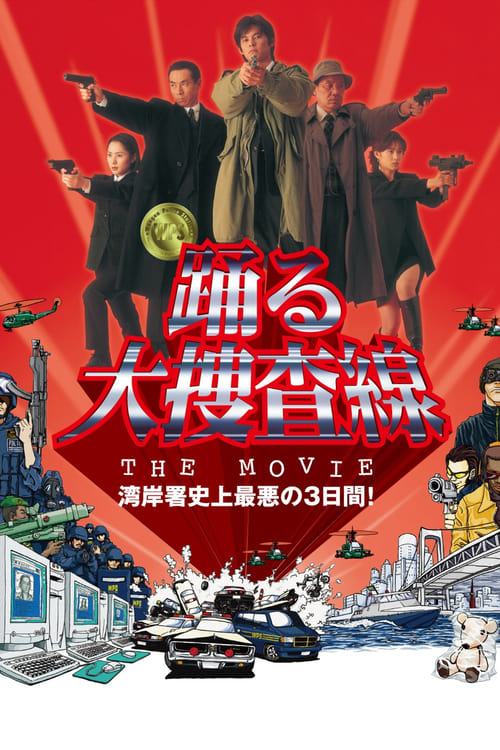
Bayside Shakedown
Aoshima, a police detective working in the Bayside Precinct, is continually frustrated by the hierarchy and red tape that plague the system. His friend Muroi is climbing the ladder of the police bureaucracy. Muroi has made a pact with Aoshima that while Aoshima looks after the streets, Muroi would make life easier for the cops on the beat. One day in Bayside, a series of events turns the small station upside down.
The film earned $99.0M at the global box office.
Plot Structure
Story beats plotted across runtime


Narrative Arc
Emotional journey through the story's key moments
Story Circle
Blueprint 15-beat structure
Arcplot Score Breakdown
Weighted: Precision (70%) + Arc (15%) + Theme (15%)
Bayside Shakedown (1998) exhibits deliberately positioned narrative design, characteristic of Katsuyuki Motohiro's storytelling approach. This structural analysis examines how the film's 15-point plot structure maps to proven narrative frameworks across 1 hour and 59 minutes. With an Arcplot score of 7.3, the film balances conventional beats with creative variation.
Characters
Cast & narrative archetypes
Shunsaku Aoshima

Sumire Onda
Masayoshi Mashita

Shinji Muroi
Shinichi Waku
Yukino Kashiwagi
Main Cast & Characters
Shunsaku Aoshima
Played by Yuji Oda
Former computer salesman turned detective who challenges bureaucratic police culture with idealism and street-level dedication.
Sumire Onda
Played by Toshiro Yanagiba
Intelligent female detective and Aoshima's partner who balances competence with navigating male-dominated police hierarchy.
Masayoshi Mashita
Played by Eri Fukatsu
Veteran detective sergeant with old-school methods who becomes reluctant ally to Aoshima's unconventional approach.
Shinji Muroi
Played by Miki Mizuno
Career-minded elite officer from headquarters who represents bureaucratic system that frustrates frontline detectives.
Shinichi Waku
Played by Yusuke Santamaria
Weak-willed station chief caught between headquarters pressure and respect for his detectives' work.
Yukino Kashiwagi
Played by Chosuke Ikariya
Administrative assistant at the station who provides crucial support and insider perspective on police operations.
Structural Analysis
The Status Quo at 1 minutes (1% through the runtime) establishes Aoshima works mundane patrol duty at Wangan Police Station, handling minor complaints and feeling disconnected from real detective work. His idealism about police work clashes with bureaucratic reality.. The analysis reveals that this early placement immediately immerses viewers in the story world.
The inciting incident occurs at 14 minutes when A dead body is discovered in the bay near Wangan Station. What seemed like a missing person case escalates into a murder investigation, disrupting the routine and drawing headquarters' attention.. At 12% through the film, this Disruption aligns precisely with traditional story structure. This beat shifts the emotional landscape, launching the protagonist into the central conflict.
The First Threshold at 30 minutes marks the transition into Act II, occurring at 25% of the runtime. This shows the protagonist's commitment to Aoshima decides to conduct his own parallel investigation despite orders. He commits to proving that local knowledge and street-level work are essential, actively defying the bureaucracy., moving from reaction to action.
At 59 minutes, the Midpoint arrives at 50% of the runtime—precisely centered, creating perfect narrative symmetry. Structural examination shows that this crucial beat False victory: Aoshima's investigation yields a major breakthrough identifying a suspect. He feels vindicated—but headquarters claims credit and intensifies their control, raising the personal stakes., fundamentally raising what's at risk. The emotional intensity shifts, dividing the narrative into clear before-and-after phases.
The Collapse moment at 88 minutes (74% through) represents the emotional nadir. Here, A hostage situation erupts. Headquarters' mismanagement puts civilians at risk. Aoshima is ordered to stand down completely. His ideals about police work protecting people seem dead—bureaucracy has won., shows the protagonist at their lowest point. This beat's placement in the final quarter sets up the climactic reversal.
The Second Threshold at 95 minutes initiates the final act resolution at 80% of the runtime. Aoshima realizes the solution: ignore headquarters entirely and act on what's right. He synthesizes his outsider perspective with his team's local expertise. "We're the ones at the scene"—they take action., demonstrating the transformation achieved throughout the journey.
Emotional Journey
Bayside Shakedown's emotional architecture traces a deliberate progression across 15 carefully calibrated beats.
Narrative Framework
This structural analysis employs proven narrative structure principles that track dramatic progression. By mapping Bayside Shakedown against these established plot points, we can identify how Katsuyuki Motohiro utilizes or subverts traditional narrative conventions. The plot point approach reveals not only adherence to structural principles but also creative choices that distinguish Bayside Shakedown within the comedy genre.
Katsuyuki Motohiro's Structural Approach
Among the 3 Katsuyuki Motohiro films analyzed on Arcplot, the average structural score is 7.4, reflecting strong command of classical structure. Bayside Shakedown takes a more unconventional approach compared to the director's typical style. For comparative analysis, explore the complete Katsuyuki Motohiro filmography.
Comparative Analysis
Additional comedy films include The Ministry of Ungentlemanly Warfare, The Bad Guys and Lake Placid. For more Katsuyuki Motohiro analyses, see Bayside Shakedown 2, Bayside Shakedown 3: Set the Guys Loose.
Plot Points by Act
Act I
SetupStatus Quo
Aoshima works mundane patrol duty at Wangan Police Station, handling minor complaints and feeling disconnected from real detective work. His idealism about police work clashes with bureaucratic reality.
Theme
Sumida tells Aoshima: "It's the people at the scene who matter most, not headquarters." This establishes the film's central theme about frontline workers versus bureaucracy.
Worldbuilding
Establishment of Wangan Station dynamics: Aoshima's frustration with paperwork, Sumida's grounded wisdom, Yukino's ambition, and the tension between street cops and management. A routine missing person case hints at something larger.
Disruption
A dead body is discovered in the bay near Wangan Station. What seemed like a missing person case escalates into a murder investigation, disrupting the routine and drawing headquarters' attention.
Resistance
Headquarters takes over the case, sidelining local detectives. Aoshima debates whether to accept his marginalized role or fight for involvement. Sumida guides him on navigating the system while maintaining integrity.
Act II
ConfrontationFirst Threshold
Aoshima decides to conduct his own parallel investigation despite orders. He commits to proving that local knowledge and street-level work are essential, actively defying the bureaucracy.
Mirror World
Aoshima deepens his partnership with Sumida and connects with Yukino on a more personal level. These relationships represent the collaborative, human-centered policing that contrasts with headquarters' cold efficiency.
Premise
The promise of the premise: street-smart detective work versus bureaucratic procedure. Aoshima and team follow leads through local knowledge, interviewing witnesses, tracking connections that headquarters misses.
Midpoint
False victory: Aoshima's investigation yields a major breakthrough identifying a suspect. He feels vindicated—but headquarters claims credit and intensifies their control, raising the personal stakes.
Opposition
Headquarters tightens grip on the investigation. Aoshima faces reprimands and threats to his career. The suspect eludes capture. Internal politics intensify as superiors prioritize public image over solving the case.
Collapse
A hostage situation erupts. Headquarters' mismanagement puts civilians at risk. Aoshima is ordered to stand down completely. His ideals about police work protecting people seem dead—bureaucracy has won.
Crisis
Aoshima contemplates whether his fight matters. Sumida and the team share their own doubts about the system. They process the darkness of bureaucracy valuing appearance over lives.
Act III
ResolutionSecond Threshold
Aoshima realizes the solution: ignore headquarters entirely and act on what's right. He synthesizes his outsider perspective with his team's local expertise. "We're the ones at the scene"—they take action.
Synthesis
Aoshima and the Wangan team execute their own plan, resolving the hostage crisis and capturing the suspect through teamwork and street knowledge. They succeed despite—not because of—headquarters.
Transformation
Aoshima returns to mundane patrol work, but transformed. He now embraces frontline duty with pride, understanding that real police work happens at street level. He and his team find meaning in serving the community directly.