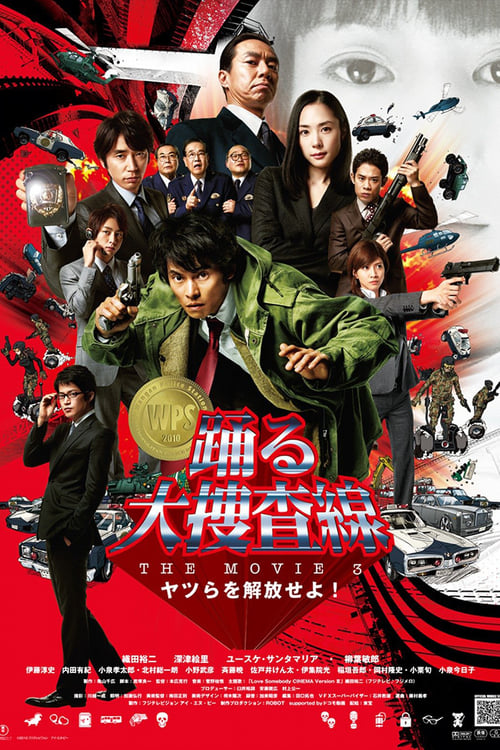
Bayside Shakedown 3: Set the Guys Loose
After Detective Shunsaku Aoshima is promoted to section chief he has the daunting task of dealing with eight cases at the same time, which includes a murder case, bomb threat, and a bus hijacking. Complications also arise between Detective Aoshima and his juniors.
The film earned $72.5M at the global box office.
Plot Structure
Story beats plotted across runtime


Narrative Arc
Emotional journey through the story's key moments
Story Circle
Blueprint 15-beat structure
Arcplot Score Breakdown
Weighted: Precision (70%) + Arc (15%) + Theme (15%)
Bayside Shakedown 3: Set the Guys Loose (2010) demonstrates deliberately positioned plot construction, characteristic of Katsuyuki Motohiro's storytelling approach. This structural analysis examines how the film's 15-point plot structure maps to proven narrative frameworks across 2 hours and 21 minutes. With an Arcplot score of 7.4, the film balances conventional beats with creative variation.
Characters
Cast & narrative archetypes

Aoshima Shunsaku
Muroi Shinji
Sumire Onda
Yukino Kashiwagi
Heihachiro Waku
Masayoshi Mashita
Main Cast & Characters
Aoshima Shunsaku
Played by Yuji Oda
Unconventional detective at Wangan Police Station who prioritizes solving cases over bureaucratic politics. Former corporate worker turned passionate street cop.
Muroi Shinji
Played by Toshiro Yanagiba
Career bureaucrat and Superintendent at Tokyo Metropolitan Police HQ. Aoshima's friend who works to reform the system from within.
Sumire Onda
Played by Eri Fukatsu
Serious, dedicated female detective who serves as Aoshima's professional partner. Methodical and committed to proper procedure.
Yukino Kashiwagi
Played by Yuki Uchida
Assistant Inspector who bridges the gap between street detectives and headquarters. Warm and organized team diplomat.
Heihachiro Waku
Played by Miki Mizuno
Bold, action-oriented female detective who isn't afraid of dangerous situations. Street-smart and physically capable.
Masayoshi Mashita
Played by Yusuke Santamaria
Energetic detective who provides comic relief while remaining competent. Friendly and sometimes naive but eager to prove himself.
Structural Analysis
The Status Quo at 2 minutes (1% through the runtime) establishes Detective Aoshima back at his desk at Wangan Police Station, handling routine paperwork and minor cases. The daily grind of a Tokyo detective is established - bureaucracy, petty crimes, and the tension between field officers and management.. Of particular interest, this early placement immediately immerses viewers in the story world.
The inciting incident occurs at 15 minutes when A major incident occurs - either a high-profile crime, kidnapping, or terrorist threat in Tokyo Bay area. The incident is beyond routine and draws attention from police headquarters, threatening to sideline Wangan Station's involvement.. At 11% through the film, this Disruption aligns precisely with traditional story structure. This beat shifts the emotional landscape, launching the protagonist into the central conflict.
The First Threshold at 34 minutes marks the transition into Act II, occurring at 24% of the runtime. This indicates the protagonist's commitment to Aoshima makes the active choice to pursue the investigation independently with his team, defying headquarters' orders. He commits to solving the case the "Wangan way" - through community connection and street-level detective work rather than top-down bureaucracy., moving from reaction to action.
At 69 minutes, the Midpoint arrives at 49% of the runtime—precisely centered, creating perfect narrative symmetry. Structural examination shows that this crucial beat False victory: Aoshima's team makes a major breakthrough in the case - a key witness, crucial evidence, or the identification of the perpetrator. It seems like they're about to crack it, vindicating their approach. But this success draws unwanted attention and raises the stakes., fundamentally raising what's at risk. The emotional intensity shifts, dividing the narrative into clear before-and-after phases.
The Collapse moment at 103 minutes (73% through) represents the emotional nadir. Here, The investigation falls apart: a team member is injured, a crucial lead is lost, or headquarters officially removes Aoshima from the case. The "whiff of death" - either literal danger to civilians/officers or the death of Aoshima's career/reputation. His lowest point., demonstrates the protagonist at their lowest point. This beat's placement in the final quarter sets up the climactic reversal.
The Second Threshold at 112 minutes initiates the final act resolution at 79% of the runtime. New information emerges or Aoshima synthesizes everything he's learned - combining street-level knowledge with official resources. He realizes the solution requires both grassroots work AND working within the system. A realization that enables the final push., demonstrating the transformation achieved throughout the journey.
Emotional Journey
Bayside Shakedown 3: Set the Guys Loose's emotional architecture traces a deliberate progression across 15 carefully calibrated beats.
Narrative Framework
This structural analysis employs structural analysis methodology used to understand storytelling architecture. By mapping Bayside Shakedown 3: Set the Guys Loose against these established plot points, we can identify how Katsuyuki Motohiro utilizes or subverts traditional narrative conventions. The plot point approach reveals not only adherence to structural principles but also creative choices that distinguish Bayside Shakedown 3: Set the Guys Loose within the action genre.
Katsuyuki Motohiro's Structural Approach
Among the 3 Katsuyuki Motohiro films analyzed on Arcplot, the average structural score is 7.4, reflecting strong command of classical structure. Bayside Shakedown 3: Set the Guys Loose takes a more unconventional approach compared to the director's typical style. For comparative analysis, explore the complete Katsuyuki Motohiro filmography.
Comparative Analysis
Additional action films include The Ministry of Ungentlemanly Warfare, The Bad Guys and Lake Placid. For more Katsuyuki Motohiro analyses, see Bayside Shakedown 2, Bayside Shakedown.
Plot Points by Act
Act I
SetupStatus Quo
Detective Aoshima back at his desk at Wangan Police Station, handling routine paperwork and minor cases. The daily grind of a Tokyo detective is established - bureaucracy, petty crimes, and the tension between field officers and management.
Theme
A senior officer or colleague remarks to Aoshima: "Real police work isn't about glory - it's about serving the community, one case at a time." The theme of grassroots dedication versus bureaucratic ambition is stated.
Worldbuilding
Introduction to the ensemble cast at Wangan Station: Sumire, Yukino, Shinjo, and other familiar faces. The hierarchical tension between headquarters and local precincts is established. Small cases demonstrate the team's dynamic and Aoshima's street-level approach.
Disruption
A major incident occurs - either a high-profile crime, kidnapping, or terrorist threat in Tokyo Bay area. The incident is beyond routine and draws attention from police headquarters, threatening to sideline Wangan Station's involvement.
Resistance
Aoshima and team debate how to proceed. Headquarters wants to take over the investigation. Internal politics and jurisdictional conflicts arise. Aoshima resists being pushed aside, arguing that local knowledge is essential. Preparation and initial investigation begins despite opposition.
Act II
ConfrontationFirst Threshold
Aoshima makes the active choice to pursue the investigation independently with his team, defying headquarters' orders. He commits to solving the case the "Wangan way" - through community connection and street-level detective work rather than top-down bureaucracy.
Mirror World
Introduction or deepening of relationship with Sumire or another character who represents the thematic counterpoint - someone who believes in the same grassroots values. This relationship subplot will carry the emotional weight of why local police work matters.
Premise
The "fun and games" of detective work: Aoshima and team conduct street-level investigation, interview witnesses, follow leads through Tokyo's neighborhoods. The promise of the premise - watching competent, dedicated cops doing real police work despite bureaucratic obstacles. Small victories build momentum.
Midpoint
False victory: Aoshima's team makes a major breakthrough in the case - a key witness, crucial evidence, or the identification of the perpetrator. It seems like they're about to crack it, vindicating their approach. But this success draws unwanted attention and raises the stakes.
Opposition
Headquarters intensifies efforts to take control. The perpetrator becomes more dangerous or elusive. Political pressure mounts. Aoshima's methods are questioned. The team faces setbacks - witnesses recant, evidence is compromised, or bureaucratic obstacles multiply. Everything gets harder.
Collapse
The investigation falls apart: a team member is injured, a crucial lead is lost, or headquarters officially removes Aoshima from the case. The "whiff of death" - either literal danger to civilians/officers or the death of Aoshima's career/reputation. His lowest point.
Crisis
Aoshima processes the failure, questioning whether his approach was wrong. Dark night of the soul where he contemplates giving up or conforming to the system. The team rallies around him, or a mentor figure reminds him why he became a detective.
Act III
ResolutionSecond Threshold
New information emerges or Aoshima synthesizes everything he's learned - combining street-level knowledge with official resources. He realizes the solution requires both grassroots work AND working within the system. A realization that enables the final push.
Synthesis
The finale: Aoshima and team execute their plan, coordinate with headquarters on their terms, confront the perpetrator, and resolve the crisis. Action sequences, tactical operation, and emotional resolution as the case is solved through teamwork that bridges bureaucratic divides.
Transformation
Closing image mirrors the opening: Aoshima back at his desk at Wangan Station, but now with renewed respect from headquarters and vindication of his methods. The system hasn't changed, but his place in it is secure. He remains committed to serving the community his way.