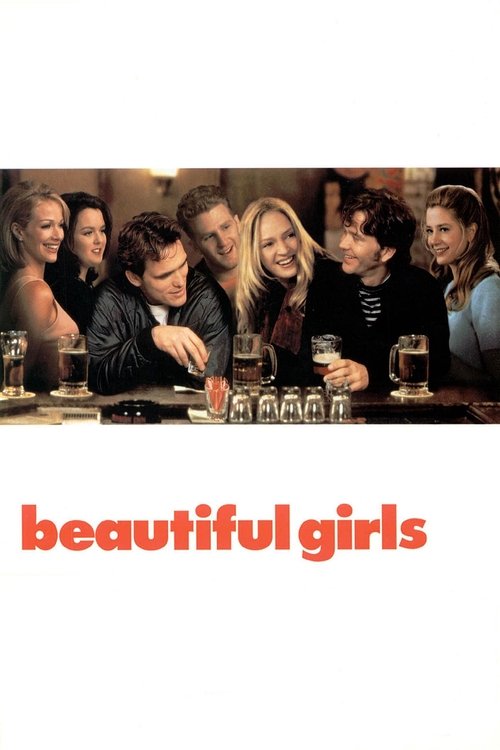
Beautiful Girls
During a snowy winter in the small fictional town of Knight's Ridge, Massachusetts, a group of lifelong buddies hang out, drink and struggle to connect with the women who affect their decisions, dreams and desires.
Working with a moderate budget of $16.0M, the film achieved a respectable showing with $27.0M in global revenue (+69% profit margin).
1 win & 4 nominations


Plot Structure
Story beats plotted across runtime


Narrative Arc
Emotional journey through the story's key moments
Story Circle
Blueprint 15-beat structure
Arcplot Score Breakdown
Weighted: Precision (70%) + Arc (15%) + Theme (15%)
Beautiful Girls (1996) reveals carefully calibrated narrative architecture, characteristic of Ted Demme's storytelling approach. This structural analysis examines how the film's 15-point plot structure maps to proven narrative frameworks across 1 hour and 52 minutes. With an Arcplot score of 6.8, the film balances conventional beats with creative variation.
Characters
Cast & narrative archetypes

Willie Conway
Marty
Tommy "Birdman" Rowland
Paul Kirkwood
Marty's Wife (Mo)
Andera
Gina Barrisano
Marty's Cousin (Sharon Cassidy)
Marissa
Jan
Main Cast & Characters
Willie Conway
Played by Timothy Hutton
A piano player who returns to his snowy hometown for his high school reunion, questioning his relationship and life choices.
Marty
Played by Matt Dillon
Willie's childhood friend, a married man struggling with temptation and commitment issues.
Tommy "Birdman" Rowland
Played by Michael Rapaport
A charismatic but immature construction worker still pining for his high school sweetheart.
Paul Kirkwood
Played by Max Perlich
The cynical, foul-mouthed member of the group who challenges everyone's illusions about women and relationships.
Marty's Wife (Mo)
Played by Annabeth Gish
Marty's wife who suspects his wandering eye and struggles with insecurity about aging.
Andera
Played by Mira Sorvino
A beautiful local woman who becomes the object of Marty's infatuation, testing his marriage.
Gina Barrisano
Played by Rosie O'Donnell
A smart, confident neighbor and veterinarian assistant who connects with Willie.
Marty's Cousin (Sharon Cassidy)
Played by Uma Thurman
A sophisticated model who represents unattainable beauty and becomes Tommy's obsession.
Marissa
Played by Natalie Portman
A precocious 13-year-old neighbor who develops a mature friendship with Willie, offering wise perspectives beyond her years.
Jan
Played by Mira Sorvino
Willie's girlfriend in Chicago, whose relationship with him is strained by distance and uncertainty.
Structural Analysis
The Status Quo at 1 minutes (1% through the runtime) establishes Willie Conway plays piano in a Chicago bar, looking disconnected and unfulfilled. His life is marked by indecision about his girlfriend Tracy and uncertainty about his future.. Of particular interest, this early placement immediately immerses viewers in the story world.
The inciting incident occurs at 13 minutes when Willie meets his precocious 13-year-old neighbor Marty, who engages him in surprisingly mature conversation. This encounter and reconnecting with his old flame Andera disrupts his emotional numbness, forcing him to confront his arrested development.. At 12% through the film, this Disruption aligns precisely with traditional story structure. This beat shifts the emotional landscape, launching the protagonist into the central conflict.
The First Threshold at 29 minutes marks the transition into Act II, occurring at 26% of the runtime. This shows the protagonist's commitment to Willie decides to actively pursue reconnecting with Andera, his high school sweetheart, rather than just passively attending the reunion. He chooses to explore whether his past holds answers to his present confusion about commitment., moving from reaction to action.
At 57 minutes, the Midpoint arrives at 50% of the runtime—precisely centered, creating perfect narrative symmetry. The analysis reveals that this crucial beat At the reunion, Willie discovers Andera is in a serious relationship. His romantic fantasy crashes. Simultaneously, Gina delivers her "Beautiful Girls" speech to the men, calling out their impossible standards and refusal to accept real women. False victory becomes false defeat., fundamentally raising what's at risk. The emotional intensity shifts, dividing the narrative into clear before-and-after phases.
The Collapse moment at 84 minutes (75% through) represents the emotional nadir. Here, Multiple relationships hit rock bottom: Paul and Jan's marriage implodes in painful confrontation; Willie definitively loses Andera; Tracy arrives from Chicago and Willie cannot commit to her. The dream of recapturing youth or finding perfect love dies., illustrates the protagonist at their lowest point. This beat's placement in the final quarter sets up the climactic reversal.
The Second Threshold at 90 minutes initiates the final act resolution at 80% of the runtime. Through Marty's wisdom and witnessing his friends' pain, Willie realizes that waiting for perfection means losing real love. He understands that Tracy, despite not being a fantasy, represents genuine connection. He must choose growth over comfort in nostalgia., demonstrating the transformation achieved throughout the journey.
Emotional Journey
Beautiful Girls's emotional architecture traces a deliberate progression across 15 carefully calibrated beats.
Narrative Framework
This structural analysis employs a 15-point narrative structure framework that maps key story moments. By mapping Beautiful Girls against these established plot points, we can identify how Ted Demme utilizes or subverts traditional narrative conventions. The plot point approach reveals not only adherence to structural principles but also creative choices that distinguish Beautiful Girls within the comedy genre.
Ted Demme's Structural Approach
Among the 4 Ted Demme films analyzed on Arcplot, the average structural score is 7.1, reflecting strong command of classical structure. Beautiful Girls takes a more unconventional approach compared to the director's typical style. For comparative analysis, explore the complete Ted Demme filmography.
Comparative Analysis
Additional comedy films include The Bad Guys, Ella Enchanted and The Evening Star. For more Ted Demme analyses, see Life, The Ref and Blow.
Plot Points by Act
Act I
SetupStatus Quo
Willie Conway plays piano in a Chicago bar, looking disconnected and unfulfilled. His life is marked by indecision about his girlfriend Tracy and uncertainty about his future.
Theme
Early conversation among the guys about women and commitment hints at the film's theme: the need to stop chasing fantasy and accept real, imperfect love. The question of growing up versus holding onto youth is established.
Worldbuilding
Willie returns to his snowy hometown of Knight's Ridge, Massachusetts for his high school reunion. We meet the ensemble: his married friend Paul, commitment-phobic Tommy, lovelorn Michael, and others. The guys gather at the local bar, discussing women, jobs, and the disappointments of adult life versus their youthful dreams.
Disruption
Willie meets his precocious 13-year-old neighbor Marty, who engages him in surprisingly mature conversation. This encounter and reconnecting with his old flame Andera disrupts his emotional numbness, forcing him to confront his arrested development.
Resistance
Willie debates his feelings about Tracy while navigating renewed connection with Andera and philosophical conversations with young Marty. His friends' various relationship disasters serve as cautionary tales. Tommy obsesses over a supermodel in a magazine while Paul's marriage shows cracks. Willie resists admitting his commitment issues.
Act II
ConfrontationFirst Threshold
Willie decides to actively pursue reconnecting with Andera, his high school sweetheart, rather than just passively attending the reunion. He chooses to explore whether his past holds answers to his present confusion about commitment.
Mirror World
Willie's deepening friendship with 13-year-old Marty becomes the thematic mirror. Her wisdom beyond her years and acceptance of imperfection contrasts with the adult men's immature fantasy-chasing. She represents emotional maturity Willie needs to learn.
Premise
The ensemble explores various romantic entanglements: Willie pursues Andera while Tracy calls from Chicago; Tommy's obsession with fantasy beauty; Paul's crumbling marriage; Michael's unrequited love for his roommate Gina. Reunion events and bar gatherings showcase men grappling with the gap between romantic ideals and reality.
Midpoint
At the reunion, Willie discovers Andera is in a serious relationship. His romantic fantasy crashes. Simultaneously, Gina delivers her "Beautiful Girls" speech to the men, calling out their impossible standards and refusal to accept real women. False victory becomes false defeat.
Opposition
Willie spirals deeper into confusion about Tracy. Tommy's fantasy fixation intensifies. Paul's wife Jan reaches her breaking point. Michael continues pining hopelessly. The winter cold and claustrophobia of the small town mirror the characters' emotional paralysis. Everyone's flaws and fears close in.
Collapse
Multiple relationships hit rock bottom: Paul and Jan's marriage implodes in painful confrontation; Willie definitively loses Andera; Tracy arrives from Chicago and Willie cannot commit to her. The dream of recapturing youth or finding perfect love dies.
Crisis
Willie sits in darkness processing his failures and fears. Conversations with Marty and his friends reveal the depth of their shared struggle: the inability to accept imperfection and move forward. The men face their emotional immaturity in the harsh light of consequences.
Act III
ResolutionSecond Threshold
Through Marty's wisdom and witnessing his friends' pain, Willie realizes that waiting for perfection means losing real love. He understands that Tracy, despite not being a fantasy, represents genuine connection. He must choose growth over comfort in nostalgia.
Synthesis
Willie pursues Tracy to make a real commitment. Final conversations among the men show tentative steps toward maturity: accepting reality, making hard choices, letting go of fantasies. Marty gives Willie her blessing to grow up. The snowy hometown becomes a place of resolution rather than escape.
Transformation
Willie, having made peace with adulthood and imperfection, shares a final goodbye with Marty that shows his emotional growth. He returns to Chicago ready to commit to Tracy, transformed from a man running from life to one willing to embrace it.