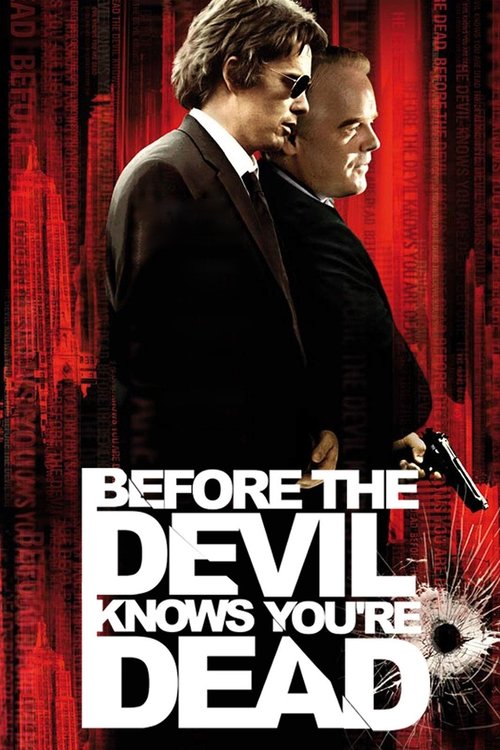
Before the Devil Knows You're Dead
When two brothers organize the robbery of their parents' jewelry store, the job goes horribly wrong, triggering a series of events that send them and their family hurtling towards a shattering climax.
Working with a mid-range budget of $18.0M, the film achieved a modest success with $25.0M in global revenue (+39% profit margin).
17 wins & 28 nominations


Plot Structure
Story beats plotted across runtime


Narrative Arc
Emotional journey through the story's key moments
Story Circle
Blueprint 15-beat structure
Arcplot Score Breakdown
Weighted: Precision (70%) + Arc (15%) + Theme (15%)
Before the Devil Knows You're Dead (2007) showcases carefully calibrated narrative architecture, characteristic of Sidney Lumet's storytelling approach. This structural analysis examines how the film's 15-point plot structure maps to proven narrative frameworks across 1 hour and 57 minutes. With an Arcplot score of 7.1, the film balances conventional beats with creative variation.
Characters
Cast & narrative archetypes

Andy Hanson
Hank Hanson
Charles Hanson
Gina Hanson
Bobby Lasorda
Nanette Hanson
Main Cast & Characters
Andy Hanson
Played by Philip Seymour Hoffman
A corporate executive with mounting debts and a drug addiction who orchestrates a jewelry store robbery that spirals into tragedy.
Hank Hanson
Played by Ethan Hawke
Andy's weak-willed younger brother who reluctantly participates in the robbery and struggles with guilt and moral weakness.
Charles Hanson
Played by Albert Finney
The brothers' retired father who becomes consumed with investigating the robbery that killed his wife.
Gina Hanson
Played by Marisa Tomei
Andy's dissatisfied wife who is having an affair with his brother Hank, creating additional family dysfunction.
Bobby Lasorda
Played by Brian F. O'Byrne
The inept criminal hired to rob the jewelry store who panics and shoots the mother, setting the tragedy in motion.
Nanette Hanson
Played by Rosemary Harris
The brothers' mother who owns the jewelry store targeted in the robbery and is killed during the botched heist.
Structural Analysis
The Status Quo at 1 minutes (1% through the runtime) establishes Andy and Gina in a Brazilian hotel room having sex. Andy appears successful but desperate, clinging to pleasure while discussing embezzlement from his job. Establishes his empty life masked by material success.. Structural examination shows that this early placement immediately immerses viewers in the story world.
The inciting incident occurs at 13 minutes when The robbery goes catastrophically wrong - their mother Nanette is working the register instead of the usual employee. The hired criminal shoots and kills her. The "victimless crime" becomes matricide.. At 11% through the film, this Disruption aligns precisely with traditional story structure. This beat shifts the emotional landscape, launching the protagonist into the central conflict.
The First Threshold at 29 minutes marks the transition into Act II, occurring at 25% of the runtime. This illustrates the protagonist's commitment to Andy chooses to double down on the crime rather than confess. He decides they must eliminate the wounded robber who can identify them, committing fully to a path of escalating violence and deception., moving from reaction to action.
At 57 minutes, the Midpoint arrives at 49% of the runtime—precisely centered, creating perfect narrative symmetry. Structural examination shows that this crucial beat Charles discovers Hank was involved in the robbery that killed his wife. False defeat - the father's investigation has exposed the first brother. The secret can no longer hold. Stakes escalate from concealment to family destruction., fundamentally raising what's at risk. The emotional intensity shifts, dividing the narrative into clear before-and-after phases.
The Collapse moment at 86 minutes (74% through) represents the emotional nadir. Here, Andy discovers Gina and Hank's affair - his wife has been sleeping with his brother. Complete betrayal. The whiff of death - his marriage, family, and identity as the "successful brother" all die. He has lost everything he thought he controlled., shows the protagonist at their lowest point. This beat's placement in the final quarter sets up the climactic reversal.
The Second Threshold at 92 minutes initiates the final act resolution at 79% of the runtime. Andy makes final choice: murder Hank. No redemption, no synthesis of lessons learned - instead, complete moral collapse. He chooses fratricidal violence as solution. The synthesis is corruption, not growth. Negative character arc confirmed., demonstrating the transformation achieved throughout the journey.
Emotional Journey
Before the Devil Knows You're Dead's emotional architecture traces a deliberate progression across 15 carefully calibrated beats.
Narrative Framework
This structural analysis employs structural analysis methodology used to understand storytelling architecture. By mapping Before the Devil Knows You're Dead against these established plot points, we can identify how Sidney Lumet utilizes or subverts traditional narrative conventions. The plot point approach reveals not only adherence to structural principles but also creative choices that distinguish Before the Devil Knows You're Dead within the crime genre.
Sidney Lumet's Structural Approach
Among the 15 Sidney Lumet films analyzed on Arcplot, the average structural score is 6.8, demonstrating varied approaches to story architecture. Before the Devil Knows You're Dead represents one of the director's most structurally precise works. For comparative analysis, explore the complete Sidney Lumet filmography.
Comparative Analysis
Additional crime films include The Bad Guys, Rustom and The Whole Ten Yards. For more Sidney Lumet analyses, see Guilty as Sin, Dog Day Afternoon and Murder on the Orient Express.
Plot Points by Act
Act I
SetupStatus Quo
Andy and Gina in a Brazilian hotel room having sex. Andy appears successful but desperate, clinging to pleasure while discussing embezzlement from his job. Establishes his empty life masked by material success.
Theme
Andy pitches the robbery scheme to Hank: "Nobody gets hurt." The tragic irony - the theme of family destruction through greed and the lie that crime can be victimless. Foreshadows their mother's death.
Worldbuilding
Establishes the Hanson family dysfunction: Andy's financial crimes and drug use, Hank's weakness and debt to criminals, their parents' jewelry store, sibling rivalry, and the desperate need for money that drives the plot.
Disruption
The robbery goes catastrophically wrong - their mother Nanette is working the register instead of the usual employee. The hired criminal shoots and kills her. The "victimless crime" becomes matricide.
Resistance
Aftermath of the robbery shown from multiple perspectives. Andy tries to manage the fallout while concealing his involvement. Hank wrestles with guilt. Their father Charles grieves. The brothers debate whether to confess or continue the cover-up.
Act II
ConfrontationFirst Threshold
Andy chooses to double down on the crime rather than confess. He decides they must eliminate the wounded robber who can identify them, committing fully to a path of escalating violence and deception.
Mirror World
Andy's relationship with his wife Gina deepens as subplot - she represents what he's destroying through his choices. She knows about his embezzlement and affairs, mirroring his moral corruption. Their marriage is loveless transaction.
Premise
The "promise of the premise" - watching a crime unravel from multiple angles. The nonlinear structure reveals how each character's choices led to catastrophe. Andy manipulates, Hank weakens, relationships fracture, and the family disintegrates.
Midpoint
Charles discovers Hank was involved in the robbery that killed his wife. False defeat - the father's investigation has exposed the first brother. The secret can no longer hold. Stakes escalate from concealment to family destruction.
Opposition
Everything closes in: Charles confronts Hank with evidence. Andy's embezzlement is discovered at work. Gina reveals her affair with Hank. The criminal world demands payment. Each lie spawns new crises as the brothers turn on each other.
Collapse
Andy discovers Gina and Hank's affair - his wife has been sleeping with his brother. Complete betrayal. The whiff of death - his marriage, family, and identity as the "successful brother" all die. He has lost everything he thought he controlled.
Crisis
Andy spirals into rage and despair. Confronts his father, who rejects him. Takes more drugs. The dark night - facing that his scheme has destroyed his mother, his marriage, his family, and himself. Pure emotional devastation.
Act III
ResolutionSecond Threshold
Andy makes final choice: murder Hank. No redemption, no synthesis of lessons learned - instead, complete moral collapse. He chooses fratricidal violence as solution. The synthesis is corruption, not growth. Negative character arc confirmed.
Synthesis
The finale: Andy goes to Hank's apartment to kill him. Confrontation between brothers ends with Andy shooting Hank. Charles arrives and shoots Andy. Father kills son for killing son. The family annihilates itself. Total destruction.
Transformation
Andy lies dying, shot by his father. Final image mirrors opening - Andy in desperate state, but now literally dying rather than metaphorically dead inside. Transformation is complete descent: from empty success to actual death. Corruption arc complete.