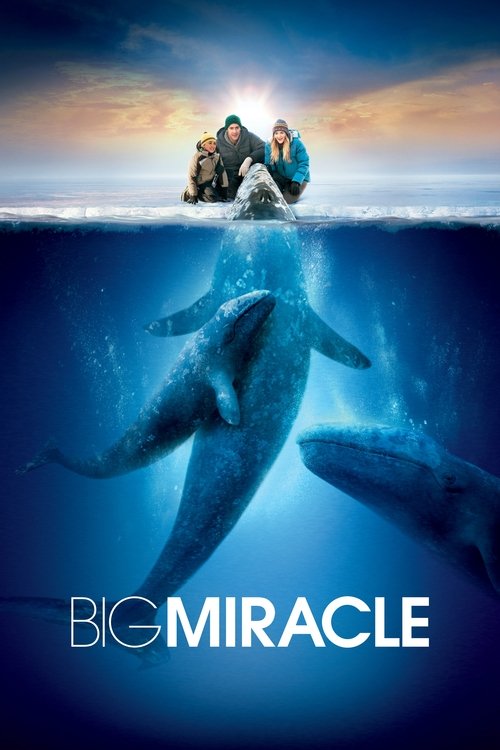
Big Miracle
A small-town news reporter and a Greenpeace volunteer enlist the help of rival superpowers to save three majestic gray whales trapped under the ice of the Arctic Circle.
The film disappointed at the box office against its moderate budget of $40.0M, earning $24.7M globally (-38% loss). While initial box office returns were modest, the film has gained appreciation for its fresh perspective within the adventure genre.


Plot Structure
Story beats plotted across runtime


Narrative Arc
Emotional journey through the story's key moments
Story Circle
Blueprint 15-beat structure
Arcplot Score Breakdown
Weighted: Precision (70%) + Arc (15%) + Theme (15%)
Big Miracle (2012) demonstrates deliberately positioned dramatic framework, characteristic of Ken Kwapis's storytelling approach. This structural analysis examines how the film's 15-point plot structure maps to proven narrative frameworks across 1 hour and 47 minutes. With an Arcplot score of 6.8, the film balances conventional beats with creative variation.
Characters
Cast & narrative archetypes

Adam Carlson
Rachel Kramer
J.W. McGraw
Nathan
Jill Jerard
Colonel Scott Boyer
Main Cast & Characters
Adam Carlson
Played by John Krasinski
Local news reporter in Alaska who breaks the story of trapped whales and becomes central to the rescue effort.
Rachel Kramer
Played by Drew Barrymore
Greenpeace activist who arrives in Alaska to save the whales and reunites with her ex-boyfriend Adam.
J.W. McGraw
Played by Ted Danson
Oil tycoon who provides equipment to help free the whales despite his industry's controversial reputation.
Nathan
Played by Ahmaogak Sweeney
Young Inupiaq boy who first discovers the trapped whales and advocates for their rescue.
Jill Jerard
Played by Kristen Bell
Ambitious news reporter from Los Angeles who arrives to cover the whale story for national media.
Colonel Scott Boyer
Played by Dermot Mulroney
National Guard officer who coordinates military assistance in the rescue operation.
Structural Analysis
The Status Quo at 1 minutes (1% through the runtime) establishes Adam Carlson reports local news in Barrow, Alaska, frustrated with small-town stories and dreaming of escaping to a bigger market. His ordinary world is defined by ambition and disconnection from the community around him.. Of particular interest, this early placement immediately immerses viewers in the story world.
The inciting incident occurs at 14 minutes when Nathan discovers three California gray whales trapped in a rapidly freezing ice hole, miles from open water. The whales are struggling to breathe and will die if the ice closes over them. This natural crisis disrupts everyone's plans and priorities.. At 13% through the film, this Disruption is delayed, allowing extended setup of the story world. This beat shifts the emotional landscape, launching the protagonist into the central conflict.
The First Threshold at 27 minutes marks the transition into Act II, occurring at 25% of the runtime. This reveals the protagonist's commitment to Adam's footage airs nationally, and the whales become an international news sensation. Adam makes the choice to stay in Barrow and cover the story rather than pursue his escape to a bigger market. The mission to save the whales officially begins, drawing worldwide attention and resources., moving from reaction to action.
At 54 minutes, the Midpoint arrives at 50% of the runtime—precisely centered, creating perfect narrative symmetry. Significantly, this crucial beat The smallest whale, nicknamed "Bone," dies despite all efforts. This false defeat raises the stakes dramatically - the rescue is not guaranteed, and the remaining two whales are weakening. The clock is ticking faster, and the methods being used may not be enough., fundamentally raising what's at risk. The emotional intensity shifts, dividing the narrative into clear before-and-after phases.
The Collapse moment at 81 minutes (75% through) represents the emotional nadir. Here, All rescue attempts have failed, equipment is broken, and a massive storm approaches that will freeze the whales in permanently. The coalition fractures as people prepare to give up and go home. Adam faces losing both the story and his rekindled connection with Rachel. The mission appears doomed, representing the death of hope and unity., reveals the protagonist at their lowest point. This beat's placement in the final quarter sets up the climactic reversal.
The Second Threshold at 86 minutes initiates the final act resolution at 80% of the runtime. News arrives that the Soviet icebreaker has been approved and is on its way - Cold War enemies cooperating for a humanitarian cause. This breakthrough, combined with renewed commitment from all parties, provides the synthesis needed. Adam chooses to stay in Barrow permanently. The coalition reunites with new determination for one final push., demonstrating the transformation achieved throughout the journey.
Emotional Journey
Big Miracle's emotional architecture traces a deliberate progression across 15 carefully calibrated beats.
Narrative Framework
This structural analysis employs a 15-point narrative structure framework that maps key story moments. By mapping Big Miracle against these established plot points, we can identify how Ken Kwapis utilizes or subverts traditional narrative conventions. The plot point approach reveals not only adherence to structural principles but also creative choices that distinguish Big Miracle within the adventure genre.
Ken Kwapis's Structural Approach
Among the 8 Ken Kwapis films analyzed on Arcplot, the average structural score is 7.3, reflecting strong command of classical structure. Big Miracle takes a more unconventional approach compared to the director's typical style. For comparative analysis, explore the complete Ken Kwapis filmography.
Comparative Analysis
Additional adventure films include The Black Stallion, The Bad Guys and Puss in Boots. For more Ken Kwapis analyses, see The Sisterhood of the Traveling Pants, Follow That Bird and A Walk in the Woods.
Plot Points by Act
Act I
SetupStatus Quo
Adam Carlson reports local news in Barrow, Alaska, frustrated with small-town stories and dreaming of escaping to a bigger market. His ordinary world is defined by ambition and disconnection from the community around him.
Theme
A local Inupiat elder speaks about the connection between people and nature, suggesting that sometimes what seems small and insignificant can bring the world together. This plants the thematic seed about interconnection and purpose beyond personal ambition.
Worldbuilding
Introduction to Barrow, Alaska in October 1988. We meet Adam Carlson, small-time reporter; Rachel Kramer, Greenpeace activist and Adam's ex-girlfriend; the Inupiat community including Nathan, a young boy; and establish the competing interests: oil companies, environmental activists, indigenous hunters, and media. The cold, isolated setting and the various stakeholders are established.
Disruption
Nathan discovers three California gray whales trapped in a rapidly freezing ice hole, miles from open water. The whales are struggling to breathe and will die if the ice closes over them. This natural crisis disrupts everyone's plans and priorities.
Resistance
Adam films the trapped whales as a human interest story hoping to gain attention from larger networks. Rachel sees it as a cause to mobilize around. The community debates what to do - some want to let nature take its course, others want to help. Traditional vs. modern values clash. The window for saving the whales is closing as winter intensifies.
Act II
ConfrontationFirst Threshold
Adam's footage airs nationally, and the whales become an international news sensation. Adam makes the choice to stay in Barrow and cover the story rather than pursue his escape to a bigger market. The mission to save the whales officially begins, drawing worldwide attention and resources.
Mirror World
Adam and Rachel are forced to work together despite their past relationship and opposing worldviews. Their dynamic represents the film's theme - that people with different values and goals can unite for a common purpose greater than themselves.
Premise
The promise of the premise: an unlikely coalition forms to save the whales. Media circus descends on Barrow. Oil company executives see PR opportunity. Greenpeace mobilizes. The National Guard gets involved. Reagan White House monitors the situation. Volunteers cut breathing holes in the ice. The community comes together in creative problem-solving despite conflicting agendas. Adam and Rachel grow closer.
Midpoint
The smallest whale, nicknamed "Bone," dies despite all efforts. This false defeat raises the stakes dramatically - the rescue is not guaranteed, and the remaining two whales are weakening. The clock is ticking faster, and the methods being used may not be enough.
Opposition
Pressure intensifies as conditions worsen. Ice-breaking equipment fails. Political tensions rise between U.S. and Soviet Union complicate getting a Russian icebreaker to help. The media begins to lose interest. Weather deteriorates. Internal conflicts emerge among the coalition - oil company motives questioned, Greenpeace tactics criticized, indigenous rights debates surface. The whales grow weaker. Time is running out.
Collapse
All rescue attempts have failed, equipment is broken, and a massive storm approaches that will freeze the whales in permanently. The coalition fractures as people prepare to give up and go home. Adam faces losing both the story and his rekindled connection with Rachel. The mission appears doomed, representing the death of hope and unity.
Crisis
In the darkness following the collapse, characters confront what the whales have come to mean. Adam realizes this story matters more than his career ambition. Rachel questions whether activism without collaboration achieves anything. The community reflects on what they've built together. A dark night of the soul where the rescue's failure forces everyone to examine their true values.
Act III
ResolutionSecond Threshold
News arrives that the Soviet icebreaker has been approved and is on its way - Cold War enemies cooperating for a humanitarian cause. This breakthrough, combined with renewed commitment from all parties, provides the synthesis needed. Adam chooses to stay in Barrow permanently. The coalition reunites with new determination for one final push.
Synthesis
The finale brings together all elements: the Soviet icebreaker arrives and begins breaking a channel through the ice. The community maintains the breathing holes. Adam coordinates media coverage that keeps pressure on. Rachel works with the oil company in grudging alliance. Nathan and the Inupiat guide the whales with traditional knowledge. In a climactic push, the whales finally swim through the channel to open water and freedom.
Transformation
Adam reports the whale rescue success not as an outsider seeking escape, but as part of the Barrow community. He and Rachel embrace, reunited. The image mirrors the opening but shows transformation: Adam has found purpose and connection in the place he wanted to leave, understanding that meaningful stories come from caring about community, not career advancement.