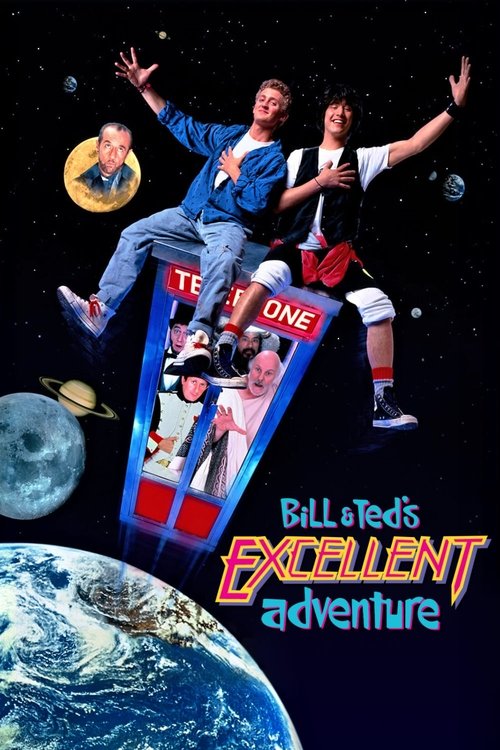
Bill & Ted's Excellent Adventure
Bill and Ted are high school buddies starting a band. They are also about to fail their history class—which means Ted would be sent to military school—but receive help from Rufus, a traveller from a future where their band is the foundation for a perfect society. With the use of Rufus' time machine, Bill and Ted travel to various points in history, returning with important figures to help them complete their final history presentation.
Despite its tight budget of $10.0M, Bill & Ted's Excellent Adventure became a financial success, earning $40.5M worldwide—a 305% return. The film's unique voice attracted moviegoers, demonstrating that strong storytelling can transcend budget limitations.


Plot Structure
Story beats plotted across runtime


Narrative Arc
Emotional journey through the story's key moments
Story Circle
Blueprint 15-beat structure
Arcplot Score Breakdown
Weighted: Precision (70%) + Arc (15%) + Theme (15%)
Bill & Ted's Excellent Adventure (1989) showcases strategically placed narrative design, characteristic of Stephen Herek's storytelling approach. This structural analysis examines how the film's 15-point plot structure maps to proven narrative frameworks across 1 hour and 30 minutes. With an Arcplot score of 7.3, the film balances conventional beats with creative variation.
Characters
Cast & narrative archetypes

Ted "Theodore" Logan
Bill S. Preston, Esq.
Rufus
Princess Joanna
Princess Elizabeth
Main Cast & Characters
Ted "Theodore" Logan
Played by Keanu Reeves
A good-natured but dim-witted high school slacker who dreams of rock stardom with his best friend Bill.
Bill S. Preston, Esq.
Played by Alex Winter
Ted's equally spacey best friend and musical partner who faces failing history class.
Rufus
Played by George Carlin
A mysterious time traveler from the future sent to ensure Bill and Ted pass history and fulfill their destiny.
Princess Joanna
Played by Diane Franklin
A medieval princess who falls for Ted and joins him in the future.
Princess Elizabeth
Played by Kimberley Kates
A medieval princess who falls for Bill and accompanies him to the future.
Structural Analysis
The Status Quo at 1 minutes (1% through the runtime) establishes Bill and Ted jamming poorly in Ted's garage, dreaming of rock stardom while being completely mediocre students. Their bond is strong but their future is dim.. Significantly, this early placement immediately immerses viewers in the story world.
The inciting incident occurs at 10 minutes when Rufus arrives in a time-traveling phone booth at the Circle K. A mysterious stranger from the future offers an impossible solution to their impossible problem.. At 12% through the film, this Disruption aligns precisely with traditional story structure. This beat shifts the emotional landscape, launching the protagonist into the central conflict.
The First Threshold at 22 minutes marks the transition into Act II, occurring at 24% of the runtime. This shows the protagonist's commitment to Bill and Ted actively choose to embark on their time-travel adventure, leaving Napoleon with Ted's little brother and heading to medieval England. They commit to the quest., moving from reaction to action.
At 44 minutes, the Midpoint arrives at 49% of the runtime—precisely centered, creating perfect narrative symmetry. Notably, this crucial beat False victory: Bill and Ted return to San Dimas with all their historical figures, confident they'll ace the presentation. They seem to have succeeded, but chaos is about to erupt. Stakes raise as the historical figures are loose in the mall., fundamentally raising what's at risk. The emotional intensity shifts, dividing the narrative into clear before-and-after phases.
The Collapse moment at 65 minutes (72% through) represents the emotional nadir. Here, All is lost: the historical figures are in jail, the presentation is in one hour, Bill and Ted have no way to save them, and Ted is about to be sent to military school in Alaska. Their dreams die., illustrates the protagonist at their lowest point. This beat's placement in the final quarter sets up the climactic reversal.
The Second Threshold at 70 minutes initiates the final act resolution at 78% of the runtime. Breakthrough synthesis: Bill and Ted realize they can use time travel creatively to solve their problem. They combine what they've learned about history and time to outsmart the system. Keys fall, trash cans appear—their future selves are helping., demonstrating the transformation achieved throughout the journey.
Emotional Journey
Bill & Ted's Excellent Adventure's emotional architecture traces a deliberate progression across 15 carefully calibrated beats.
Narrative Framework
This structural analysis employs a 15-point narrative structure framework that maps key story moments. By mapping Bill & Ted's Excellent Adventure against these established plot points, we can identify how Stephen Herek utilizes or subverts traditional narrative conventions. The plot point approach reveals not only adherence to structural principles but also creative choices that distinguish Bill & Ted's Excellent Adventure within the adventure genre.
Stephen Herek's Structural Approach
Among the 11 Stephen Herek films analyzed on Arcplot, the average structural score is 7.2, reflecting strong command of classical structure. Bill & Ted's Excellent Adventure represents one of the director's most structurally precise works. For comparative analysis, explore the complete Stephen Herek filmography.
Comparative Analysis
Additional adventure films include The Black Stallion, The Bad Guys and Puss in Boots. For more Stephen Herek analyses, see Rock Star, 101 Dalmatians and Critters.
Plot Points by Act
Act I
SetupStatus Quo
Bill and Ted jamming poorly in Ted's garage, dreaming of rock stardom while being completely mediocre students. Their bond is strong but their future is dim.
Theme
Rufus (in future utopia) states: "The music of Wyld Stallyns has brought the world together." The theme: their authenticity and friendship will change everything, even if they don't know it yet.
Worldbuilding
Establishment of Bill and Ted's world: failing history, Ted's dad threatening military school, their band dreams, their genuine friendship, and the upcoming final history presentation that will determine their fate.
Disruption
Rufus arrives in a time-traveling phone booth at the Circle K. A mysterious stranger from the future offers an impossible solution to their impossible problem.
Resistance
Bill and Ted debate whether to believe Rufus, test the phone booth with Napoleon, and gradually accept the reality of time travel. Rufus mentors them on the mission: gather historical figures for their presentation.
Act II
ConfrontationFirst Threshold
Bill and Ted actively choose to embark on their time-travel adventure, leaving Napoleon with Ted's little brother and heading to medieval England. They commit to the quest.
Mirror World
Bill and Ted meet the medieval princesses Joanna and Elizabeth, who represent what they need to learn: people from different times and places can connect through authenticity and openness.
Premise
The "fun and games" of time travel: collecting Billy the Kid, Socrates, Genghis Khan, Joan of Arc, Freud, Beethoven, and Lincoln. Bill and Ted learn history by experiencing it, forming genuine connections with these figures.
Midpoint
False victory: Bill and Ted return to San Dimas with all their historical figures, confident they'll ace the presentation. They seem to have succeeded, but chaos is about to erupt. Stakes raise as the historical figures are loose in the mall.
Opposition
Everything falls apart: the historical figures cause chaos at the mall and get arrested. Ted's dad becomes increasingly antagonistic. Bill and Ted are separated from their presentation material and running out of time.
Collapse
All is lost: the historical figures are in jail, the presentation is in one hour, Bill and Ted have no way to save them, and Ted is about to be sent to military school in Alaska. Their dreams die.
Crisis
Dark night: Bill and Ted sit in despair, seemingly defeated. Then Ted has the realization about using time travel strategically—they can set things up after the presentation to save themselves now.
Act III
ResolutionSecond Threshold
Breakthrough synthesis: Bill and Ted realize they can use time travel creatively to solve their problem. They combine what they've learned about history and time to outsmart the system. Keys fall, trash cans appear—their future selves are helping.
Synthesis
The finale: Bill and Ted execute their plan, free the historical figures, deliver an triumphant presentation that wows the school, save Ted from military school, and win the princesses. Everything comes together.
Transformation
Closing image mirrors opening: Bill and Ted jamming in the garage, but now the princesses have joined them and Rufus confirms their destiny. Same garage, same friendship, but transformed by belief in themselves and their future.