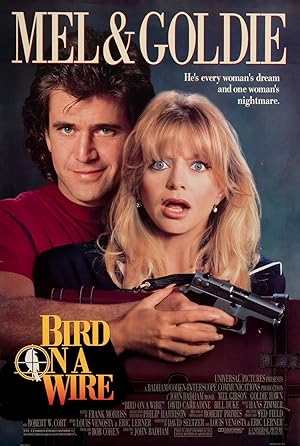
Bird on a Wire
Rick has been given a new identity by the FBI for helping convict a drug dealing FBI agent. Fifteen years later his former fiance recognises him. Rick's FBI 'minder' has been replaced by a corrupt agent who helps the drug dealing FBI agent and his accomplice locate him. There are many subsequent chase scenes as Rick and girlfriend revisit his former haunts.
Despite a moderate budget of $20.0M, Bird on a Wire became a runaway success, earning $138.7M worldwide—a remarkable 593% return.


Plot Structure
Story beats plotted across runtime


Narrative Arc
Emotional journey through the story's key moments
Story Circle
Blueprint 15-beat structure
Arcplot Score Breakdown
Weighted: Precision (70%) + Arc (15%) + Theme (15%)
Bird on a Wire (1990) showcases carefully calibrated dramatic framework, characteristic of John Badham's storytelling approach. This structural analysis examines how the film's 15-point plot structure maps to proven narrative frameworks across 1 hour and 50 minutes. With an Arcplot score of 6.8, the film balances conventional beats with creative variation.
Characters
Cast & narrative archetypes

Rick Jarmin
Marianne Graves
Eugene Sorenson
Albert "Diggs" Diggins
Joe Weyburn
Main Cast & Characters
Rick Jarmin
Played by Mel Gibson
Former federal witness in hiding who must run from corrupt DEA agents when his past catches up with him.
Marianne Graves
Played by Goldie Hawn
A lawyer who reunites with her ex-fiancé after 15 years and gets caught up in his dangerous flight from killers.
Eugene Sorenson
Played by David Carradine
Corrupt DEA agent determined to silence Rick permanently to protect his drug trafficking operation.
Albert "Diggs" Diggins
Played by Bill Duke
Eugene's ruthless partner and hitman who relentlessly pursues Rick and Marianne.
Joe Weyburn
Played by Stephen Tobolowsky
FBI agent and Rick's former handler who tries to help him escape the corrupt DEA agents.
Structural Analysis
The Status Quo at 1 minutes (1% through the runtime) establishes Rick Jarmin works as a gas station attendant under a false identity, living a quiet anonymous life in Detroit as part of the witness protection program after testifying against drug dealers fifteen years ago.. Of particular interest, this early placement immediately immerses viewers in the story world.
The inciting incident occurs at 13 minutes when Marianne stops at Rick's gas station and recognizes him as her former fiancé who disappeared fifteen years ago. At the same moment, the corrupt DEA agents arrive to kill him, forcing Rick to flee with a shocked Marianne.. At 12% through the film, this Disruption aligns precisely with traditional story structure. This beat shifts the emotional landscape, launching the protagonist into the central conflict.
The First Threshold at 28 minutes marks the transition into Act II, occurring at 25% of the runtime. This reveals the protagonist's commitment to After Rick's FBI contact is killed, they realize they cannot trust anyone in law enforcement. Rick chooses to go on the run with Marianne rather than surrender, committing to exposing the corrupt agents themselves., moving from reaction to action.
At 55 minutes, the Midpoint arrives at 50% of the runtime—precisely centered, creating perfect narrative symmetry. Significantly, this crucial beat Rick and Marianne discover evidence that the corrupt DEA agents have been running their own drug operation. They believe they finally have what they need to bring down Sorenson and Diggs and clear Rick's name - a false victory., fundamentally raising what's at risk. The emotional intensity shifts, dividing the narrative into clear before-and-after phases.
The Collapse moment at 83 minutes (75% through) represents the emotional nadir. Here, Rick and Marianne are captured by Sorenson and Diggs. Rick's former colleague who helped set up witness protection is killed. All hope seems lost as they are taken to a zoo to be executed, with no evidence and no allies remaining., shows the protagonist at their lowest point. This beat's placement in the final quarter sets up the climactic reversal.
The Second Threshold at 88 minutes initiates the final act resolution at 80% of the runtime. Rick realizes the zoo environment gives them advantages - he knows the layout from a previous identity working there. He decides to stop running and use his accumulated knowledge from all his identities to fight back., demonstrating the transformation achieved throughout the journey.
Emotional Journey
Bird on a Wire's emotional architecture traces a deliberate progression across 15 carefully calibrated beats.
Narrative Framework
This structural analysis employs a 15-point narrative structure framework that maps key story moments. By mapping Bird on a Wire against these established plot points, we can identify how John Badham utilizes or subverts traditional narrative conventions. The plot point approach reveals not only adherence to structural principles but also creative choices that distinguish Bird on a Wire within the action genre.
John Badham's Structural Approach
Among the 11 John Badham films analyzed on Arcplot, the average structural score is 7.1, reflecting strong command of classical structure. Bird on a Wire takes a more unconventional approach compared to the director's typical style. For comparative analysis, explore the complete John Badham filmography.
Comparative Analysis
Additional action films include The Bad Guys, Puss in Boots and Venom: The Last Dance. For more John Badham analyses, see Nick of Time, Saturday Night Fever and Drop Zone.
Plot Points by Act
Act I
SetupStatus Quo
Rick Jarmin works as a gas station attendant under a false identity, living a quiet anonymous life in Detroit as part of the witness protection program after testifying against drug dealers fifteen years ago.
Theme
Marianne's colleague comments that "you can't keep running from your past forever" as she discusses her upcoming business trip and her pattern of failed relationships since her fiancé disappeared years ago.
Worldbuilding
We establish Rick's new identity as a mechanic, Marianne's successful career as a lawyer, and the release of criminals Sorenson and Diggs from prison who immediately begin hunting for Rick to get revenge for his testimony.
Disruption
Marianne stops at Rick's gas station and recognizes him as her former fiancé who disappeared fifteen years ago. At the same moment, the corrupt DEA agents arrive to kill him, forcing Rick to flee with a shocked Marianne.
Resistance
Rick and Marianne escape in a wild car chase. Rick reluctantly explains his witness protection status to a furious Marianne who feels betrayed. They seek help from his FBI handler, but discover the program has been compromised from within.
Act II
ConfrontationFirst Threshold
After Rick's FBI contact is killed, they realize they cannot trust anyone in law enforcement. Rick chooses to go on the run with Marianne rather than surrender, committing to exposing the corrupt agents themselves.
Mirror World
As Rick and Marianne hide out, their old romantic connection resurfaces. Marianne represents everything Rick gave up for witness protection - love, identity, and authentic connection. She challenges him to stop hiding and fight back.
Premise
Rick and Marianne travel across the country seeking evidence and allies, visiting Rick's various former identities. Comic chase sequences ensue as they stay one step ahead of the killers while rekindling their romance.
Midpoint
Rick and Marianne discover evidence that the corrupt DEA agents have been running their own drug operation. They believe they finally have what they need to bring down Sorenson and Diggs and clear Rick's name - a false victory.
Opposition
The villains intensify their pursuit with more resources. Rick and Marianne's attempts to get help from authorities fail as the corruption runs deeper. They are nearly captured multiple times, and their evidence is destroyed.
Collapse
Rick and Marianne are captured by Sorenson and Diggs. Rick's former colleague who helped set up witness protection is killed. All hope seems lost as they are taken to a zoo to be executed, with no evidence and no allies remaining.
Crisis
Held captive at the closed zoo, Rick and Marianne face their apparent death. Rick apologizes for dragging Marianne into this and for leaving her years ago. They share what may be their final moments together.
Act III
ResolutionSecond Threshold
Rick realizes the zoo environment gives them advantages - he knows the layout from a previous identity working there. He decides to stop running and use his accumulated knowledge from all his identities to fight back.
Synthesis
An elaborate cat-and-mouse battle through the zoo unfolds. Rick uses his wits and various skills learned during his years of hiding. The animals become unwitting allies. Rick and Marianne defeat Sorenson and Diggs in a climactic confrontation.
Transformation
Rick is finally free, his name cleared. He and Marianne embrace, no longer hiding or running. Rick can now live openly with his true identity and the woman he loves - the opposite of his anonymous, isolated existence at the start.