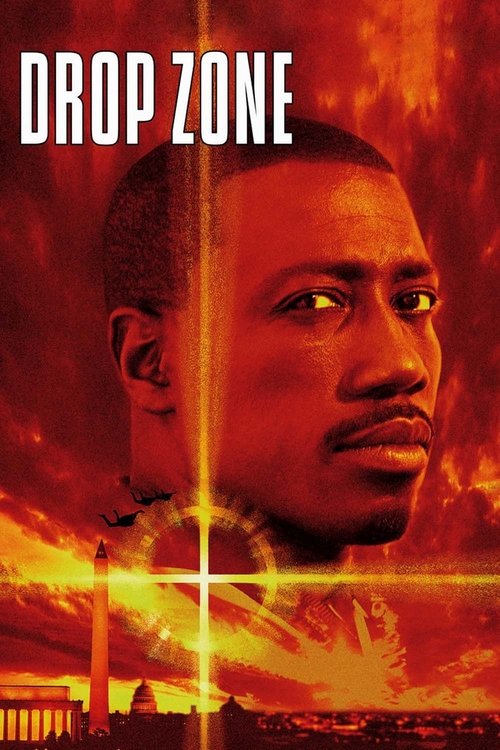
Drop Zone
A daring prison break from an airliner at 30,000 feet leaves U.S. Marshal Pete Nessip mourning a brother and gunning for revenge. After being ordered to turn in his badge, he seeks out Jessie Crossman, a noted skydiver, and offers to sponsor her crew for the annual Independence Day parachuting show in Washington, D.C., if she trains him. Meanwhile, the mastermind behind the mid-air jailbreak is planning a daring computer theft on Independence Day.
Working with a mid-range budget of $45.0M, the film achieved a respectable showing with $62.0M in global revenue (+38% profit margin).


Plot Structure
Story beats plotted across runtime


Narrative Arc
Emotional journey through the story's key moments
Story Circle
Blueprint 15-beat structure
Arcplot Score Breakdown
Weighted: Precision (70%) + Arc (15%) + Theme (15%)
Drop Zone (1994) showcases carefully calibrated narrative architecture, characteristic of John Badham's storytelling approach. This structural analysis examines how the film's 15-point plot structure maps to proven narrative frameworks across 1 hour and 41 minutes. With an Arcplot score of 7.4, the film balances conventional beats with creative variation.
Characters
Cast & narrative archetypes

Pete Nessip
Ty Moncrief
Jessie Crossman
Swoop
Selkirk
Main Cast & Characters
Pete Nessip
Played by Wesley Snipes
A U.S. Marshal who infiltrates the skydiving community to catch his brother's killers and recover stolen computer codes.
Ty Moncrief
Played by Gary Busey
A charismatic ex-DEA agent turned skydiving expert who leads a crew of criminals stealing government secrets.
Jessie Crossman
Played by Yancy Butler
A skilled and independent skydiving instructor who becomes Pete's mentor and romantic interest.
Swoop
Played by Michael Jeter
A wild and unpredictable member of Ty's crew who serves as comic relief and chaos agent.
Selkirk
Played by Kyle Secor
A cold and calculating member of Ty's criminal crew, serving as enforcer.
Structural Analysis
The Status Quo at 1 minutes (1% through the runtime) establishes U.S. Marshal Pete Nessip and his brother Terry are competent, confident law enforcement partners escorting a dangerous computer hacker on a commercial flight. They work well together, exemplifying professional brotherhood.. The analysis reveals that this early placement immediately immerses viewers in the story world.
The inciting incident occurs at 11 minutes when Skydiving hijackers led by Ty Moncrief assault the plane mid-flight. In the chaos, Terry is killed and Leedy is extracted via parachute. Pete is left alive but devastated, having failed to protect his brother.. At 11% through the film, this Disruption aligns precisely with traditional story structure. This beat shifts the emotional landscape, launching the protagonist into the central conflict.
The First Threshold at 24 minutes marks the transition into Act II, occurring at 24% of the runtime. This illustrates the protagonist's commitment to Pete makes the active choice to investigate independently. He travels to the skydiving drop zone where he believes the hijackers operate, committing to enter a world he doesn't understand to find his brother's killers., moving from reaction to action.
At 50 minutes, the Midpoint arrives at 50% of the runtime—precisely centered, creating perfect narrative symmetry. Significantly, this crucial beat Pete discovers the scope of the conspiracy - Ty is planning to use skydiving techniques for a major criminal operation (DEA computer theft). Stakes raise dramatically. Pete's cover is compromised when Ty becomes suspicious of him. False defeat as Pete realizes he's in over his head., fundamentally raising what's at risk. The emotional intensity shifts, dividing the narrative into clear before-and-after phases.
The Collapse moment at 75 minutes (75% through) represents the emotional nadir. Here, Jessie is captured or severely endangered by Ty's crew. Pete faces the possibility of losing another person he cares about. The "whiff of death" as Pete confronts his deepest fear - his inability to save those close to him due to his need for control., shows the protagonist at their lowest point. This beat's placement in the final quarter sets up the climactic reversal.
The Second Threshold at 80 minutes initiates the final act resolution at 79% of the runtime. Pete synthesizes his marshal training with his new skydiving skills and Jessie's philosophy. He realizes he must "let go" - trust himself in the air to defeat Ty. He chooses to confront the criminals in their element: mid-air during the heist., demonstrating the transformation achieved throughout the journey.
Emotional Journey
Drop Zone's emotional architecture traces a deliberate progression across 15 carefully calibrated beats.
Narrative Framework
This structural analysis employs a 15-point narrative structure framework that maps key story moments. By mapping Drop Zone against these established plot points, we can identify how John Badham utilizes or subverts traditional narrative conventions. The plot point approach reveals not only adherence to structural principles but also creative choices that distinguish Drop Zone within the action genre.
John Badham's Structural Approach
Among the 11 John Badham films analyzed on Arcplot, the average structural score is 7.1, reflecting strong command of classical structure. Drop Zone represents one of the director's most structurally precise works. For comparative analysis, explore the complete John Badham filmography.
Comparative Analysis
Additional action films include The Bad Guys, Puss in Boots and Venom: The Last Dance. For more John Badham analyses, see Nick of Time, Saturday Night Fever and Point of No Return.
Plot Points by Act
Act I
SetupStatus Quo
U.S. Marshal Pete Nessip and his brother Terry are competent, confident law enforcement partners escorting a dangerous computer hacker on a commercial flight. They work well together, exemplifying professional brotherhood.
Theme
Terry tells Pete about trust and taking risks - "You gotta learn to let go sometimes." The theme of trust, control, and calculated risk-taking is established.
Worldbuilding
The airplane escort mission is established. We meet the brothers' dynamic, the prisoner Earl Leedy, and understand Pete's by-the-book approach to law enforcement. The stakes of the transport mission are laid out.
Disruption
Skydiving hijackers led by Ty Moncrief assault the plane mid-flight. In the chaos, Terry is killed and Leedy is extracted via parachute. Pete is left alive but devastated, having failed to protect his brother.
Resistance
Pete struggles with guilt and grief. The official investigation rules it an accident. Pete debates whether to pursue the truth alone or accept the official version. He resists the idea that he must enter the unfamiliar world of skydiving to solve the case.
Act II
ConfrontationFirst Threshold
Pete makes the active choice to investigate independently. He travels to the skydiving drop zone where he believes the hijackers operate, committing to enter a world he doesn't understand to find his brother's killers.
Mirror World
Pete meets Jessie Crossman, a tough, experienced skydiver and instructor who embodies the "let go" philosophy his brother mentioned. She represents everything Pete needs to learn - trust, surrender of control, and taking leaps of faith.
Premise
Pete learns to skydive under Jessie's instruction while investigating the drop zone community. Fish-out-of-water sequences as the ground-bound marshal learns to fly. He infiltrates the skydiving world, getting closer to Ty's crew while developing feelings for Jessie.
Midpoint
Pete discovers the scope of the conspiracy - Ty is planning to use skydiving techniques for a major criminal operation (DEA computer theft). Stakes raise dramatically. Pete's cover is compromised when Ty becomes suspicious of him. False defeat as Pete realizes he's in over his head.
Opposition
Ty's crew closes in on Pete. The criminal plan accelerates. Pete's inexperience in skydiving becomes a liability. Jessie is drawn into danger. The antagonists tighten their grip, and Pete's marshal skills aren't enough in this aerial world.
Collapse
Jessie is captured or severely endangered by Ty's crew. Pete faces the possibility of losing another person he cares about. The "whiff of death" as Pete confronts his deepest fear - his inability to save those close to him due to his need for control.
Crisis
Pete's dark night. He must confront that his brother died because Pete couldn't let go of control. To save Jessie and stop Ty, he must embrace the very thing he fears - trusting in freefall, both literal and metaphorical.
Act III
ResolutionSecond Threshold
Pete synthesizes his marshal training with his new skydiving skills and Jessie's philosophy. He realizes he must "let go" - trust himself in the air to defeat Ty. He chooses to confront the criminals in their element: mid-air during the heist.
Synthesis
Aerial finale. Pete skydives into Ty's airborne heist operation. Mid-air combat combining marshal skills with skydiving technique. Pete saves Jessie, defeats Ty, and recovers the stolen data. He has become both marshal and skydiver - controlling by letting go.
Transformation
Pete, now a certified skydiver, jumps with confidence and joy alongside Jessie. Where the opening showed rigid control, the closing shows earned freedom. He honors Terry's memory by embodying the lesson: trust, let go, take the leap.