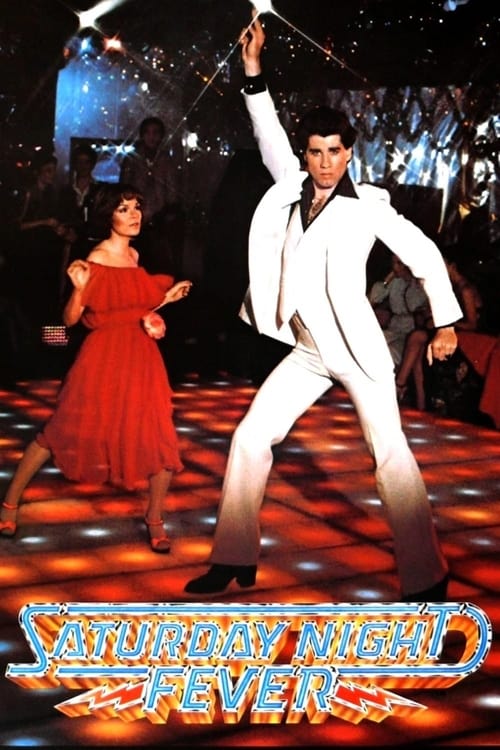
Saturday Night Fever
Tony spends his Saturdays at a disco where his stylish moves raise his popularity among the patrons. But his life outside the disco is not easy and things change when he gets attracted to Stephanie.
Despite its tight budget of $3.5M, Saturday Night Fever became a runaway success, earning $237.1M worldwide—a remarkable 6675% return. The film's distinctive approach found its audience, confirming that strong storytelling can transcend budget limitations.
Nominated for 1 Oscar. 6 wins & 14 nominations


Plot Structure
Story beats plotted across runtime


Narrative Arc
Emotional journey through the story's key moments
Story Circle
Blueprint 15-beat structure
Arcplot Score Breakdown
Weighted: Precision (70%) + Arc (15%) + Theme (15%)
Saturday Night Fever (1977) exemplifies precise narrative architecture, characteristic of John Badham's storytelling approach. This structural analysis examines how the film's 15-point plot structure maps to proven narrative frameworks across 1 hour and 58 minutes. With an Arcplot score of 7.3, the film balances conventional beats with creative variation.
Characters
Cast & narrative archetypes

Tony Manero
Stephanie Mangano
Annette
Bobby C.
Joey
Double J
Gus
Main Cast & Characters
Tony Manero
Played by John Travolta
A Brooklyn paint store clerk who lives for Saturday nights dancing at the disco, seeking escape from his dead-end life and working-class neighborhood.
Stephanie Mangano
Played by Karen Lynn Gorney
An ambitious young woman who has moved to Manhattan and aspires to transcend her Brooklyn roots, becoming Tony's dance partner and catalyst for change.
Annette
Played by Donna Pescow
A neighborhood girl infatuated with Tony who desperately seeks his romantic attention despite his indifference.
Bobby C.
Played by Barry Miller
Tony's troubled friend who faces an unexpected pregnancy crisis that leads to tragic consequences.
Joey
Played by Joseph Cali
A member of Tony's crew and his protective older brother, torn between street life and settling down.
Double J
Played by Paul Pape
One of Tony's close friends in the gang, participates in the group's disco outings and street activities.
Gus
Played by Bruce Ornstein
Another member of Tony's crew who hangs out at the disco and gets involved in the gang's adventures.
Structural Analysis
The Status Quo at 1 minutes (1% through the runtime) establishes Tony Manero struts through Brooklyn to "Stayin' Alive," carrying paint cans, embodying working-class swagger and showing his ordinary life as a paint store clerk who lives for Saturday nights.. Notably, this early placement immediately immerses viewers in the story world.
The inciting incident occurs at 14 minutes when Tony sees Stephanie Mangano dancing at the disco for the first time. Her sophistication and skill captivate him, representing a world beyond Brooklyn that he suddenly desires to reach.. At 12% through the film, this Disruption aligns precisely with traditional story structure. This beat shifts the emotional landscape, launching the protagonist into the central conflict.
The First Threshold at 30 minutes marks the transition into Act II, occurring at 25% of the runtime. This indicates the protagonist's commitment to Stephanie agrees to be Tony's partner for the upcoming dance competition. Tony makes the active choice to pursue something meaningful beyond just being king of the disco—to genuinely improve himself and win her respect., moving from reaction to action.
At 59 minutes, the Midpoint arrives at 50% of the runtime—precisely centered, creating perfect narrative symmetry. The analysis reveals that this crucial beat False victory: Tony and Stephanie's dance routine peaks in rehearsal and they share an intimate moment. Tony believes he's winning her over and will escape Brooklyn through the competition, but he hasn't truly changed yet., fundamentally raising what's at risk. The emotional intensity shifts, dividing the narrative into clear before-and-after phases.
The Collapse moment at 88 minutes (75% through) represents the emotional nadir. Here, After winning the competition through obvious favoritism over a Puerto Rican couple, Tony's world collapses: Bobby falls to his death from the Verrazano Bridge, and Tony's attempted assault on Stephanie reveals his moral bankruptcy. Everything he valued turns to ashes., reveals the protagonist at their lowest point. This beat's placement in the final quarter sets up the climactic reversal.
The Second Threshold at 94 minutes initiates the final act resolution at 80% of the runtime. At dawn, Tony goes to Stephanie's Manhattan apartment. Having spent the night confronting his demons, he sees clearly for the first time: he must leave Brooklyn behind, not just geographically but spiritually, and become someone worthy of respect., demonstrating the transformation achieved throughout the journey.
Emotional Journey
Saturday Night Fever's emotional architecture traces a deliberate progression across 15 carefully calibrated beats.
Narrative Framework
This structural analysis employs a 15-point narrative structure framework that maps key story moments. By mapping Saturday Night Fever against these established plot points, we can identify how John Badham utilizes or subverts traditional narrative conventions. The plot point approach reveals not only adherence to structural principles but also creative choices that distinguish Saturday Night Fever within the music genre.
John Badham's Structural Approach
Among the 11 John Badham films analyzed on Arcplot, the average structural score is 7.1, reflecting strong command of classical structure. Saturday Night Fever represents one of the director's most structurally precise works. For comparative analysis, explore the complete John Badham filmography.
Comparative Analysis
Additional music films include South Pacific, Dirty Dancing: Havana Nights and Yesterday. For more John Badham analyses, see Nick of Time, Drop Zone and Point of No Return.
Plot Points by Act
Act I
SetupStatus Quo
Tony Manero struts through Brooklyn to "Stayin' Alive," carrying paint cans, embodying working-class swagger and showing his ordinary life as a paint store clerk who lives for Saturday nights.
Theme
Tony's father says "You're going nowhere, just like me," establishing the central theme of transcending one's origins and breaking the cycle of limited ambition in working-class Brooklyn.
Worldbuilding
Establishes Tony's dual life: dead-end paint store job, dysfunctional family dynamics with an unemployed father and favored priest brother, and his gang of friends who worship him as the king of the 2001 Odyssey disco.
Disruption
Tony sees Stephanie Mangano dancing at the disco for the first time. Her sophistication and skill captivate him, representing a world beyond Brooklyn that he suddenly desires to reach.
Resistance
Tony pursues Stephanie, who challenges his worldview with her Manhattan aspirations and cultural pretensions. She represents the bridge to a better life but initially rejects his advances, forcing him to prove he's more than a Brooklyn stereotype.
Act II
ConfrontationFirst Threshold
Stephanie agrees to be Tony's partner for the upcoming dance competition. Tony makes the active choice to pursue something meaningful beyond just being king of the disco—to genuinely improve himself and win her respect.
Mirror World
Tony and Stephanie's rehearsals begin. Their developing relationship serves as the thematic subplot where Stephanie embodies the aspirational life beyond Brooklyn that Tony needs to embrace, challenging his identity and values.
Premise
The "promise of the premise"—training montages, dance rehearsals, disco culture at its peak. Tony navigates his attraction to Stephanie while she pushes him to think beyond Brooklyn, even as his friends spiral into violence and desperation.
Midpoint
False victory: Tony and Stephanie's dance routine peaks in rehearsal and they share an intimate moment. Tony believes he's winning her over and will escape Brooklyn through the competition, but he hasn't truly changed yet.
Opposition
Reality closes in: Tony's brother quits the priesthood, shattering family stability. His friends' toxic behavior escalates. Stephanie keeps him at arm's length. The pressure of his dead-end life intensifies as the competition approaches.
Collapse
After winning the competition through obvious favoritism over a Puerto Rican couple, Tony's world collapses: Bobby falls to his death from the Verrazano Bridge, and Tony's attempted assault on Stephanie reveals his moral bankruptcy. Everything he valued turns to ashes.
Crisis
Tony rides the subway all night in despair, contemplating his own death on the bridge where Bobby died. He processes the loss of his friend, his self-respect, and the realization that disco glory is empty without genuine personal growth.
Act III
ResolutionSecond Threshold
At dawn, Tony goes to Stephanie's Manhattan apartment. Having spent the night confronting his demons, he sees clearly for the first time: he must leave Brooklyn behind, not just geographically but spiritually, and become someone worthy of respect.
Synthesis
Tony apologizes to Stephanie, acknowledging his immaturity and asking only for friendship. She accepts, offering hope for a genuine connection. He commits to leaving his old life behind and building something real, merging his natural talent with newfound self-awareness.
Transformation
Tony and Stephanie sit together in her Manhattan apartment as friends, watching the sunrise. The image mirrors the opening strut but shows transformation: he's no longer the cocky king of Brooklyn but a humbled young man ready to grow beyond his origins.