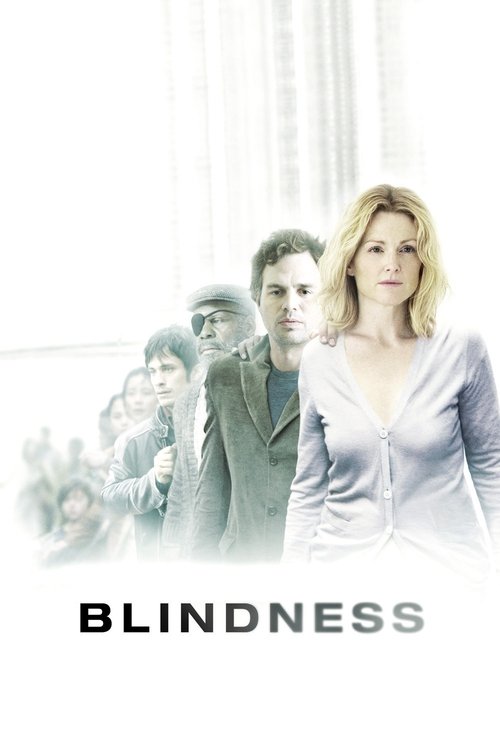
Blindness
When a sudden plague of blindness devastates a city, a small group of the afflicted band together to triumphantly overcome the horrific conditions of their imposed quarantine.
The film struggled financially against its mid-range budget of $25.0M, earning $19.8M globally (-21% loss).
16 wins & 21 nominations


Plot Structure
Story beats plotted across runtime


Narrative Arc
Emotional journey through the story's key moments
Story Circle
Blueprint 15-beat structure
Arcplot Score Breakdown
Weighted: Precision (70%) + Arc (15%) + Theme (15%)
Blindness (2008) demonstrates carefully calibrated dramatic framework, characteristic of Fernando Meirelles's storytelling approach. This structural analysis examines how the film's 15-point plot structure maps to proven narrative frameworks across 2 hours and 1 minutes. With an Arcplot score of 7.1, the film balances conventional beats with creative variation.
Characters
Cast & narrative archetypes

Doctor's Wife
Doctor
King of Ward 3
Man with the Black Eye Patch
Woman with Dark Glasses
Boy with the Squint
First Blind Man
Main Cast & Characters
Doctor's Wife
Played by Julianne Moore
The only person who retains her sight during the epidemic; becomes the group's protector and moral center.
Doctor
Played by Mark Ruffalo
An ophthalmologist who becomes one of the first victims of the white blindness; tries to maintain order and compassion.
King of Ward 3
Played by Gael García Bernal
A brutal criminal who seizes control of the food supply and exploits the blind inmates through violence and sexual assault.
Man with the Black Eye Patch
Played by Danny Glover
A proud, independent accountant who struggles with vulnerability and eventually becomes a key member of the Doctor's group.
Woman with Dark Glasses
Played by Alice Braga
A sex worker who finds dignity and community within the group; forms a maternal bond with the Boy with the Squint.
Boy with the Squint
Played by Mitchell Nye
A young orphaned boy who attaches himself to the Woman with Dark Glasses; represents innocence amid chaos.
First Blind Man
Played by Yusuke Iseya
A car thief who becomes the first known victim of the white blindness epidemic.
Structural Analysis
The Status Quo at 1 minutes (1% through the runtime) establishes A Japanese man sits in his car at a traffic light in a bustling city intersection, surrounded by the ordinary chaos of urban life - a world where sight is taken for granted.. Significantly, this early placement immediately immerses viewers in the story world.
The inciting incident occurs at 15 minutes when The Doctor goes blind. His wife, witnessing his terror, makes the split-second decision to pretend she is also blind so she can accompany him into quarantine - the one sighted person in a world of the blind.. At 12% through the film, this Disruption aligns precisely with traditional story structure. This beat shifts the emotional landscape, launching the protagonist into the central conflict.
The First Threshold at 30 minutes marks the transition into Act II, occurring at 25% of the runtime. This illustrates the protagonist's commitment to The Doctor's Wife commits fully to her deception when the guards threaten violence. She chooses to remain hidden among the blind, taking on the burden of being their secret protector rather than revealing herself and potentially being separated from her husband., moving from reaction to action.
At 61 minutes, the Midpoint arrives at 50% of the runtime—precisely centered, creating perfect narrative symmetry. Of particular interest, this crucial beat The King of Ward 3, a brutal man with a gun, seizes control of the food supply and demands payment - first valuables, then the women themselves. The false security of their small community is shattered as true predators emerge from the chaos., fundamentally raising what's at risk. The emotional intensity shifts, dividing the narrative into clear before-and-after phases.
The Collapse moment at 91 minutes (75% through) represents the emotional nadir. Here, The Doctor's Wife kills the King of Ward 3 with scissors, ending his reign of terror but crossing a threshold of violence. A fire breaks out in the asylum. In the chaos, inmates die. The Girl with Dark Glasses is brutalized. Humanity seems to have completely failed., demonstrates the protagonist at their lowest point. This beat's placement in the final quarter sets up the climactic reversal.
The Second Threshold at 97 minutes initiates the final act resolution at 80% of the runtime. The Doctor's Wife decides to lead the group to her apartment, taking full responsibility as their guide and protector. She embraces her role not as a secret keeper but as a shepherd, using her sight to give them a chance at survival and dignity., demonstrating the transformation achieved throughout the journey.
Emotional Journey
Blindness's emotional architecture traces a deliberate progression across 15 carefully calibrated beats.
Narrative Framework
This structural analysis employs a 15-point narrative structure framework that maps key story moments. By mapping Blindness against these established plot points, we can identify how Fernando Meirelles utilizes or subverts traditional narrative conventions. The plot point approach reveals not only adherence to structural principles but also creative choices that distinguish Blindness within the drama genre.
Fernando Meirelles's Structural Approach
Among the 3 Fernando Meirelles films analyzed on Arcplot, the average structural score is 5.7, showcasing experimental approaches to narrative form. Blindness represents one of the director's most structurally precise works. For comparative analysis, explore the complete Fernando Meirelles filmography.
Comparative Analysis
Additional drama films include After Thomas, South Pacific and Dirty Dancing: Havana Nights. For more Fernando Meirelles analyses, see City of God, The Constant Gardener.
Plot Points by Act
Act I
SetupStatus Quo
A Japanese man sits in his car at a traffic light in a bustling city intersection, surrounded by the ordinary chaos of urban life - a world where sight is taken for granted.
Theme
The Doctor tells his patient, "I can't find anything wrong with your eyes," suggesting that the blindness affecting humanity is not physical but rather a moral and social affliction - we choose not to see.
Worldbuilding
The white blindness spreads through the city. The Japanese man, the thief who stole his car, and the Doctor all succumb to the mysterious epidemic. The government responds with fear, quarantining the blind in an abandoned mental asylum.
Disruption
The Doctor goes blind. His wife, witnessing his terror, makes the split-second decision to pretend she is also blind so she can accompany him into quarantine - the one sighted person in a world of the blind.
Resistance
The Doctor's Wife and her husband arrive at the quarantine facility. She navigates the terrifying new reality of being the only one who can see, debating whether to reveal her secret. She witnesses the cruelty of the guards and the growing desperation of the inmates.
Act II
ConfrontationFirst Threshold
The Doctor's Wife commits fully to her deception when the guards threaten violence. She chooses to remain hidden among the blind, taking on the burden of being their secret protector rather than revealing herself and potentially being separated from her husband.
Mirror World
The Doctor's Wife begins forming bonds with the other ward members - the Girl with Dark Glasses, the Boy, the Old Man with the Black Eyepatch, and others. This makeshift family represents what humanity could be: compassionate, cooperative, and caring despite the darkness.
Premise
The Doctor's Wife secretly guides her ward, helping them survive while maintaining her cover. She organizes food distribution, cleans, and protects them from danger. Her unique position as the only sighted person allows her to witness both the horror and the resilience of human nature.
Midpoint
The King of Ward 3, a brutal man with a gun, seizes control of the food supply and demands payment - first valuables, then the women themselves. The false security of their small community is shattered as true predators emerge from the chaos.
Opposition
Ward 3's tyranny escalates. The women are forced to submit to rape in exchange for food. The Doctor's Wife witnesses unspeakable horrors, her sight becoming a curse. The asylum descends into hell as the outside world collapses and the guards abandon their posts.
Collapse
The Doctor's Wife kills the King of Ward 3 with scissors, ending his reign of terror but crossing a threshold of violence. A fire breaks out in the asylum. In the chaos, inmates die. The Girl with Dark Glasses is brutalized. Humanity seems to have completely failed.
Crisis
The survivors escape the burning asylum into an abandoned, apocalyptic city. The Doctor's Wife leads her blind family through streets filled with garbage, corpses, and feral dogs. She grapples with the weight of what she's seen and done.
Act III
ResolutionSecond Threshold
The Doctor's Wife decides to lead the group to her apartment, taking full responsibility as their guide and protector. She embraces her role not as a secret keeper but as a shepherd, using her sight to give them a chance at survival and dignity.
Synthesis
The group establishes a fragile community in the apartment. The Doctor's Wife cares for them - finding food, water, and maintaining their humanity. They learn to live together, forming genuine connections. Rain falls, cleansing them physically and spiritually.
Transformation
The Japanese man's sight returns. One by one, the blind begin to see again. The Doctor's Wife, who never lost her sight, now sees a world transformed by the experience - a world that has learned, through blindness, what it truly means to see.