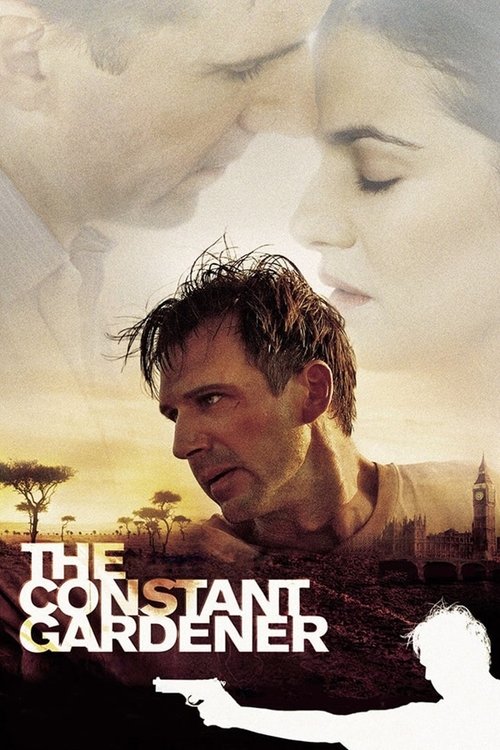
The Constant Gardener
Justin Quayle is a low-level British diplomat who has always gone about his work very quietly, not causing any problems. But after his radical wife Tessa is killed he becomes determined to find out why, thrusting himself into the middle of a very dangerous conspiracy.
Despite a respectable budget of $25.0M, The Constant Gardener became a solid performer, earning $82.5M worldwide—a 230% return.
1 Oscar. 35 wins & 70 nominations


Plot Structure
Story beats plotted across runtime


Narrative Arc
Emotional journey through the story's key moments
Story Circle
Blueprint 15-beat structure
Arcplot Score Breakdown
Weighted: Precision (70%) + Arc (15%) + Theme (15%)
The Constant Gardener (2005) showcases carefully calibrated story structure, characteristic of Fernando Meirelles's storytelling approach. This structural analysis examines how the film's 15-point plot structure maps to proven narrative frameworks across 2 hours and 9 minutes. With an Arcplot score of 6.3, the film takes an unconventional approach to traditional narrative frameworks.
Characters
Cast & narrative archetypes

Justin Quayle
Tessa Quayle
Sandy Woodrow
Dr. Arnold Bluhm
Sir Bernard Pellegrin
Tim Donohue
Main Cast & Characters
Justin Quayle
Played by Ralph Fiennes
A reserved British diplomat who transforms into a determined investigator after his wife's murder, uncovering a pharmaceutical conspiracy.
Tessa Quayle
Played by Rachel Weisz
A passionate activist and Justin's wife who fights against pharmaceutical exploitation in Kenya before her mysterious death.
Sandy Woodrow
Played by Danny Huston
Justin's colleague at the British High Commission who appears supportive but harbors complicated loyalties and secrets.
Dr. Arnold Bluhm
Played by Hubert Koundé
A passionate Belgian doctor and Tessa's close friend who works with her to expose pharmaceutical corruption.
Sir Bernard Pellegrin
Played by Bill Nighy
A high-ranking British Foreign Office official who orchestrates the cover-up of corporate wrongdoing.
Tim Donohue
Played by Donald Sumpter
A cynical journalist who aids Justin in understanding the conspiracy and the dangers he faces.
Structural Analysis
The Status Quo at 1 minutes (1% through the runtime) establishes Justin Quayle tends to his garden in Kenya, establishing his passive, ordered existence as a British diplomat who avoids confrontation and prefers the quiet cultivation of plants over engagement with the world's injustices.. Significantly, this early placement immediately immerses viewers in the story world.
The inciting incident occurs at 15 minutes when Justin receives news that Tessa has been found murdered near Lake Turkana, her body discovered alongside her driver. His ordered world is shattered, and suspicions about her relationship with Dr. Arnold Bluhm surface.. At 12% through the film, this Disruption aligns precisely with traditional story structure. This beat shifts the emotional landscape, launching the protagonist into the central conflict.
The First Threshold at 32 minutes marks the transition into Act II, occurring at 25% of the runtime. This demonstrates the protagonist's commitment to Justin makes the active choice to investigate Tessa's death himself, traveling to the site where her body was found. He commits to uncovering the truth regardless of what he might discover about his wife or the danger to himself., moving from reaction to action.
At 65 minutes, the Midpoint arrives at 50% of the runtime—precisely centered, creating perfect narrative symmetry. The analysis reveals that this crucial beat Justin discovers that Dypraxa, an anti-TB drug, is fatally flawed but KDH is covering up deaths to protect their profits. This false defeat reveals the conspiracy is far larger and more dangerous than he imagined, with his own government complicit., fundamentally raising what's at risk. The emotional intensity shifts, dividing the narrative into clear before-and-after phases.
The Collapse moment at 97 minutes (75% through) represents the emotional nadir. Here, Justin learns the full truth: Tessa was killed specifically because of her investigation, ordered by those he trusted. His cousin Ham is revealed as complicit. All his illusions about his world, his colleagues, and the system he served are destroyed., indicates the protagonist at their lowest point. This beat's placement in the final quarter sets up the climactic reversal.
The Second Threshold at 103 minutes initiates the final act resolution at 80% of the runtime. Justin sends all of Tessa's evidence to her activist contact Ghita, ensuring the truth will be exposed. He then makes the conscious choice to return to Lake Turkana, to the place where Tessa died, accepting his fate while guaranteeing the story survives., demonstrating the transformation achieved throughout the journey.
Emotional Journey
The Constant Gardener's emotional architecture traces a deliberate progression across 15 carefully calibrated beats.
Narrative Framework
This structural analysis employs structural analysis methodology used to understand storytelling architecture. By mapping The Constant Gardener against these established plot points, we can identify how Fernando Meirelles utilizes or subverts traditional narrative conventions. The plot point approach reveals not only adherence to structural principles but also creative choices that distinguish The Constant Gardener within the drama genre.
Fernando Meirelles's Structural Approach
Among the 3 Fernando Meirelles films analyzed on Arcplot, the average structural score is 5.7, showcasing experimental approaches to narrative form. The Constant Gardener represents one of the director's most structurally precise works. For comparative analysis, explore the complete Fernando Meirelles filmography.
Comparative Analysis
Additional drama films include After Thomas, South Pacific and Dirty Dancing: Havana Nights. For more Fernando Meirelles analyses, see City of God, Blindness.
Plot Points by Act
Act I
SetupStatus Quo
Justin Quayle tends to his garden in Kenya, establishing his passive, ordered existence as a British diplomat who avoids confrontation and prefers the quiet cultivation of plants over engagement with the world's injustices.
Theme
Sandy Woodrow tells Justin that Tessa was "too involved" with Africa, articulating the theme: the danger and moral necessity of engagement versus the safety of diplomatic detachment and willful blindness.
Worldbuilding
Through flashbacks and present-day scenes, we learn of Justin and Tessa's meeting, their marriage, her activism, and the world of British diplomatic circles in Kenya where appearance matters more than truth.
Disruption
Justin receives news that Tessa has been found murdered near Lake Turkana, her body discovered alongside her driver. His ordered world is shattered, and suspicions about her relationship with Dr. Arnold Bluhm surface.
Resistance
Justin grapples with grief and suspicion. He debates whether to accept the official narrative of a crime of passion or pursue the truth. He begins examining Tessa's belongings and discovers hints of her secret investigation into pharmaceutical company KDH.
Act II
ConfrontationFirst Threshold
Justin makes the active choice to investigate Tessa's death himself, traveling to the site where her body was found. He commits to uncovering the truth regardless of what he might discover about his wife or the danger to himself.
Mirror World
Through flashbacks, we see Tessa's passionate activism and her investigation into Dypraxa, revealing the thematic counterpoint: her fierce engagement with injustice contrasts with Justin's former passive compliance. Her spirit becomes his guide.
Premise
Justin follows Tessa's trail, meeting her contacts, visiting the clinic, discovering the scope of KDH's drug trials on poor Africans. He transforms from passive gardener to active investigator, traveling to London and Germany to uncover corporate crimes.
Midpoint
Justin discovers that Dypraxa, an anti-TB drug, is fatally flawed but KDH is covering up deaths to protect their profits. This false defeat reveals the conspiracy is far larger and more dangerous than he imagined, with his own government complicit.
Opposition
The forces against Justin intensify. His investigation is monitored, his passport flagged, colleagues warn him off. He travels to Sudan and discovers Arnold Bluhm was murdered too. KDH and British intelligence actively work to stop him and discredit Tessa's memory.
Collapse
Justin learns the full truth: Tessa was killed specifically because of her investigation, ordered by those he trusted. His cousin Ham is revealed as complicit. All his illusions about his world, his colleagues, and the system he served are destroyed.
Crisis
Justin sits with the full weight of his loss and the corruption he's uncovered. He processes that his passive life enabled these horrors, and that Tessa died for a cause he ignored. He must choose whether to expose the truth or retreat to safety.
Act III
ResolutionSecond Threshold
Justin sends all of Tessa's evidence to her activist contact Ghita, ensuring the truth will be exposed. He then makes the conscious choice to return to Lake Turkana, to the place where Tessa died, accepting his fate while guaranteeing the story survives.
Synthesis
Justin returns to Kenya, visiting the places meaningful to him and Tessa. He sits at Lake Turkana where she died, reading her letters, making peace with her memory. At her graveside funeral, her evidence is revealed and the conspiracy is publicly exposed.
Transformation
Justin is killed at the same location as Tessa, completing his transformation from passive gardener to active participant in her cause. His death mirrors hers, but his sacrifice ensures the truth is told. At the funeral, the scandal breaks publicly, vindicating them both.