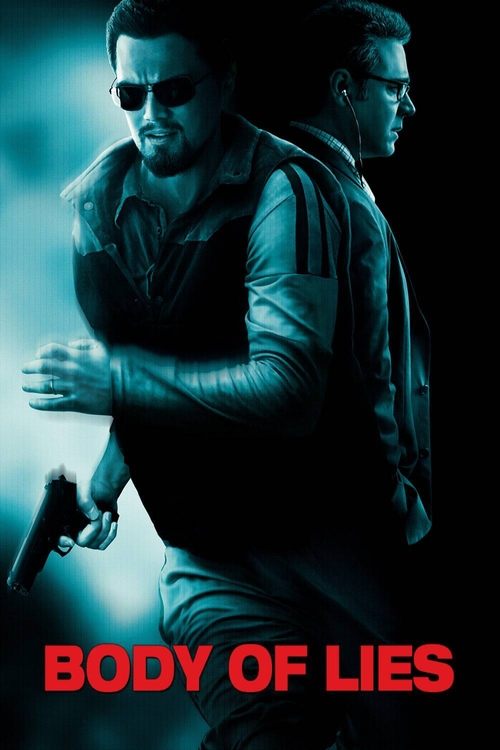
Body of Lies
The CIA’s hunt is on for the mastermind of a wave of terrorist attacks. Roger Ferris is the agency’s man on the ground, moving from place to place, scrambling to stay ahead of ever-shifting events. An eye in the sky – a satellite link – watches Ferris. At the other end of that real-time link is the CIA’s Ed Hoffman, strategizing events from thousands of miles away. And as Ferris nears the target, he discovers trust can be just as dangerous as it is necessary for survival.
Working with a mid-range budget of $70.0M, the film achieved a steady performer with $113.3M in global revenue (+62% profit margin).


Plot Structure
Story beats plotted across runtime


Narrative Arc
Emotional journey through the story's key moments
Story Circle
Blueprint 15-beat structure
Arcplot Score Breakdown
Weighted: Precision (70%) + Arc (15%) + Theme (15%)
Body of Lies (2008) showcases carefully calibrated narrative architecture, characteristic of Ridley Scott's storytelling approach. This structural analysis examines how the film's 15-point plot structure maps to proven narrative frameworks across 2 hours and 8 minutes. With an Arcplot score of 6.5, the film balances conventional beats with creative variation.
Characters
Cast & narrative archetypes

Roger Ferris
Ed Hoffman
Hani Salaam
Aisha
Al-Saleem
Bassam
Main Cast & Characters
Roger Ferris
Played by Leonardo DiCaprio
CIA operative on the ground in the Middle East, running intelligence operations against terrorist networks.
Ed Hoffman
Played by Russell Crowe
CIA handler operating from the US, manipulating operations remotely while managing family life.
Hani Salaam
Played by Mark Strong
Head of Jordanian intelligence, sophisticated and principled, demands honesty and mutual respect.
Aisha
Played by Golshifteh Farahani
Iranian nurse working in Jordan who becomes romantically involved with Ferris.
Al-Saleem
Played by Alon Aboutboul
Elusive terrorist mastermind and leader of the network Ferris is hunting.
Bassam
Played by Oscar Isaac
Jordanian architect recruited by Ferris as a fake terrorist to draw out Al-Saleem.
Structural Analysis
The Status Quo at 1 minutes (1% through the runtime) establishes Roger Ferris operates in the dangerous world of CIA field work in the Middle East, establishing him as a skilled but morally compromised operative navigating a violent landscape of terrorism and deception.. Notably, this early placement immediately immerses viewers in the story world.
The inciting incident occurs at 15 minutes when A botched operation in Iraq forces Ferris to relocate to Jordan. His informant is killed, and Ferris must start over by partnering with Jordanian intelligence chief Hani Salaam, disrupting his existing methods and relationships.. At 12% through the film, this Disruption aligns precisely with traditional story structure. This beat shifts the emotional landscape, launching the protagonist into the central conflict.
The First Threshold at 32 minutes marks the transition into Act II, occurring at 25% of the runtime. This demonstrates the protagonist's commitment to Ferris commits to the Jordan operation, actively choosing to work with Hani while secretly feeding information to Hoffman. He crosses into a world of layered deception where betraying someone becomes inevitable., moving from reaction to action.
At 63 minutes, the Midpoint arrives at 50% of the runtime—precisely centered, creating perfect narrative symmetry. Significantly, this crucial beat Ferris's elaborate plan to create a fake terrorist organization to draw out Al-Saleem appears to be working. False victory - the deception seems successful, but it's built on compounding lies that will inevitably collapse., fundamentally raising what's at risk. The emotional intensity shifts, dividing the narrative into clear before-and-after phases.
The Collapse moment at 96 minutes (75% through) represents the emotional nadir. Here, Aisha is kidnapped by Al-Saleem's men as leverage against Ferris. The innocent person he genuinely cared about becomes a victim of the deception he perpetuated. His lies have endangered the one authentic thing in his life - a whiff of death for love itself., illustrates the protagonist at their lowest point. This beat's placement in the final quarter sets up the climactic reversal.
The Second Threshold at 102 minutes initiates the final act resolution at 79% of the runtime. Ferris surrenders himself to Al-Saleem in exchange for Aisha's freedom. He crosses the final threshold by choosing genuine sacrifice over operational success - his first truly honest act in a career built on deception., demonstrating the transformation achieved throughout the journey.
Emotional Journey
Body of Lies's emotional architecture traces a deliberate progression across 15 carefully calibrated beats.
Narrative Framework
This structural analysis employs a 15-point narrative structure framework that maps key story moments. By mapping Body of Lies against these established plot points, we can identify how Ridley Scott utilizes or subverts traditional narrative conventions. The plot point approach reveals not only adherence to structural principles but also creative choices that distinguish Body of Lies within the action genre.
Ridley Scott's Structural Approach
Among the 24 Ridley Scott films analyzed on Arcplot, the average structural score is 6.5, demonstrating varied approaches to story architecture. Body of Lies represents one of the director's most structurally precise works. For comparative analysis, explore the complete Ridley Scott filmography.
Comparative Analysis
Additional action films include The Bad Guys, Puss in Boots and Venom: The Last Dance. For more Ridley Scott analyses, see Alien, White Squall and American Gangster.
Plot Points by Act
Act I
SetupStatus Quo
Roger Ferris operates in the dangerous world of CIA field work in the Middle East, establishing him as a skilled but morally compromised operative navigating a violent landscape of terrorism and deception.
Theme
Ed Hoffman delivers the thematic statement about the nature of intelligence work and the corrosive effect of constant deception. The theme that trust is the ultimate currency - and the ultimate casualty - in espionage is established.
Worldbuilding
We see Ferris's world: his handler Ed Hoffman micromanages from suburban America while Ferris risks his life in Iraq. The toxic dynamic of remote control warfare and the expendability of field agents is established alongside the hunt for terrorist mastermind Al-Saleem.
Disruption
A botched operation in Iraq forces Ferris to relocate to Jordan. His informant is killed, and Ferris must start over by partnering with Jordanian intelligence chief Hani Salaam, disrupting his existing methods and relationships.
Resistance
Ferris debates how to work with Hani Salaam, whose only rule is "Don't lie to me." Hoffman pressures Ferris to deceive Hani anyway, setting up the central conflict of competing loyalties and incompatible moral codes.
Act II
ConfrontationFirst Threshold
Ferris commits to the Jordan operation, actively choosing to work with Hani while secretly feeding information to Hoffman. He crosses into a world of layered deception where betraying someone becomes inevitable.
Mirror World
Ferris meets Aisha, a Jordanian-Iranian nurse, beginning a relationship that represents everything his spy life destroys - genuine connection, trust, and innocence. She embodies the authentic human connection he's sacrificing.
Premise
The promise of the premise delivers spy thriller goods: Ferris works both angles, cultivating sources, conducting operations, building trust with Hani while deceiving him. An elaborate scheme to create a fake terrorist organization takes shape to draw out Al-Saleem.
Midpoint
Ferris's elaborate plan to create a fake terrorist organization to draw out Al-Saleem appears to be working. False victory - the deception seems successful, but it's built on compounding lies that will inevitably collapse.
Opposition
Everything unravels. Hoffman's interference exposes their operation to Hani, destroying Ferris's carefully built trust. His relationship with Aisha puts her in danger. Al-Saleem proves more capable and aware than expected. The cost of deception accumulates.
Collapse
Aisha is kidnapped by Al-Saleem's men as leverage against Ferris. The innocent person he genuinely cared about becomes a victim of the deception he perpetuated. His lies have endangered the one authentic thing in his life - a whiff of death for love itself.
Crisis
Ferris faces the consequences of the world he's created. He must decide whether to sacrifice himself for Aisha or let operational priorities dictate another innocent's death. His dark night forces him to confront what he's become.
Act III
ResolutionSecond Threshold
Ferris surrenders himself to Al-Saleem in exchange for Aisha's freedom. He crosses the final threshold by choosing genuine sacrifice over operational success - his first truly honest act in a career built on deception.
Synthesis
Ferris is captured and brutally tortured. Hani's men rescue him in an operation that reveals Hani knew more than Ferris ever realized. The final confrontation exposes all the layers of deception, counter-deception, and the true cost of the intelligence game.
Transformation
Ferris, recovering in hospital, sees Hoffman's call and deliberately ignores it, quitting the CIA. He chooses to stay in Jordan to pursue an authentic life with Aisha. The man who lived by lies chooses truth and human connection over the deception that defined him.