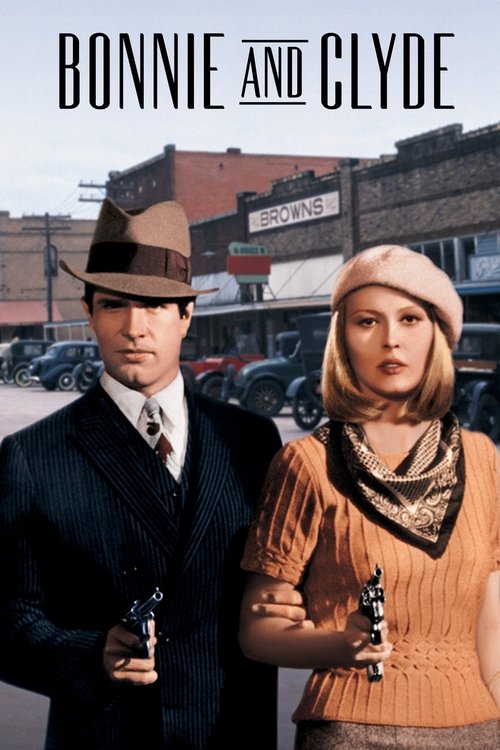
Bonnie and Clyde
In the 1930s, bored European-American waitress Bonnie Parker falls in love with a European-American ex-con named Clyde Barrow and together they start a violent crime spree through the country, stealing cars and robbing banks.
Despite its modest budget of $2.5M, Bonnie and Clyde became a commercial juggernaut, earning $70.0M worldwide—a remarkable 2700% return. The film's compelling narrative attracted moviegoers, showing that strong storytelling can transcend budget limitations.
2 Oscars. 22 wins & 29 nominations


Plot Structure
Story beats plotted across runtime


Narrative Arc
Emotional journey through the story's key moments
Story Circle
Blueprint 15-beat structure
Arcplot Score Breakdown
Weighted: Precision (70%) + Arc (15%) + Theme (15%)
Bonnie and Clyde (1967) exemplifies deliberately positioned story structure, characteristic of Arthur Penn's storytelling approach. This structural analysis examines how the film's 15-point plot structure maps to proven narrative frameworks across 1 hour and 51 minutes. With an Arcplot score of 6.6, the film balances conventional beats with creative variation.
Characters
Cast & narrative archetypes

Bonnie Parker
Clyde Barrow
C.W. Moss
Buck Barrow
Blanche Barrow
Frank Hamer
Main Cast & Characters
Bonnie Parker
Played by Faye Dunaway
A bored waitress who becomes intoxicated by the outlaw lifestyle and fame, transforming into a passionate criminal and poet of her own legend.
Clyde Barrow
Played by Warren Beatty
A charismatic ex-con and aspiring bank robber who seeks notoriety and freedom, hampered by impotence but driven by romantic idealism.
C.W. Moss
Played by Michael J. Pollard
A naive gas station attendant who joins the gang as their driver, torn between loyalty and self-preservation.
Buck Barrow
Played by Gene Hackman
Clyde's older brother and fellow gang member, more traditional and less romanticized about their criminal lifestyle.
Blanche Barrow
Played by Estelle Parsons
Buck's religious, high-strung wife who disapproves of the gang's activities but stays out of love and duty.
Frank Hamer
Played by Denver Pyle
The relentless Texas Ranger determined to track down and kill Bonnie and Clyde.
Structural Analysis
The Status Quo at 1 minutes (1% through the runtime) establishes Bonnie Parker stares at herself in the bedroom mirror, naked and restless, trapped in a dead-end life in small-town Texas during the Depression. She's bored, sexually frustrated, and desperate for something more.. Significantly, this early placement immediately immerses viewers in the story world.
The inciting incident occurs at 13 minutes when Bonnie makes the fateful choice to jump into Clyde's stolen car and leave her old life behind. She doesn't just witness the robbery—she becomes complicit, crossing from spectator to participant. Her ordinary world is shattered.. At 12% through the film, this Disruption aligns precisely with traditional story structure. This beat shifts the emotional landscape, launching the protagonist into the central conflict.
The First Threshold at 27 minutes marks the transition into Act II, occurring at 24% of the runtime. This demonstrates the protagonist's commitment to Clyde's brother Buck and his wife Blanche join the gang, forming the Barrow Gang proper. This marks the transition from a couple on the run to an organized criminal enterprise. The stakes escalate—they're now a notorious gang, and there's no turning back., moving from reaction to action.
At 56 minutes, the Midpoint arrives at 51% of the runtime—precisely centered, creating perfect narrative symmetry. Of particular interest, this crucial beat The gang is ambushed by police at a tourist camp. In the chaotic shootout, Buck is mortally wounded and Blanche is blinded. The false victory of their fame collapses into brutal reality. The fun is over—from here, the walls close in., fundamentally raising what's at risk. The emotional intensity shifts, dividing the narrative into clear before-and-after phases.
The Collapse moment at 83 minutes (75% through) represents the emotional nadir. Here, Bonnie reads her poem "The Story of Bonnie and Clyde" aloud to Clyde, ending with the prophetic lines about their violent deaths. They both know how this ends. The romance is gone, replaced by exhausted resignation. Their death is no longer a distant possibility—it's inevitable., indicates the protagonist at their lowest point. This beat's placement in the final quarter sets up the climactic reversal.
The Second Threshold at 90 minutes initiates the final act resolution at 82% of the runtime. C.W.'s father makes a deal with the authorities to betray Bonnie and Clyde in exchange for leniency for his son. The trap is set. The lovers are sold out by the man they trusted, sealing their doom., demonstrating the transformation achieved throughout the journey.
Emotional Journey
Bonnie and Clyde's emotional architecture traces a deliberate progression across 15 carefully calibrated beats.
Narrative Framework
This structural analysis employs structural analysis methodology used to understand storytelling architecture. By mapping Bonnie and Clyde against these established plot points, we can identify how Arthur Penn utilizes or subverts traditional narrative conventions. The plot point approach reveals not only adherence to structural principles but also creative choices that distinguish Bonnie and Clyde within the crime genre.
Arthur Penn's Structural Approach
Among the 3 Arthur Penn films analyzed on Arcplot, the average structural score is 6.7, demonstrating varied approaches to story architecture. Bonnie and Clyde takes a more unconventional approach compared to the director's typical style. For comparative analysis, explore the complete Arthur Penn filmography.
Comparative Analysis
Additional crime films include The Bad Guys, Rustom and The Whole Ten Yards. For more Arthur Penn analyses, see Little Big Man, The Missouri Breaks.
Plot Points by Act
Act I
SetupStatus Quo
Bonnie Parker stares at herself in the bedroom mirror, naked and restless, trapped in a dead-end life in small-town Texas during the Depression. She's bored, sexually frustrated, and desperate for something more.
Theme
Clyde tells Bonnie he spent time in prison and she asks what it's like. He describes it matter-of-factly, establishing the film's central theme: the romance of rebellion comes with a deadly price, and once you cross that line, there's no going back.
Worldbuilding
Bonnie meets Clyde as he attempts to steal her mother's car. He shows off by robbing a grocery store while she watches, thrilled. Their chemistry is immediate and electric, though Clyde reveals he's impotent. The Depression-era world is established: desperation, poverty, and the thrill of transgression.
Disruption
Bonnie makes the fateful choice to jump into Clyde's stolen car and leave her old life behind. She doesn't just witness the robbery—she becomes complicit, crossing from spectator to participant. Her ordinary world is shattered.
Resistance
Bonnie and Clyde commit small-time robberies, learning the criminal life together. They recruit gas station attendant C.W. Moss as their driver. The early crimes are amateurish and chaotic—Clyde shoots a bank clerk who jumps on their running board. Bonnie writes a poem glorifying their exploits, seduced by the notoriety.
Act II
ConfrontationFirst Threshold
Clyde's brother Buck and his wife Blanche join the gang, forming the Barrow Gang proper. This marks the transition from a couple on the run to an organized criminal enterprise. The stakes escalate—they're now a notorious gang, and there's no turning back.
Mirror World
Bonnie and Clyde visit her family for a picnic. Bonnie's mother sees through the glamorous facade and tells Bonnie she knows how this will end. This scene represents the domestic, conventional life Bonnie rejected—the thematic counterpoint to their criminal adventure.
Premise
The Barrow Gang lives the outlaw life in full. They rob banks, evade police, enjoy their growing fame through newspaper coverage, and live on the run. Bonnie and Clyde's relationship deepens. The "fun and games" of being depression-era folk heroes—the promise of the premise delivered.
Midpoint
The gang is ambushed by police at a tourist camp. In the chaotic shootout, Buck is mortally wounded and Blanche is blinded. The false victory of their fame collapses into brutal reality. The fun is over—from here, the walls close in.
Opposition
Buck dies from his wounds. Blanche is captured and reveals C.W.'s identity to police. The net tightens. Texas Ranger Frank Hamer joins the hunt. Bonnie and Clyde are wounded, exhausted, and increasingly isolated. Their injuries don't heal properly; they're running out of safe places and allies.
Collapse
Bonnie reads her poem "The Story of Bonnie and Clyde" aloud to Clyde, ending with the prophetic lines about their violent deaths. They both know how this ends. The romance is gone, replaced by exhausted resignation. Their death is no longer a distant possibility—it's inevitable.
Crisis
Bonnie and Clyde make peace with their fate. They consummate their relationship for the first time—Clyde is no longer impotent, suggesting they've finally achieved authentic intimacy in the shadow of death. They prepare for the end with quiet acceptance rather than bravado.
Act III
ResolutionSecond Threshold
C.W.'s father makes a deal with the authorities to betray Bonnie and Clyde in exchange for leniency for his son. The trap is set. The lovers are sold out by the man they trusted, sealing their doom.
Synthesis
On a country road, Bonnie and Clyde stop to help C.W.'s father with his truck—the setup for the ambush. They share a tender moment, completely unaware. Frank Hamer and his posse lie in wait in the bushes. The final act is swift and inevitable.
Transformation
Bonnie and Clyde exchange a knowing look as they realize the ambush. In the iconic slow-motion sequence, their bodies are riddled with bullets in a ballet of violence. The bored girl from the opening image is transformed into a legend—immortalized in death, just as her poem predicted.