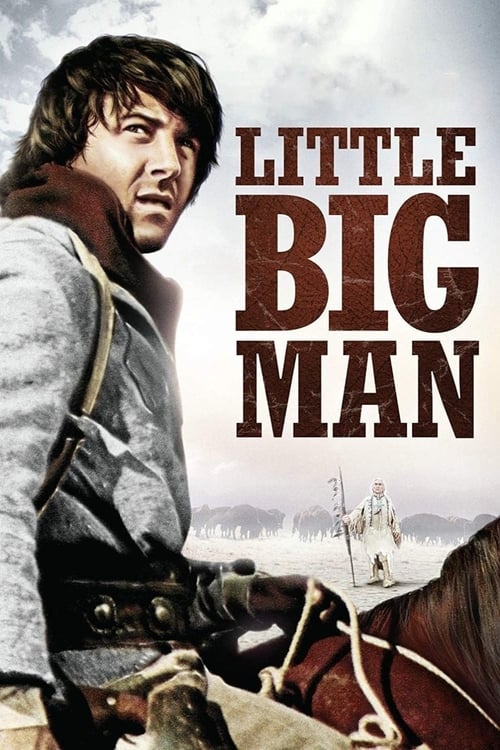
Little Big Man
Jack Crabb, looking back from extreme old age, tells of his life being raised by Indians and fighting with General Custer.
Despite a mid-range budget of $15.0M, Little Big Man became a box office success, earning $31.6M worldwide—a 110% return.
Nominated for 1 Oscar. 5 wins & 11 nominations


Plot Structure
Story beats plotted across runtime


Narrative Arc
Emotional journey through the story's key moments
Story Circle
Blueprint 15-beat structure
Arcplot Score Breakdown
Weighted: Precision (70%) + Arc (15%) + Theme (15%)
Little Big Man (1970) exemplifies meticulously timed narrative design, characteristic of Arthur Penn's storytelling approach. This structural analysis examines how the film's 15-point plot structure maps to proven narrative frameworks across 2 hours and 19 minutes. With an Arcplot score of 6.4, the film takes an unconventional approach to traditional narrative frameworks.
Structural Analysis
The Status Quo at 2 minutes (1% through the runtime) establishes Ancient Jack Crabb sits in a nursing home, claiming to be 121 years old and the sole white survivor of the Battle of Little Bighorn, establishing the framing device for his incredible life story.. Of particular interest, this early placement immediately immerses viewers in the story world.
The inciting incident occurs at 17 minutes when The cavalry attacks the Cheyenne camp at Washita River. Jack is forced to declare himself white to survive, betraying his adopted family and marking the beginning of his lifelong oscillation between two worlds.. At 12% through the film, this Disruption aligns precisely with traditional story structure. This beat shifts the emotional landscape, launching the protagonist into the central conflict.
The First Threshold at 35 minutes marks the transition into Act II, occurring at 25% of the runtime. This reveals the protagonist's commitment to Jack makes the active choice to marry Olga, a Swedish immigrant, and attempt to settle down as a shopkeeper, committing to building a life in white society despite his lingering connection to the Cheyenne., moving from reaction to action.
At 70 minutes, the Midpoint arrives at 50% of the runtime—precisely centered, creating perfect narrative symmetry. Of particular interest, this crucial beat The cavalry massacres Jack's Cheyenne family at the Washita River, killing his wife Sunshine and their child. This devastating false defeat raises the stakes and transforms Jack's journey from seeking belonging to seeking vengeance., fundamentally raising what's at risk. The emotional intensity shifts, dividing the narrative into clear before-and-after phases.
The Collapse moment at 105 minutes (76% through) represents the emotional nadir. Here, Jack finds Old Lodge Skins apparently dying on a mountaintop, attempting to pass into the spirit world. This "whiff of death" represents the loss of Jack's spiritual anchor and the seeming end of the Cheyenne way of life., indicates the protagonist at their lowest point. This beat's placement in the final quarter sets up the climactic reversal.
The Second Threshold at 112 minutes initiates the final act resolution at 81% of the runtime. Jack receives a vision from Old Lodge Skins about the coming battle at Little Bighorn. He synthesizes his knowledge of both worlds, realizing he must warn Custer not out of loyalty, but because it's his destiny to witness the end of an era., demonstrating the transformation achieved throughout the journey.
Emotional Journey
Little Big Man's emotional architecture traces a deliberate progression across 15 carefully calibrated beats.
Narrative Framework
This structural analysis employs systematic plot point analysis that identifies crucial turning points. By mapping Little Big Man against these established plot points, we can identify how Arthur Penn utilizes or subverts traditional narrative conventions. The plot point approach reveals not only adherence to structural principles but also creative choices that distinguish Little Big Man within the western genre.
Arthur Penn's Structural Approach
Among the 3 Arthur Penn films analyzed on Arcplot, the average structural score is 6.7, demonstrating varied approaches to story architecture. Little Big Man takes a more unconventional approach compared to the director's typical style. For comparative analysis, explore the complete Arthur Penn filmography.
Comparative Analysis
Additional western films include All the Pretty Horses, Shenandoah and Lone Star. For more Arthur Penn analyses, see The Missouri Breaks, Bonnie and Clyde.
Plot Points by Act
Act I
SetupStatus Quo
Ancient Jack Crabb sits in a nursing home, claiming to be 121 years old and the sole white survivor of the Battle of Little Bighorn, establishing the framing device for his incredible life story.
Theme
Young Jack's first encounter with the Cheyenne introduces the central theme of identity and belonging between two conflicting cultures: "You are not a Human Being, you are a white man."
Worldbuilding
The orphaned Crabb children are rescued by Cheyenne after their family is killed. Jack is adopted by Old Lodge Skins and given the name "Little Big Man," learning Cheyenne ways and culture while his sister Caroline escapes back to white civilization.
Disruption
The cavalry attacks the Cheyenne camp at Washita River. Jack is forced to declare himself white to survive, betraying his adopted family and marking the beginning of his lifelong oscillation between two worlds.
Resistance
Jack struggles to find his place in white society. He is taken in by Reverend Pendrake and his wife, attempts to become a gunfighter, works as a snake oil salesman, and tries various identities, never quite fitting in anywhere.
Act II
ConfrontationFirst Threshold
Jack makes the active choice to marry Olga, a Swedish immigrant, and attempt to settle down as a shopkeeper, committing to building a life in white society despite his lingering connection to the Cheyenne.
Mirror World
After his wife and business are destroyed in a Pawnee raid, Jack is rescued by his Cheyenne family and reunited with Old Lodge Skins, who represents the thematic counterpoint of wisdom, acceptance, and spiritual connection versus white society's greed and violence.
Premise
Jack embraces Cheyenne life fully, marrying Sunshine, becoming a father, and participating in raids and hunts. This section delivers the promise of experiencing both cultures, showing the contrast between Cheyenne harmony with nature and white civilization's destructive expansion.
Midpoint
The cavalry massacres Jack's Cheyenne family at the Washita River, killing his wife Sunshine and their child. This devastating false defeat raises the stakes and transforms Jack's journey from seeking belonging to seeking vengeance.
Opposition
Jack descends into darkness, becoming a drunken mule skinner for Custer's cavalry. He repeatedly attempts and fails to kill Custer, finding himself constantly saved by the very man he wants dead. The opposition intensifies as Jack realizes he cannot escape his fate.
Collapse
Jack finds Old Lodge Skins apparently dying on a mountaintop, attempting to pass into the spirit world. This "whiff of death" represents the loss of Jack's spiritual anchor and the seeming end of the Cheyenne way of life.
Crisis
Old Lodge Skins doesn't die, and in this dark night of the soul, he and Jack reflect on the nature of life, death, and the inevitable cycle of all things. Jack processes his grief and begins to understand his role in the larger story.
Act III
ResolutionSecond Threshold
Jack receives a vision from Old Lodge Skins about the coming battle at Little Bighorn. He synthesizes his knowledge of both worlds, realizing he must warn Custer not out of loyalty, but because it's his destiny to witness the end of an era.
Synthesis
Jack attempts to warn Custer about the massive Cheyenne and Sioux gathering, but Custer's arrogance leads him to ignore the warning. Jack witnesses the Battle of Little Bighorn, where Custer and his men are annihilated, fulfilling the prophecy and closing the chapter on the Old West.
Transformation
Back in the present, the ancient Jack Crabb concludes his story to the historian. Having lived as both white man and Cheyenne, he has transformed from a boy seeking identity into a witness to history, finally at peace with his dual nature and unique place in the story of the American West.