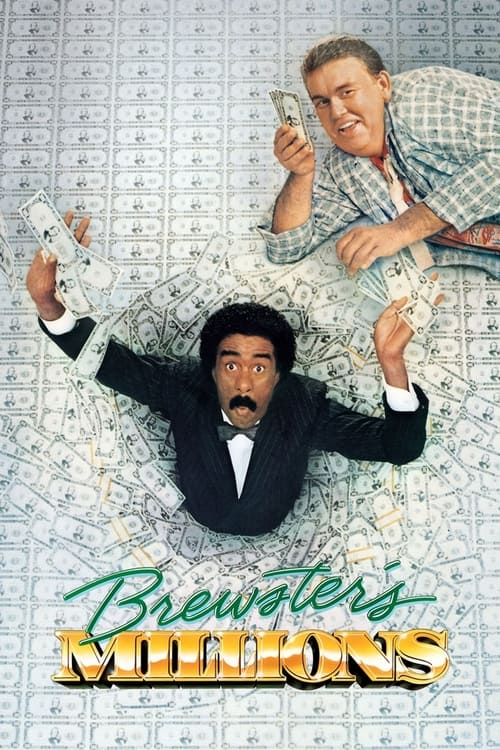
Brewster's Millions
Monty Brewster, an aging minor-league baseball player, stands to inherit $300 million if he can successfully spend $30 million in 30 days without anything to show for it, and without telling anyone what he's up to... A task that's a lot harder than it sounds!
Despite a respectable budget of $20.0M, Brewster's Millions became a financial success, earning $45.8M worldwide—a 129% return.


Plot Structure
Story beats plotted across runtime


Narrative Arc
Emotional journey through the story's key moments
Story Circle
Blueprint 15-beat structure
Arcplot Score Breakdown
Weighted: Precision (70%) + Arc (15%) + Theme (15%)
Brewster's Millions (1985) exemplifies precise narrative design, characteristic of Walter Hill's storytelling approach. This structural analysis examines how the film's 15-point plot structure maps to proven narrative frameworks across 1 hour and 37 minutes. With an Arcplot score of 7.2, the film balances conventional beats with creative variation.
Characters
Cast & narrative archetypes

Montgomery Brewster
Spike Nolan
Angela Drake
Charley Pegler
Warren Cox
Rupert Horn
Main Cast & Characters
Montgomery Brewster
Played by Richard Pryor
A minor league baseball pitcher who must spend $30 million in 30 days to inherit $300 million from his late uncle.
Spike Nolan
Played by John Candy
Brewster's loyal best friend and catcher who tries to help him spend the money while staying grounded.
Angela Drake
Played by Lonette McKee
A savvy accountant hired to monitor Brewster's spending who becomes romantically involved with him.
Charley Pegler
Played by Stephen Collins
The law firm representative overseeing the challenge who enforces the strict rules of the inheritance.
Warren Cox
Played by Hume Cronyn
A greedy relative who stands to inherit if Brewster fails the challenge.
Rupert Horn
Played by Pat Hingle
A scheming business manager who tries to manipulate Brewster into making investments.
Structural Analysis
The Status Quo at 1 minutes (1% through the runtime) establishes Monty Brewster is a minor league baseball player living paycheck to paycheck, playing for the Hackensack Bulls with his best friend Spike, content but financially struggling in his ordinary working-class life.. Notably, this early placement immediately immerses viewers in the story world.
The inciting incident occurs at 11 minutes when Monty learns his great-uncle Rupert Horn has died and left him an inheritance. Lawyers Granville and Baxter arrive to inform him he's inherited a fortune, disrupting his ordinary life completely.. At 11% through the film, this Disruption aligns precisely with traditional story structure. This beat shifts the emotional landscape, launching the protagonist into the central conflict.
The First Threshold at 23 minutes marks the transition into Act II, occurring at 24% of the runtime. This reveals the protagonist's commitment to Monty actively chooses to accept the challenge and begin spending the 30 million, committing to the rules despite not being able to tell anyone the real reason, launching him into the new world of extreme wealth., moving from reaction to action.
At 49 minutes, the Midpoint arrives at 50% of the runtime—precisely centered, creating perfect narrative symmetry. Structural examination shows that this crucial beat False defeat: Monty realizes he's actually making money from his spending attempts - his investments accidentally appreciate and his publicity stunts generate revenue. The challenge becomes seemingly impossible as his efforts backfire., fundamentally raising what's at risk. The emotional intensity shifts, dividing the narrative into clear before-and-after phases.
The Collapse moment at 72 minutes (74% through) represents the emotional nadir. Here, With hours left and still millions to spend, Angela and friends confront Monty believing he's lost his mind. He loses their trust and respect - the death of his relationships and reputation, the only things that actually mattered., shows the protagonist at their lowest point. This beat's placement in the final quarter sets up the climactic reversal.
The Second Threshold at 77 minutes initiates the final act resolution at 79% of the runtime. Monty has a realization about what truly matters and finds a final way to spend the remaining money that aligns with his values, synthesizing the lesson about wealth with his authentic self., demonstrating the transformation achieved throughout the journey.
Emotional Journey
Brewster's Millions's emotional architecture traces a deliberate progression across 15 carefully calibrated beats.
Narrative Framework
This structural analysis employs structural analysis methodology used to understand storytelling architecture. By mapping Brewster's Millions against these established plot points, we can identify how Walter Hill utilizes or subverts traditional narrative conventions. The plot point approach reveals not only adherence to structural principles but also creative choices that distinguish Brewster's Millions within the comedy genre.
Walter Hill's Structural Approach
Among the 14 Walter Hill films analyzed on Arcplot, the average structural score is 7.1, reflecting strong command of classical structure. Brewster's Millions represents one of the director's most structurally precise works. For comparative analysis, explore the complete Walter Hill filmography.
Comparative Analysis
Additional comedy films include The Bad Guys, Ella Enchanted and The Evening Star. For more Walter Hill analyses, see The Warriors, Johnny Handsome and The Driver.
Plot Points by Act
Act I
SetupStatus Quo
Monty Brewster is a minor league baseball player living paycheck to paycheck, playing for the Hackensack Bulls with his best friend Spike, content but financially struggling in his ordinary working-class life.
Theme
A character observes that money doesn't buy happiness and true value comes from what you do with your life, not what you own - foreshadowing Monty's journey to discover what truly matters beyond wealth.
Worldbuilding
Establishment of Monty's world as a struggling minor league player with dreams of the majors, his friendship with Spike, his relationship with Angela the photographer, and his complete lack of financial resources or prospects.
Disruption
Monty learns his great-uncle Rupert Horn has died and left him an inheritance. Lawyers Granville and Baxter arrive to inform him he's inherited a fortune, disrupting his ordinary life completely.
Resistance
Monty learns the bizarre conditions: he must spend 30 million dollars in 30 days with nothing to show for it to inherit 300 million. He debates whether this is possible or desirable, consulting with Spike and Angela while the lawyers explain the strict rules.
Act II
ConfrontationFirst Threshold
Monty actively chooses to accept the challenge and begin spending the 30 million, committing to the rules despite not being able to tell anyone the real reason, launching him into the new world of extreme wealth.
Mirror World
Angela becomes increasingly important as she documents Monty's spending spree, representing authenticity and genuine human connection in contrast to the false relationships money attracts - the thematic heart of the story.
Premise
The fun of watching Monty try to spend money: hiring the Yankees for an exhibition game, buying expensive items, throwing lavish parties, running a political campaign, and discovering that spending money without assets is harder than it looks.
Midpoint
False defeat: Monty realizes he's actually making money from his spending attempts - his investments accidentally appreciate and his publicity stunts generate revenue. The challenge becomes seemingly impossible as his efforts backfire.
Opposition
Pressure mounts as everyone thinks Monty is insane or corrupt. Angela and Spike grow concerned about his behavior. The lawyers scheme to prevent his success. Time runs out and money keeps growing instead of disappearing.
Collapse
With hours left and still millions to spend, Angela and friends confront Monty believing he's lost his mind. He loses their trust and respect - the death of his relationships and reputation, the only things that actually mattered.
Crisis
Monty faces his darkest hour realizing he may lose both the inheritance and the people he cares about. He grapples with whether the money is worth the cost to his soul and friendships.
Act III
ResolutionSecond Threshold
Monty has a realization about what truly matters and finds a final way to spend the remaining money that aligns with his values, synthesizing the lesson about wealth with his authentic self.
Synthesis
The climactic final hours as Monty executes his plan, the deadline arrives, the truth is revealed to his friends, and the accountants verify whether he succeeded. Resolution of the inheritance and his relationships.
Transformation
Monty, whether rich or poor, is now surrounded by genuine friends who know the truth and has learned that relationships and integrity matter more than wealth - a transformed man who understands true value.