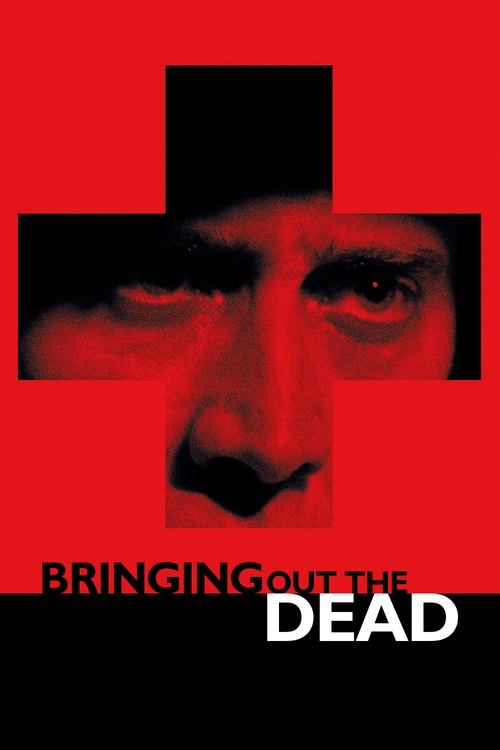
Bringing Out the Dead
Once called "Father Frank" for his efforts to rescue lives, Frank Pierce sees the ghosts of those he failed to save around every turn. He has tried everything he can to get fired, calling in sick, delaying taking calls where he might have to face one more victim he couldn't help, yet cannot quit the job on his own.
The film struggled financially against its moderate budget of $32.0M, earning $16.8M globally (-48% loss). While initial box office returns were modest, the film has gained appreciation for its unconventional structure within the drama genre.
2 wins & 5 nominations


Plot Structure
Story beats plotted across runtime


Narrative Arc
Emotional journey through the story's key moments
Story Circle
Blueprint 15-beat structure
Arcplot Score Breakdown
Weighted: Precision (70%) + Arc (15%) + Theme (15%)
Bringing Out the Dead (1999) exhibits carefully calibrated narrative architecture, characteristic of Martin Scorsese's storytelling approach. This structural analysis examines how the film's 15-point plot structure maps to proven narrative frameworks across 2 hours and 1 minutes. With an Arcplot score of 6.7, the film balances conventional beats with creative variation.
Characters
Cast & narrative archetypes

Frank Pierce
Mary Burke
Marcus
Larry
Tom Walls
Noel
Main Cast & Characters
Frank Pierce
Played by Nicolas Cage
A burned-out paramedic haunted by his inability to save lives, struggling through Hell's Kitchen on the night shift
Mary Burke
Played by Patricia Arquette
A former addict and daughter of a cardiac patient Frank tried to save, seeking redemption and connection
Marcus
Played by Ving Rhames
Frank's philosophical and religious partner who provides spiritual counterpoint to Frank's despair
Larry
Played by John Goodman
Frank's volatile and aggressive partner who uses violence and chaos to cope with the job
Tom Walls
Played by Tom Sizemore
Frank's reckless and thrill-seeking partner who treats emergencies like a twisted adventure
Noel
Played by Marc Anthony
A drug dealer and dangerous presence in Mary's life who represents her past temptations
Structural Analysis
The Status Quo at 1 minutes (1% through the runtime) establishes Frank Pierce narrates his exhausted state as a burnt-out paramedic in Hell's Kitchen, revealing he hasn't saved anyone in months and is haunted by visions of Rose, a girl he couldn't save.. Significantly, this early placement immediately immerses viewers in the story world.
The inciting incident occurs at 15 minutes when Frank and Larry respond to a cardiac arrest call for Burke, an older man whose heart has stopped. Frank's CPR brings Burke back from the dead, but he meets Burke's estranged daughter Mary—a recovering addict who will change his trajectory.. At 12% through the film, this Disruption aligns precisely with traditional story structure. This beat shifts the emotional landscape, launching the protagonist into the central conflict.
The First Threshold at 30 minutes marks the transition into Act II, occurring at 25% of the runtime. This demonstrates the protagonist's commitment to Frank chooses to stay connected to Mary and the Burke case rather than simply moving on. He returns to the hospital on his own time, crossing from professional detachment into personal involvement—seeking redemption through this family., moving from reaction to action.
At 61 minutes, the Midpoint arrives at 50% of the runtime—precisely centered, creating perfect narrative symmetry. Notably, this crucial beat Frank's hallucinations of Rose intensify during a particularly brutal call. He realizes Burke may never wake up—that Frank's "save" has trapped the man in living death. False defeat: his attempt at redemption has only created more suffering., fundamentally raising what's at risk. The emotional intensity shifts, dividing the narrative into clear before-and-after phases.
The Collapse moment at 91 minutes (75% through) represents the emotional nadir. Here, Frank finds Mary has overdosed and nearly dies. He saves her physically but realizes he cannot save her from herself—just as he cannot save himself through external acts of rescue. The whiff of death: his messianic complex is killing them both., illustrates the protagonist at their lowest point. This beat's placement in the final quarter sets up the climactic reversal.
The Second Threshold at 97 minutes initiates the final act resolution at 80% of the runtime. Frank returns to Burke's hospital room and makes a choice: instead of fighting death, he will offer mercy. He realizes that letting go is not failure—it is compassion. The synthesis of healer and human., demonstrating the transformation achieved throughout the journey.
Emotional Journey
Bringing Out the Dead's emotional architecture traces a deliberate progression across 15 carefully calibrated beats.
Narrative Framework
This structural analysis employs structural analysis methodology used to understand storytelling architecture. By mapping Bringing Out the Dead against these established plot points, we can identify how Martin Scorsese utilizes or subverts traditional narrative conventions. The plot point approach reveals not only adherence to structural principles but also creative choices that distinguish Bringing Out the Dead within the drama genre.
Martin Scorsese's Structural Approach
Among the 18 Martin Scorsese films analyzed on Arcplot, the average structural score is 6.0, showcasing experimental approaches to narrative form. Bringing Out the Dead represents one of the director's most structurally precise works. For comparative analysis, explore the complete Martin Scorsese filmography.
Comparative Analysis
Additional drama films include After Thomas, South Pacific and Dirty Dancing: Havana Nights. For more Martin Scorsese analyses, see Casino, Killers of the Flower Moon and After Hours.
Plot Points by Act
Act I
SetupStatus Quo
Frank Pierce narrates his exhausted state as a burnt-out paramedic in Hell's Kitchen, revealing he hasn't saved anyone in months and is haunted by visions of Rose, a girl he couldn't save.
Theme
Frank's partner Larry tells him "You gotta learn to love the job again" and later a dispatcher notes that saving lives means knowing when to let go—establishing the theme of finding peace through acceptance of mortality.
Worldbuilding
The first night establishes Frank's world: the chaotic Hell's Kitchen streets, the revolving door of partners, his hallucinations of Rose, and the grinding despair of emergency medicine in 1990s New York.
Disruption
Frank and Larry respond to a cardiac arrest call for Burke, an older man whose heart has stopped. Frank's CPR brings Burke back from the dead, but he meets Burke's estranged daughter Mary—a recovering addict who will change his trajectory.
Resistance
Frank oscillates between duty and desperation. He visits Mary at the hospital, learns about her troubled past, and continues his shifts with different partners while Burke remains in a coma—a living reproach to Frank's intervention.
Act II
ConfrontationFirst Threshold
Frank chooses to stay connected to Mary and the Burke case rather than simply moving on. He returns to the hospital on his own time, crossing from professional detachment into personal involvement—seeking redemption through this family.
Mirror World
Mary Burke emerges as Frank's mirror—a fellow wounded soul seeking redemption. Her struggle with addiction and guilt over abandoning her father reflects Frank's own guilt over those he couldn't save. Their connection offers mutual healing.
Premise
The second night unfolds with partner Marcus. Frank navigates the surreal nightscape of NYC emergencies—drug overdoses, violent crimes, the homeless—while deepening his bond with Mary and confronting his psychological deterioration.
Midpoint
Frank's hallucinations of Rose intensify during a particularly brutal call. He realizes Burke may never wake up—that Frank's "save" has trapped the man in living death. False defeat: his attempt at redemption has only created more suffering.
Opposition
The third night with the violent, unhinged partner Tom. Frank's mental state deteriorates further. Mary relapses. The streets become increasingly nightmarish. Tom's brutal methods contrast with Frank's fading humanity.
Collapse
Frank finds Mary has overdosed and nearly dies. He saves her physically but realizes he cannot save her from herself—just as he cannot save himself through external acts of rescue. The whiff of death: his messianic complex is killing them both.
Crisis
Frank wanders the dawn streets in existential crisis. He cannot save everyone. He cannot even save himself. His visions of Rose persist. He must find another way to live with mortality—his patients' and his own.
Act III
ResolutionSecond Threshold
Frank returns to Burke's hospital room and makes a choice: instead of fighting death, he will offer mercy. He realizes that letting go is not failure—it is compassion. The synthesis of healer and human.
Synthesis
Frank disconnects Burke's life support, granting him death with dignity. Mary, now sober, witnesses this act of mercy. Frank accepts that saving people sometimes means letting them go. He finds peace with Rose's ghost.
Transformation
Frank and Mary lie together on her rooftop as dawn breaks over the city. Rose's ghost finally releases him. Frank has transformed from a man desperate to save lives into one who understands that presence and acceptance are their own form of salvation.