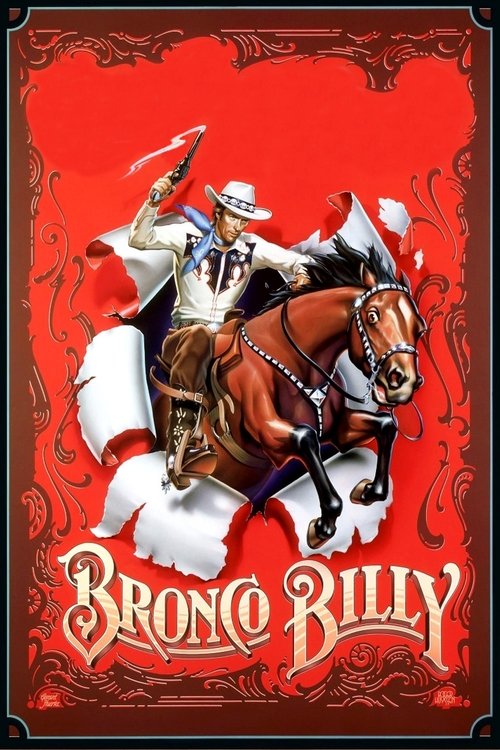
Bronco Billy
An idealistic, modern-day cowboy struggles to keep his Wild West show afloat in the face of hard luck and waning interest.
Despite its modest budget of $6.5M, Bronco Billy became a commercial success, earning $24.3M worldwide—a 274% return. The film's bold vision found its audience, demonstrating that strong storytelling can transcend budget limitations.


Plot Structure
Story beats plotted across runtime


Narrative Arc
Emotional journey through the story's key moments
Story Circle
Blueprint 15-beat structure
Arcplot Score Breakdown
Weighted: Precision (70%) + Arc (15%) + Theme (15%)
Bronco Billy (1980) showcases precise dramatic framework, characteristic of Clint Eastwood's storytelling approach. This structural analysis examines how the film's 15-point plot structure maps to proven narrative frameworks across 1 hour and 56 minutes. With an Arcplot score of 7.0, the film balances conventional beats with creative variation.
Characters
Cast & narrative archetypes

Bronco Billy McCoy
Antoinette Lily
Doc Lynch
Leonard James
Lefty LeBow
Chief Big Eagle
Lorraine Running Water
Main Cast & Characters
Bronco Billy McCoy
Played by Clint Eastwood
A shoe salesman turned Wild West show proprietor who lives by an idealistic cowboy code and dreams of keeping the Old West alive.
Antoinette Lily
Played by Sondra Locke
A runaway heiress who joins the Wild West show and finds purpose beyond her privileged upbringing.
Doc Lynch
Played by Scatman Crothers
The show's sharpshooter and Bronco Billy's loyal friend, a former draft dodger seeking redemption.
Leonard James
Played by Sam Bottoms
The show's rope trick artist and mechanical genius who keeps the operation running.
Lefty LeBow
Played by Bill McKinney
The one-armed trick roper and announcer, fiercely devoted to the show despite physical limitations.
Chief Big Eagle
Played by Dan Vadis
The show's Native American performer, actually from the Bronx, who embraces his adopted Western persona.
Lorraine Running Water
Played by Sierra Pecheur
The show's snake charmer and fortune teller, romantically involved with Leonard.
Structural Analysis
The Status Quo at 1 minutes (1% through the runtime) establishes Bronco Billy's Wild West Show performs for a small-town audience. Billy McCoy, the show's star, lives out his cowboy fantasy despite the show's financial struggles and dwindling crowds.. Significantly, this early placement immediately immerses viewers in the story world.
The inciting incident occurs at 14 minutes when Antoinette's new husband abandons her at a motel on their wedding night, stranding her without money or resources. Her assistant quits, leaving her alone and desperate in unfamiliar territory.. At 12% through the film, this Disruption aligns precisely with traditional story structure. This beat shifts the emotional landscape, launching the protagonist into the central conflict.
The First Threshold at 29 minutes marks the transition into Act II, occurring at 25% of the runtime. This indicates the protagonist's commitment to Antoinette agrees to become Billy's new assistant in the Wild West Show. She actively chooses to enter this new world, leaving behind her old identity as a wealthy heiress., moving from reaction to action.
At 59 minutes, the Midpoint arrives at 51% of the runtime—precisely centered, creating perfect narrative symmetry. The analysis reveals that this crucial beat Antoinette and Billy fall in love and consummate their relationship. This false victory seems like everything is perfect - she's found authentic love and he's found his ideal partner. But her inheritance and past identity still loom, and the show's financial problems remain unresolved., fundamentally raising what's at risk. The emotional intensity shifts, dividing the narrative into clear before-and-after phases.
The Collapse moment at 87 minutes (75% through) represents the emotional nadir. Here, The Wild West Show's tent burns down in a fire, destroying everything. The show appears dead - Billy's dream, his identity, and his livelihood are literally reduced to ash. The troupe is devastated and Billy faces losing everything he's built., demonstrates the protagonist at their lowest point. This beat's placement in the final quarter sets up the climactic reversal.
The Second Threshold at 92 minutes initiates the final act resolution at 80% of the runtime. The troupe and community come together to rebuild. Antoinette uses her resources wisely to help without compromising Billy's integrity. Billy realizes that the show - and his identity - isn't about the tent or props, but about the spirit and belief. He chooses to continue being Bronco Billy., demonstrating the transformation achieved throughout the journey.
Emotional Journey
Bronco Billy's emotional architecture traces a deliberate progression across 15 carefully calibrated beats.
Narrative Framework
This structural analysis employs a 15-point narrative structure framework that maps key story moments. By mapping Bronco Billy against these established plot points, we can identify how Clint Eastwood utilizes or subverts traditional narrative conventions. The plot point approach reveals not only adherence to structural principles but also creative choices that distinguish Bronco Billy within the drama genre.
Clint Eastwood's Structural Approach
Among the 32 Clint Eastwood films analyzed on Arcplot, the average structural score is 6.5, demonstrating varied approaches to story architecture. Bronco Billy represents one of the director's most structurally precise works. For comparative analysis, explore the complete Clint Eastwood filmography.
Comparative Analysis
Additional drama films include After Thomas, South Pacific and Dirty Dancing: Havana Nights. For more Clint Eastwood analyses, see True Crime, Million Dollar Baby and The Gauntlet.
Plot Points by Act
Act I
SetupStatus Quo
Bronco Billy's Wild West Show performs for a small-town audience. Billy McCoy, the show's star, lives out his cowboy fantasy despite the show's financial struggles and dwindling crowds.
Theme
Billy tells his troupe: "You can be anything you want to be. All you have to do is go out and become it." The theme of self-invention and choosing your own identity is established.
Worldbuilding
We meet Billy's ragtag troupe: Lefty (the one-armed rope artist), Chief Big Eagle, Doc Lynch, and Leonard. The show barely scrapes by, performing in small towns. Meanwhile, heiress Antoinette Lily is introduced in her world of wealth, married to John Arlington for his money.
Disruption
Antoinette's new husband abandons her at a motel on their wedding night, stranding her without money or resources. Her assistant quits, leaving her alone and desperate in unfamiliar territory.
Resistance
Antoinette desperately tries to survive, attempting to get work and money. Billy's assistant Lorraine quits the show. Antoinette and Billy cross paths multiple times, with her initially resistant to joining his "ridiculous" show. She debates whether to lower herself to this level.
Act II
ConfrontationFirst Threshold
Antoinette agrees to become Billy's new assistant in the Wild West Show. She actively chooses to enter this new world, leaving behind her old identity as a wealthy heiress.
Mirror World
Antoinette begins working with Billy and develops a relationship with him. He represents authenticity and self-made identity, the opposite of her world of inherited wealth and pretense. Their connection deepens as he teaches her to shoot.
Premise
Antoinette performs in the Wild West Show, learning the ropes and growing closer to Billy and the troupe. She experiences the freedom and authenticity of this simple life. Billy shares his philosophy and past. The promise of the premise: watching a rich heiress discover real life and love in a traveling Wild West show.
Midpoint
Antoinette and Billy fall in love and consummate their relationship. This false victory seems like everything is perfect - she's found authentic love and he's found his ideal partner. But her inheritance and past identity still loom, and the show's financial problems remain unresolved.
Opposition
Antoinette's past catches up with her as lawyers and her husband track her down regarding her inheritance. The show faces increasing financial pressure. The reality of their different worlds threatens their relationship. Billy discovers Antoinette's true identity and wealth, creating conflict.
Collapse
The Wild West Show's tent burns down in a fire, destroying everything. The show appears dead - Billy's dream, his identity, and his livelihood are literally reduced to ash. The troupe is devastated and Billy faces losing everything he's built.
Crisis
Billy and the troupe sit in the darkness of their loss. Billy contemplates giving up his dream. Antoinette must decide between returning to her wealthy world or staying with Billy and his broken dream. The troupe questions whether to continue.
Act III
ResolutionSecond Threshold
The troupe and community come together to rebuild. Antoinette uses her resources wisely to help without compromising Billy's integrity. Billy realizes that the show - and his identity - isn't about the tent or props, but about the spirit and belief. He chooses to continue being Bronco Billy.
Synthesis
The community helps rebuild the Wild West Show with a new tent made from American flags. Billy and Antoinette reconcile, combining their worlds. The show reopens with renewed purpose and bigger crowds. Billy fully embodies his chosen identity, and Antoinette embraces her new authentic self.
Transformation
The Wild West Show performs under the new star-spangled tent to an enthusiastic crowd. Antoinette is fully integrated as Billy's partner in life and the show. Billy's philosophy has been proven: you can be anything you want to be. The closing image mirrors the opening show, but now it's whole, authentic, and supported by community.