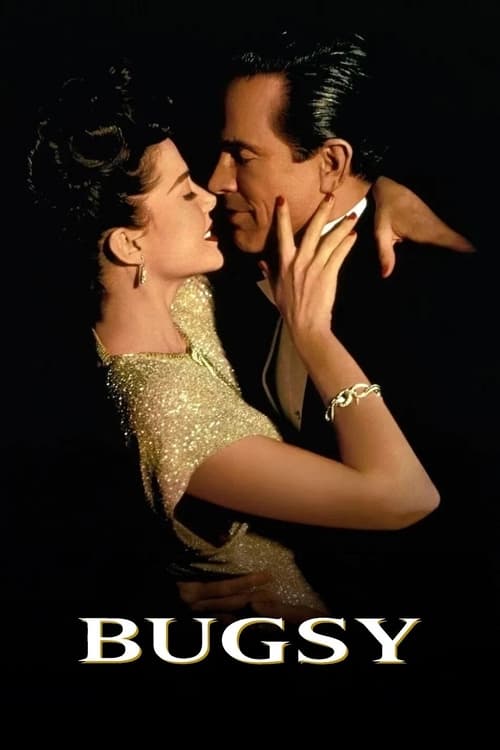
Bugsy
New York gangster Ben 'Bugsy' Siegel takes a brief business trip to Los Angeles. A sharp-dressing womanizer with a foul temper, Siegel doesn't hesitate to kill or maim anyone crossing him. In L.A. the life, the movies, and most of all strong-willed Virginia Hill detain him while his family wait back home. Then a trip to a run-down gambling joint at a spot in the desert known as Las Vegas gives him his big idea.
Working with a mid-range budget of $30.0M, the film achieved a modest success with $49.1M in global revenue (+64% profit margin).
2 Oscars. 12 wins & 41 nominations


Plot Structure
Story beats plotted across runtime


Narrative Arc
Emotional journey through the story's key moments
Story Circle
Blueprint 15-beat structure
Arcplot Score Breakdown
Weighted: Precision (70%) + Arc (15%) + Theme (15%)
Bugsy (1991) reveals carefully calibrated plot construction, characteristic of Barry Levinson's storytelling approach. This structural analysis examines how the film's 15-point plot structure maps to proven narrative frameworks across 2 hours and 16 minutes. With an Arcplot score of 7.3, the film balances conventional beats with creative variation.
Characters
Cast & narrative archetypes

Bugsy Siegel
Virginia Hill
Meyer Lansky
Mickey Cohen
Esta Siegel
Harry Greenberg
Main Cast & Characters
Bugsy Siegel
Played by Warren Beatty
Charismatic gangster who dreams of building a gambling empire in Las Vegas, driven by vision and volatility.
Virginia Hill
Played by Annette Bening
Beautiful, ambitious actress who becomes Bugsy's lover and partner in his Las Vegas dream.
Meyer Lansky
Played by Ben Kingsley
Bugsy's calculating childhood friend and business partner who represents the practical side of organized crime.
Mickey Cohen
Played by Harvey Keitel
Bugsy's loyal protégé and enforcer who handles the violent side of the business.
Esta Siegel
Played by Wendy Phillips
Bugsy's devoted wife and mother of his children, representing his abandoned domestic life.
Harry Greenberg
Played by Elliott Gould
Former associate whose presence threatens to expose the mob's secrets.
Structural Analysis
The Status Quo at 2 minutes (1% through the runtime) establishes Bugsy Siegel arrives in Los Angeles in 1941 as a successful, violent mobster with connections to Meyer Lansky and the East Coast syndicate. He's charming, impulsive, and living the high life of organized crime.. Of particular interest, this early placement immediately immerses viewers in the story world.
The inciting incident occurs at 16 minutes when Bugsy meets Virginia Hill at a party. The instant attraction disrupts his comfortable existence and awakens something deeper in him—a desire for something beyond the mob life he's known.. At 12% through the film, this Disruption aligns precisely with traditional story structure. This beat shifts the emotional landscape, launching the protagonist into the central conflict.
The First Threshold at 34 minutes marks the transition into Act II, occurring at 25% of the runtime. This reveals the protagonist's commitment to Bugsy makes the decision to build the Flamingo Hotel and Casino in Las Vegas. He chooses to pursue his dream, committing the mob's money and his own reputation to transforming the desert into an entertainment paradise., moving from reaction to action.
At 68 minutes, the Midpoint arrives at 50% of the runtime—precisely centered, creating perfect narrative symmetry. Of particular interest, this crucial beat False defeat: The Flamingo's costs spiral out of control. The mob bosses back East grow suspicious of Bugsy's spending. What seemed like a dream project becomes a potential death sentence as Meyer warns him the syndicate is losing patience., fundamentally raising what's at risk. The emotional intensity shifts, dividing the narrative into clear before-and-after phases.
The Collapse moment at 102 minutes (75% through) represents the emotional nadir. Here, The Flamingo's opening night is a disaster. Bad weather keeps celebrities away, the casino loses money, and the hotel is incomplete. Bugsy's dream publicly fails, and he knows the mob has decided he's a liability. Death is imminent., reveals the protagonist at their lowest point. This beat's placement in the final quarter sets up the climactic reversal.
The Second Threshold at 110 minutes initiates the final act resolution at 81% of the runtime. Bugsy accepts his fate but reopens the Flamingo. He achieves a synthesis of who he was (a mobster) and who he wanted to be (a visionary). He knows he'll die but refuses to abandon his dream, finding dignity in his commitment., demonstrating the transformation achieved throughout the journey.
Emotional Journey
Bugsy's emotional architecture traces a deliberate progression across 15 carefully calibrated beats.
Narrative Framework
This structural analysis employs systematic plot point analysis that identifies crucial turning points. By mapping Bugsy against these established plot points, we can identify how Barry Levinson utilizes or subverts traditional narrative conventions. The plot point approach reveals not only adherence to structural principles but also creative choices that distinguish Bugsy within the crime genre.
Barry Levinson's Structural Approach
Among the 14 Barry Levinson films analyzed on Arcplot, the average structural score is 7.0, reflecting strong command of classical structure. Bugsy represents one of the director's most structurally precise works. For comparative analysis, explore the complete Barry Levinson filmography.
Comparative Analysis
Additional crime films include The Bad Guys, Rustom and The Whole Ten Yards. For more Barry Levinson analyses, see Envy, Wag the Dog and Diner.
Plot Points by Act
Act I
SetupStatus Quo
Bugsy Siegel arrives in Los Angeles in 1941 as a successful, violent mobster with connections to Meyer Lansky and the East Coast syndicate. He's charming, impulsive, and living the high life of organized crime.
Theme
Meyer Lansky or another character hints at the danger of dreams and ambition: "You can have anything you want, but you can't have everything." The theme explores the cost of vision when divorced from reality.
Worldbuilding
Establishment of Bugsy's world: his relationship with Meyer Lansky, his marriage to Esta, his Hollywood connections, and his violent reputation. We see his charm, his temper, and his dangerous lifestyle as a mob enforcer expanding West Coast operations.
Disruption
Bugsy meets Virginia Hill at a party. The instant attraction disrupts his comfortable existence and awakens something deeper in him—a desire for something beyond the mob life he's known.
Resistance
Bugsy pursues Virginia while maintaining his mob duties. He begins to envision possibilities beyond traditional organized crime. His first trip to Las Vegas plants the seed of his grand vision, though he resists fully committing to the idea.
Act II
ConfrontationFirst Threshold
Bugsy makes the decision to build the Flamingo Hotel and Casino in Las Vegas. He chooses to pursue his dream, committing the mob's money and his own reputation to transforming the desert into an entertainment paradise.
Mirror World
Bugsy's deepening relationship with Virginia Hill becomes the emotional center. She represents both his romantic ideal and the glamorous life he envisions. Their relationship mirrors his larger ambition—passionate, expensive, and volatile.
Premise
The promise of the premise: Bugsy building his dream. We see the construction of the Flamingo, his obsessive attention to luxury details, his relationship with Virginia flourishing, and his vision coming to life despite escalating costs.
Midpoint
False defeat: The Flamingo's costs spiral out of control. The mob bosses back East grow suspicious of Bugsy's spending. What seemed like a dream project becomes a potential death sentence as Meyer warns him the syndicate is losing patience.
Opposition
Pressure mounts from all sides. The mob demands answers about the money. Construction problems multiply. Virginia's loyalty wavers. Bugsy becomes more desperate and volatile, borrowing more money and making increasingly risky decisions to complete the Flamingo.
Collapse
The Flamingo's opening night is a disaster. Bad weather keeps celebrities away, the casino loses money, and the hotel is incomplete. Bugsy's dream publicly fails, and he knows the mob has decided he's a liability. Death is imminent.
Crisis
Bugsy faces the darkness of his situation. He knows he's a dead man. Virginia leaves him. Meyer can't protect him. Yet Bugsy refuses to run, clinging to his belief that the Flamingo will eventually succeed and vindicate his vision.
Act III
ResolutionSecond Threshold
Bugsy accepts his fate but reopens the Flamingo. He achieves a synthesis of who he was (a mobster) and who he wanted to be (a visionary). He knows he'll die but refuses to abandon his dream, finding dignity in his commitment.
Synthesis
The Flamingo begins to succeed. Bugsy lives his final days with Virginia in Los Angeles, knowing the hit is coming but refusing to hide. He maintains his dignity and vision until the end, proving he was right about Las Vegas even as it costs him everything.
Transformation
Bugsy is assassinated in Virginia's living room. The final image shows him dead, but title cards reveal the Flamingo became profitable and Las Vegas became exactly what he envisioned. His dream outlived him—a tragic transformation from dreamer to martyr.