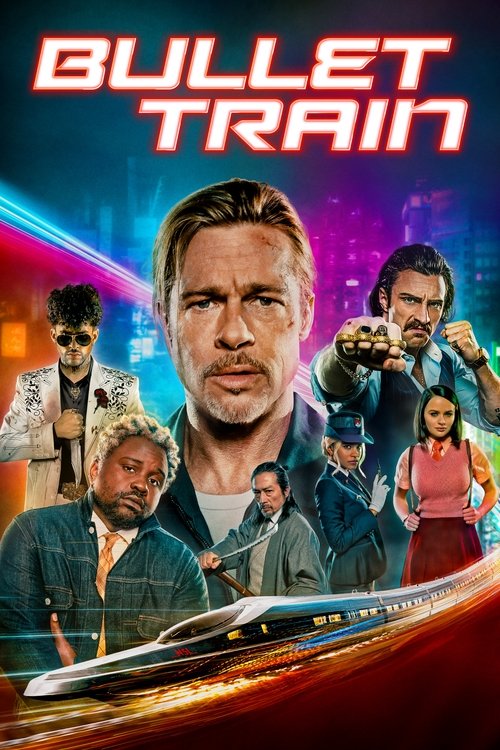
Bullet Train
Unlucky assassin Ladybug is determined to do his job peacefully after one too many gigs gone off the rails. Fate, however, may have other plans, as Ladybug's latest mission puts him on a collision course with lethal adversaries from around the globe—all with connected, yet conflicting, objectives—on the world's fastest train.
Despite a substantial budget of $90.0M, Bullet Train became a commercial success, earning $239.3M worldwide—a 166% return.
2 wins & 19 nominations


Plot Structure
Story beats plotted across runtime


Narrative Arc
Emotional journey through the story's key moments
Story Circle
Blueprint 15-beat structure
Arcplot Score Breakdown
Weighted: Precision (70%) + Arc (15%) + Theme (15%)
Bullet Train (2022) exemplifies meticulously timed dramatic framework, characteristic of David Leitch's storytelling approach. This structural analysis examines how the film's 15-point plot structure maps to proven narrative frameworks across 2 hours and 6 minutes. With an Arcplot score of 7.0, the film balances conventional beats with creative variation.
Characters
Cast & narrative archetypes

Ladybug
Tangerine
Lemon
The Prince
The Father
The Wolf
The Hornet
Kimura
Main Cast & Characters
Ladybug
Played by Brad Pitt
An unlucky assassin trying to stay peaceful who just wants to complete a simple snatch-and-grab job on a bullet train.
Tangerine
Played by Aaron Taylor-Johnson
A sharp-suited British assassin who operates with his partner Lemon, tasked with escorting a crime lord's son.
Lemon
Played by Brian Tyree Henry
A Thomas the Tank Engine-obsessed assassin who works with Tangerine and reads people through train characters.
The Prince
Played by Joey King
A manipulative young woman posing as an innocent schoolgirl to execute a revenge plot.
The Father
Played by Michael Shannon
A ruthless crime lord seeking revenge for his son's condition, known as the White Death.
The Wolf
Played by Bad Bunny
A Mexican cartel member who boards the train seeking revenge for his wedding massacre.
The Hornet
Played by Zazie Beetz
A deadly assassin who uses poison derived from boomslang snake venom as her weapon of choice.
Kimura
Played by Andrew Koji
A father forced onto the train by The Prince to protect his hospitalized son.
Structural Analysis
The Status Quo at 1 minutes (1% through the runtime) establishes Ladybug meditates with his handler Maria, discussing his therapy journey and desire to find peace. He's trying to become a better, more zen person and leave his violent past behind.. Structural examination shows that this early placement immediately immerses viewers in the story world.
The inciting incident occurs at 15 minutes when Ladybug boards the bullet train from Tokyo to Kyoto to retrieve a briefcase, replacing the original assassin Carver. What should be simple is already complicated - he doesn't have a gun and multiple assassins are aboard.. At 12% through the film, this Disruption aligns precisely with traditional story structure. This beat shifts the emotional landscape, launching the protagonist into the central conflict.
The First Threshold at 32 minutes marks the transition into Act II, occurring at 25% of the runtime. This reveals the protagonist's commitment to Ladybug decides to stay on the train after Tangerine and Lemon confront him. The train departs the station before he can escape. He's now fully committed to navigating the deadly situation aboard the bullet train., moving from reaction to action.
At 64 minutes, the Midpoint arrives at 50% of the runtime—precisely centered, creating perfect narrative symmetry. Of particular interest, this crucial beat Lemon is apparently killed and thrown off the train. The stakes raise as the White Death is revealed to be orchestrating everything, and all assassins realize they're being gathered for his revenge. False defeat - the body count is rising and there's no escape., fundamentally raising what's at risk. The emotional intensity shifts, dividing the narrative into clear before-and-after phases.
The Collapse moment at 95 minutes (76% through) represents the emotional nadir. Here, Ladybug is poisoned by the Wolf with boomslang venom and appears to be dying. His zen philosophy has failed to protect him. Tangerine appears dead. The White Death boards the train and executes the Elder (Kimura's father). All seems lost., reveals the protagonist at their lowest point. This beat's placement in the final quarter sets up the climactic reversal.
The Second Threshold at 102 minutes initiates the final act resolution at 81% of the runtime. Ladybug realizes the truth: Maria (his handler) was the White Death's wife. He accepts that fate brought everyone together, but they still have agency in how they respond. Tangerine and Lemon are revealed to be alive. Time to fight back together., demonstrating the transformation achieved throughout the journey.
Emotional Journey
Bullet Train's emotional architecture traces a deliberate progression across 15 carefully calibrated beats.
Narrative Framework
This structural analysis employs proven narrative structure principles that track dramatic progression. By mapping Bullet Train against these established plot points, we can identify how David Leitch utilizes or subverts traditional narrative conventions. The plot point approach reveals not only adherence to structural principles but also creative choices that distinguish Bullet Train within the action genre.
David Leitch's Structural Approach
Among the 5 David Leitch films analyzed on Arcplot, the average structural score is 7.1, reflecting strong command of classical structure. Bullet Train takes a more unconventional approach compared to the director's typical style. For comparative analysis, explore the complete David Leitch filmography.
Comparative Analysis
Additional action films include The Bad Guys, Puss in Boots and Venom: The Last Dance. For more David Leitch analyses, see Once Upon a Deadpool, Atomic Blonde and Fast & Furious Presents: Hobbs & Shaw.
Plot Points by Act
Act I
SetupStatus Quo
Ladybug meditates with his handler Maria, discussing his therapy journey and desire to find peace. He's trying to become a better, more zen person and leave his violent past behind.
Theme
Maria tells Ladybug about fate and how "we don't control the bumps in the road, just how we react to them." The theme of fate versus self-determination is established.
Worldbuilding
Introduction to the ensemble cast: assassins Tangerine and Lemon protecting the White Death's son and briefcase on the bullet train; the Prince manipulating events; Kimura boarding to find who pushed his son off a roof; the Hornet; and Ladybug reluctantly accepting a "simple snatch-and-grab" job.
Disruption
Ladybug boards the bullet train from Tokyo to Kyoto to retrieve a briefcase, replacing the original assassin Carver. What should be simple is already complicated - he doesn't have a gun and multiple assassins are aboard.
Resistance
Ladybug locates and steals the briefcase from Tangerine and Lemon, but discovers the White Death's son is dead (poisoned). Multiple assassins realize they're all on the same train with intersecting missions. Ladybug debates getting off at the next stop but keeps getting pulled back in.
Act II
ConfrontationFirst Threshold
Ladybug decides to stay on the train after Tangerine and Lemon confront him. The train departs the station before he can escape. He's now fully committed to navigating the deadly situation aboard the bullet train.
Mirror World
The Prince reveals herself as a manipulative strategist who orchestrated Kimura's son's accident. She represents a dark mirror to Ladybug - both are strategic thinkers, but she embraces manipulation while he seeks peace.
Premise
The "fun and games" of assassins colliding on a bullet train. Ladybug fights the Hornet (who dies from her own poison), battles Tangerine and Lemon repeatedly, and tries to maintain his zen philosophy while bodies pile up. Multiple flashbacks reveal how everyone ended up on this train.
Midpoint
Lemon is apparently killed and thrown off the train. The stakes raise as the White Death is revealed to be orchestrating everything, and all assassins realize they're being gathered for his revenge. False defeat - the body count is rising and there's no escape.
Opposition
The White Death's backstory is revealed - his wife was killed in a hospital, leading to his revenge plot. All the assassins were involved in that incident. Tangerine is shot by the Prince. The Wolf boards and attacks Ladybug. The Prince's manipulation deepens as she forces Kimura to do her bidding.
Collapse
Ladybug is poisoned by the Wolf with boomslang venom and appears to be dying. His zen philosophy has failed to protect him. Tangerine appears dead. The White Death boards the train and executes the Elder (Kimura's father). All seems lost.
Crisis
In the darkness of imminent death, Ladybug finds the antidote (from the Hornet's case). The White Death reveals his master plan - he orchestrated everything to gather everyone who wronged him. The Prince's betrayal of her own father is exposed.
Act III
ResolutionSecond Threshold
Ladybug realizes the truth: Maria (his handler) was the White Death's wife. He accepts that fate brought everyone together, but they still have agency in how they respond. Tangerine and Lemon are revealed to be alive. Time to fight back together.
Synthesis
The finale battle: Ladybug, Tangerine, Lemon, and Kimura work together against the White Death and his forces. The Prince's gun backfires (thanks to Lemon's swap). Massive tanker truck collision. The train derails spectacularly into Kyoto. Ladybug embraces both fate and choice, using his "bad luck" strategically.
Transformation
Ladybug stands in the wreckage with Maria, having survived the impossible. He's found balance - accepting fate while still choosing peace. He walks away from the chaos, transformed from anxious assassin to someone who can ride the chaos with zen acceptance.