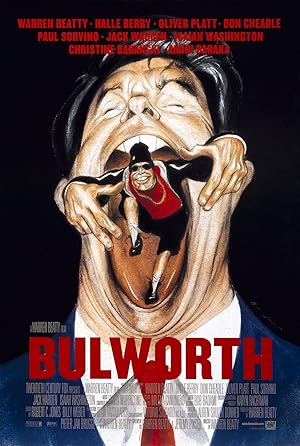
Bulworth
Senator Jay Bulworth is facing speculation-induced financial ruin, so he puts out a contract on his own life in order to collect a large, new insurance policy for his family. Living each moment on borrowed time, he suddenly begins spouting raw, unfiltered--and sometimes offensive in word but satirical in spirit -- thoughts to shocked audiences and handlers in the speech of hip-hop music and culture. His newfound uninhibitedness and new relationship with Nina carry him on a journey of political and spiritual renewal.
The film disappointed at the box office against its respectable budget of $30.0M, earning $29.2M globally (-3% loss).
Nominated for 1 Oscar. 1 win & 20 nominations


Plot Structure
Story beats plotted across runtime


Narrative Arc
Emotional journey through the story's key moments
Story Circle
Blueprint 15-beat structure
Arcplot Score Breakdown
Weighted: Precision (70%) + Arc (15%) + Theme (15%)
Bulworth (1998) exhibits strategically placed dramatic framework, characteristic of Warren Beatty's storytelling approach. This structural analysis examines how the film's 15-point plot structure maps to proven narrative frameworks across 1 hour and 48 minutes. With an Arcplot score of 6.4, the film takes an unconventional approach to traditional narrative frameworks.
Characters
Cast & narrative archetypes

Jay Billington Bulworth
Nina
Dennis Murphy
Constance Bulworth
L.D.
Davers
Vinnie
Main Cast & Characters
Jay Billington Bulworth
Played by Warren Beatty
A disillusioned Democratic senator who hires a hitman on himself and begins speaking radical truths after abandoning political correctness.
Nina
Played by Halle Berry
A young, politically conscious woman from South Central LA who becomes Bulworth's guide to street reality and eventual love interest.
Dennis Murphy
Played by Oliver Platt
Bulworth's loyal but increasingly concerned campaign manager trying to contain the senator's political self-destruction.
Constance Bulworth
Played by Christine Baranski
Bulworth's superficial, image-obsessed wife who is more concerned with appearances than her husband's mental breakdown.
L.D.
Played by Don Cheadle
A drug dealer and Nina's associate who becomes entangled in Bulworth's dangerous journey through South Central.
Davers
Played by Jack Warden
A TV producer and political operative who witnesses Bulworth's transformation and tries to manage the media fallout.
Vinnie
Played by Paul Sorvino
An insurance industry lobbyist representing corporate interests pressuring Bulworth for political favors.
Structural Analysis
The Status Quo at 1 minutes (1% through the runtime) establishes Senator Jay Bulworth sits alone in his office at 3 AM, weeping while watching his own campaign ads, a broken man who has sold out his ideals for political survival.. Structural examination shows that this early placement immediately immerses viewers in the story world.
The inciting incident occurs at 13 minutes when Bulworth hires an assassin to kill himself during the campaign weekend, purchasing a $10 million life insurance policy for his daughter, making his remaining days a death sentence.. At 12% through the film, this Disruption aligns precisely with traditional story structure. This beat shifts the emotional landscape, launching the protagonist into the central conflict.
The First Threshold at 26 minutes marks the transition into Act II, occurring at 24% of the runtime. This demonstrates the protagonist's commitment to At a black church, Bulworth abandons his prepared speech and starts speaking brutal truth, telling the congregation "You haven't gotten rid of me because you're not really askin' for anything" - his first act of radical honesty., moving from reaction to action.
At 53 minutes, the Midpoint arrives at 49% of the runtime—precisely centered, creating perfect narrative symmetry. The analysis reveals that this crucial beat False victory: Bulworth's truth-telling goes viral, he's becoming a sensation, and he connects with Nina intimately. He decides he wants to live and tries to call off the assassination contract., fundamentally raising what's at risk. The emotional intensity shifts, dividing the narrative into clear before-and-after phases.
The Collapse moment at 79 minutes (73% through) represents the emotional nadir. Here, Bulworth discovers Nina was paid by the insurance industry to set him up. His trust is shattered, his political career is destroyed, and he still has an assassin after him - everything falls apart., shows the protagonist at their lowest point. This beat's placement in the final quarter sets up the climactic reversal.
The Second Threshold at 85 minutes initiates the final act resolution at 79% of the runtime. Nina reveals she genuinely cares for him and explains the truth about the setup. Bulworth realizes the real enemy is the system itself, and decides to continue fighting, embracing his newfound voice., demonstrating the transformation achieved throughout the journey.
Emotional Journey
Bulworth's emotional architecture traces a deliberate progression across 15 carefully calibrated beats.
Narrative Framework
This structural analysis employs structural analysis methodology used to understand storytelling architecture. By mapping Bulworth against these established plot points, we can identify how Warren Beatty utilizes or subverts traditional narrative conventions. The plot point approach reveals not only adherence to structural principles but also creative choices that distinguish Bulworth within the comedy genre.
Warren Beatty's Structural Approach
Among the 3 Warren Beatty films analyzed on Arcplot, the average structural score is 6.8, demonstrating varied approaches to story architecture. Bulworth takes a more unconventional approach compared to the director's typical style. For comparative analysis, explore the complete Warren Beatty filmography.
Comparative Analysis
Additional comedy films include The Bad Guys, Ella Enchanted and The Evening Star. For more Warren Beatty analyses, see Dick Tracy, Reds.
Plot Points by Act
Act I
SetupStatus Quo
Senator Jay Bulworth sits alone in his office at 3 AM, weeping while watching his own campaign ads, a broken man who has sold out his ideals for political survival.
Theme
Bulworth's advisor tells him "You're gonna have to get happy for the big money guys," foreshadowing the film's exploration of political corruption and authenticity versus performance.
Worldbuilding
Setup of Bulworth's world: exhausted, suicidal senator who hasn't slept in days, preparing for campaign appearances while negotiating insurance lobby deals and abandoning his liberal principles.
Disruption
Bulworth hires an assassin to kill himself during the campaign weekend, purchasing a $10 million life insurance policy for his daughter, making his remaining days a death sentence.
Resistance
Freed by his imminent death, Bulworth begins his weekend campaign in South Central LA, debating whether to continue the charade or speak his mind before dying.
Act II
ConfrontationFirst Threshold
At a black church, Bulworth abandons his prepared speech and starts speaking brutal truth, telling the congregation "You haven't gotten rid of me because you're not really askin' for anything" - his first act of radical honesty.
Mirror World
Bulworth meets Nina, a young black woman from South Central who challenges his assumptions and represents the authentic connection to real people he's lost in his political career.
Premise
The promise of the premise: Bulworth continues telling uncomfortable truths at fundraisers and events, starts rapping his political views, and pursues Nina while his handlers desperately try to contain the damage.
Midpoint
False victory: Bulworth's truth-telling goes viral, he's becoming a sensation, and he connects with Nina intimately. He decides he wants to live and tries to call off the assassination contract.
Opposition
Bulworth can't reach the assassin to cancel the hit. The insurance industry threatens him. His continued truth-telling alienates powerful interests. Nina's connections to dangerous people become apparent.
Collapse
Bulworth discovers Nina was paid by the insurance industry to set him up. His trust is shattered, his political career is destroyed, and he still has an assassin after him - everything falls apart.
Crisis
Bulworth spirals in despair, confronting the darkness of his situation: betrayed, politically ruined, marked for death, questioning whether his brief moment of authenticity meant anything.
Act III
ResolutionSecond Threshold
Nina reveals she genuinely cares for him and explains the truth about the setup. Bulworth realizes the real enemy is the system itself, and decides to continue fighting, embracing his newfound voice.
Synthesis
Bulworth makes a final televised appearance speaking complete truth about race, class, and corruption in America. The assassin is revealed and confronted, bringing all forces together for resolution.
Transformation
Just as Bulworth has found authentic purpose and appears ready to continue his revolution, he is shot and killed by the insurance industry operative, suggesting the system destroys those who truly challenge it.