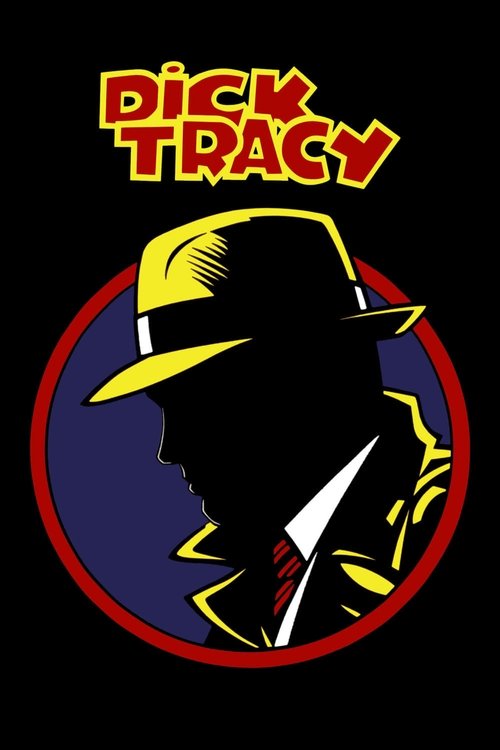
Dick Tracy
The comic strip detective finds his life vastly complicated when Breathless Mahoney makes advances towards him while he is trying to battle Big Boy Caprice's united mob.
Despite a mid-range budget of $47.0M, Dick Tracy became a financial success, earning $103.7M worldwide—a 121% return.
3 Oscars. 9 wins & 37 nominations


Plot Structure
Story beats plotted across runtime


Narrative Arc
Emotional journey through the story's key moments
Story Circle
Blueprint 15-beat structure
Arcplot Score Breakdown
Weighted: Precision (70%) + Arc (15%) + Theme (15%)
Dick Tracy (1990) showcases deliberately positioned narrative design, characteristic of Warren Beatty's storytelling approach. This structural analysis examines how the film's 15-point plot structure maps to proven narrative frameworks across 1 hour and 45 minutes. With an Arcplot score of 6.9, the film balances conventional beats with creative variation.
Characters
Cast & narrative archetypes

Dick Tracy
Breathless Mahoney
Big Boy Caprice
Tess Trueheart
The Kid
Lips Manlis
Main Cast & Characters
Dick Tracy
Played by Warren Beatty
Incorruptible police detective fighting organized crime in a stylized 1930s city. Known for his yellow coat, square jaw, and unwavering moral code.
Breathless Mahoney
Played by Madonna
Sultry nightclub singer caught between gangster Big Boy Caprice and detective Dick Tracy. Uses her sexuality as a weapon while seeking genuine connection.
Big Boy Caprice
Played by Al Pacino
Ruthless crime boss who murders his way to the top of the city's underworld. Flamboyant, violent, and power-hungry with a Napoleon complex.
Tess Trueheart
Played by Glenne Headly
Dick Tracy's loyal and patient girlfriend who works as a schoolteacher. Represents moral virtue and domesticity while growing frustrated with Tracy's devotion to duty.
The Kid
Played by Charlie Korsmo
Orphaned street urchin who idolizes Dick Tracy and becomes his unofficial sidekick. Searching for identity and belonging after his father's murder.
Lips Manlis
Played by Paul Sorvino
Initial crime boss who controls the city before Big Boy betrays and murders him. His death sets the plot in motion.
Structural Analysis
The Status Quo at 1 minutes (1% through the runtime) establishes Dick Tracy patrols the city in his signature yellow coat and fedora, a lone crusader against crime in a corrupt metropolis. He's defined by his unwavering moral code but emotionally distant from those who care about him.. Significantly, this early placement immediately immerses viewers in the story world.
The inciting incident occurs at 12 minutes when Big Boy Caprice consolidates all the crime bosses under his control, creating a unified criminal empire. This escalation threatens the entire city and makes Tracy's solitary crusade insufficient. The stakes are raised beyond normal crime-fighting.. At 12% through the film, this Disruption aligns precisely with traditional story structure. This beat shifts the emotional landscape, launching the protagonist into the central conflict.
The First Threshold at 25 minutes marks the transition into Act II, occurring at 24% of the runtime. This demonstrates the protagonist's commitment to Tracy actively chooses to go after Big Boy despite the danger, accepting that he must engage more deeply with the criminal world. He commits to taking down the entire organization, not just responding to individual crimes. This is his conscious decision to enter a more dangerous game., moving from reaction to action.
At 52 minutes, the Midpoint arrives at 50% of the runtime—precisely centered, creating perfect narrative symmetry. Structural examination shows that this crucial beat False defeat: Big Boy frames Tracy for murder, turning the detective from hunter to hunted. Tracy's own system turns against him as he becomes a wanted man. The stakes raise dramatically - now he must clear his name while still pursuing Big Boy, and his rigid adherence to the law becomes a liability., fundamentally raising what's at risk. The emotional intensity shifts, dividing the narrative into clear before-and-after phases.
The Collapse moment at 78 minutes (75% through) represents the emotional nadir. Here, The Kid is endangered and Tracy's world crumbles. Everything he's fought to protect is at risk. The whiff of death: Tracy faces the possibility of losing everyone he cares about due to his unbending nature. His greatest strength - his incorruptibility - has become his greatest weakness, isolating him from human connection., reveals the protagonist at their lowest point. This beat's placement in the final quarter sets up the climactic reversal.
The Second Threshold at 84 minutes initiates the final act resolution at 80% of the runtime. Tracy synthesizes duty with humanity. He realizes he can be both incorruptible AND emotionally present. The revelation: he doesn't have to choose between his principles and his heart. Armed with this understanding and new evidence, he moves toward final confrontation with Big Boy, now fighting for people, not just justice., demonstrating the transformation achieved throughout the journey.
Emotional Journey
Dick Tracy's emotional architecture traces a deliberate progression across 15 carefully calibrated beats.
Narrative Framework
This structural analysis employs a 15-point narrative structure framework that maps key story moments. By mapping Dick Tracy against these established plot points, we can identify how Warren Beatty utilizes or subverts traditional narrative conventions. The plot point approach reveals not only adherence to structural principles but also creative choices that distinguish Dick Tracy within the adventure genre.
Warren Beatty's Structural Approach
Among the 3 Warren Beatty films analyzed on Arcplot, the average structural score is 6.8, demonstrating varied approaches to story architecture. Dick Tracy represents one of the director's most structurally precise works. For comparative analysis, explore the complete Warren Beatty filmography.
Comparative Analysis
Additional adventure films include The Black Stallion, The Bad Guys and Puss in Boots. For more Warren Beatty analyses, see Bulworth, Reds.
Plot Points by Act
Act I
SetupStatus Quo
Dick Tracy patrols the city in his signature yellow coat and fedora, a lone crusader against crime in a corrupt metropolis. He's defined by his unwavering moral code but emotionally distant from those who care about him.
Theme
Tess Trueheart confronts Tracy about his inability to commit, asking when he'll make a choice about their relationship. The theme emerges: choosing between duty and personal life, between black-and-white morality and human complexity.
Worldbuilding
Introduction to the vibrant, comic-strip world of the city. Big Boy Caprice murders crime boss Lips Manlis and takes over his empire and his girlfriend Breathless Mahoney. Tracy operates alone, refusing bribes, caring for orphan Kid. The criminal underworld and Tracy's rigid moral stance are established.
Disruption
Big Boy Caprice consolidates all the crime bosses under his control, creating a unified criminal empire. This escalation threatens the entire city and makes Tracy's solitary crusade insufficient. The stakes are raised beyond normal crime-fighting.
Resistance
Tracy investigates Big Boy's organization while resisting Breathless Mahoney's seductive attempts to compromise him. He struggles with how to bring down a now-legitimate criminal empire. Tess pressures him for commitment. Tracy debates whether his old methods can work against this new threat.
Act II
ConfrontationFirst Threshold
Tracy actively chooses to go after Big Boy despite the danger, accepting that he must engage more deeply with the criminal world. He commits to taking down the entire organization, not just responding to individual crimes. This is his conscious decision to enter a more dangerous game.
Mirror World
Breathless Mahoney intensifies her pursuit of Tracy, representing the temptation to abandon his rigid principles. She embodies the thematic conflict: will Tracy remain incorruptible or will he yield to human desire? Her presence forces him to confront what he's sacrificing for duty.
Premise
The fun of the premise: Tracy navigates the colorful criminal underworld in classic detective fashion. Shootouts, interrogations, and narrow escapes in a comic-book style world. Big Boy's criminal empire expands while Tracy gathers evidence. The visual spectacle and cat-and-mouse game deliver on the film's promise.
Midpoint
False defeat: Big Boy frames Tracy for murder, turning the detective from hunter to hunted. Tracy's own system turns against him as he becomes a wanted man. The stakes raise dramatically - now he must clear his name while still pursuing Big Boy, and his rigid adherence to the law becomes a liability.
Opposition
Tracy operates as a fugitive while Big Boy's power grows. The police force turns against him. Breathless's manipulation intensifies. His relationships with Tess and the Kid strain under pressure. Every move becomes more difficult as both criminals and law enforcement close in. Tracy's isolation deepens.
Collapse
The Kid is endangered and Tracy's world crumbles. Everything he's fought to protect is at risk. The whiff of death: Tracy faces the possibility of losing everyone he cares about due to his unbending nature. His greatest strength - his incorruptibility - has become his greatest weakness, isolating him from human connection.
Crisis
Tracy's dark night of the soul. He must confront whether his rigid moral code is heroic or cowardly - is he avoiding commitment and human messiness by hiding behind duty? He processes what truly matters: not just stopping crime, but protecting the people he loves.
Act III
ResolutionSecond Threshold
Tracy synthesizes duty with humanity. He realizes he can be both incorruptible AND emotionally present. The revelation: he doesn't have to choose between his principles and his heart. Armed with this understanding and new evidence, he moves toward final confrontation with Big Boy, now fighting for people, not just justice.
Synthesis
The finale: Tracy confronts Big Boy's organization in a spectacular showdown. He uses both his detective skills and his human connections. Breathless's role is revealed, Tess supports him, the Kid is saved. Tracy brings down Big Boy while maintaining his integrity, proving he can have both duty and love. The criminal empire falls.
Transformation
Tracy proposes to Tess and embraces his relationship with the Kid, showing he's learned to commit emotionally while remaining incorruptible. The final image mirrors the opening but shows transformation: he's still the hero in the yellow coat, but now connected to others, no longer alone. Duty and love united.