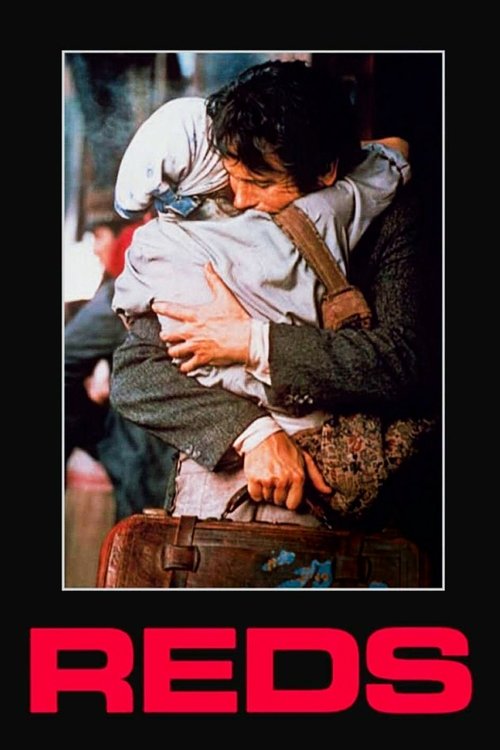
Reds
An account of the revolutionary years of the legendary American journalist John Reed, who shared his adventurous professional life with his radical commitment to the socialist revolution in Russia, his dream of spreading its principles among the members of the American working class, and his troubled romantic relationship with the writer Louise Bryant.
Working with a respectable budget of $35.0M, the film achieved a steady performer with $40.4M in global revenue (+15% profit margin).
3 Oscars. 22 wins & 37 nominations


Plot Structure
Story beats plotted across runtime


Narrative Arc
Emotional journey through the story's key moments
Story Circle
Blueprint 15-beat structure
Arcplot Score Breakdown
Weighted: Precision (70%) + Arc (15%) + Theme (15%)
Reds (1981) showcases deliberately positioned story structure, characteristic of Warren Beatty's storytelling approach. This structural analysis examines how the film's 15-point plot structure maps to proven narrative frameworks across 3 hours and 15 minutes. With an Arcplot score of 7.1, the film balances conventional beats with creative variation.
Characters
Cast & narrative archetypes

John Reed
Louise Bryant
Eugene O'Neill
Emma Goldman
Grigory Zinoviev
Main Cast & Characters
John Reed
Played by Warren Beatty
American journalist and radical activist who becomes caught up in the Russian Revolution and communist movement while struggling to balance his ideals with his personal life.
Louise Bryant
Played by Diane Keaton
Independent writer and feminist who navigates her passionate but turbulent relationship with Reed while seeking her own identity and voice in the radical political movements of the era.
Eugene O'Neill
Played by Jack Nicholson
Brooding playwright who becomes romantically involved with Louise Bryant and struggles with his own demons while witnessing the revolutionary fervor of his peers.
Emma Goldman
Played by Maureen Stapleton
Anarchist activist and mentor figure who challenges both Reed and Bryant on their revolutionary ideals and personal choices.
Grigory Zinoviev
Played by Jerzy Kosinski
Bolshevik revolutionary leader who becomes Reed's contact and guide through the complex political landscape of Soviet Russia.
Structural Analysis
The Status Quo at 2 minutes (1% through the runtime) establishes Louise Bryant trapped in conventional bourgeois marriage in Portland, watching a suffragist speak, yearning for something more meaningful in her constrained life.. Of particular interest, this early placement immediately immerses viewers in the story world.
The inciting incident occurs at 23 minutes when John Reed invites Louise to leave Portland and come to New York with him, offering her escape from her conventional life and entry into the radical intellectual world she desires.. At 12% through the film, this Disruption aligns precisely with traditional story structure. This beat shifts the emotional landscape, launching the protagonist into the central conflict.
The First Threshold at 47 minutes marks the transition into Act II, occurring at 24% of the runtime. This indicates the protagonist's commitment to Louise actively chooses to leave her marriage and move to Greenwich Village with Jack Reed, fully entering the world of radical politics and free love. They become a committed couple., moving from reaction to action.
At 93 minutes, the Midpoint arrives at 48% of the runtime—precisely centered, creating perfect narrative symmetry. Notably, this crucial beat False victory: Jack and Louise witness the October Revolution firsthand in Petrograd. The triumph of the Bolsheviks represents everything they've believed in coming true. Jack is energized, validated in his radical politics. Stakes raised: they must now bring the revolution home to America., fundamentally raising what's at risk. The emotional intensity shifts, dividing the narrative into clear before-and-after phases.
The Collapse moment at 144 minutes (74% through) represents the emotional nadir. Here, All is lost: Louise and Jack have brutal final argument where she leaves him. Their relationship—the emotional core of the film—appears dead. Jack is isolated, his health failing, his political faction defeated, and he has lost Louise. Complete collapse on all fronts., reveals the protagonist at their lowest point. This beat's placement in the final quarter sets up the climactic reversal.
The Second Threshold at 154 minutes initiates the final act resolution at 79% of the runtime. Louise receives word that Jack is stranded and dying in Russia. She realizes that their love matters more than pride or political differences. She chooses to risk everything to find him, synthesizing personal commitment with revolutionary action., demonstrating the transformation achieved throughout the journey.
Emotional Journey
Reds's emotional architecture traces a deliberate progression across 15 carefully calibrated beats.
Narrative Framework
This structural analysis employs systematic plot point analysis that identifies crucial turning points. By mapping Reds against these established plot points, we can identify how Warren Beatty utilizes or subverts traditional narrative conventions. The plot point approach reveals not only adherence to structural principles but also creative choices that distinguish Reds within the drama genre.
Warren Beatty's Structural Approach
Among the 3 Warren Beatty films analyzed on Arcplot, the average structural score is 6.8, demonstrating varied approaches to story architecture. Reds represents one of the director's most structurally precise works. For comparative analysis, explore the complete Warren Beatty filmography.
Comparative Analysis
Additional drama films include After Thomas, South Pacific and Dirty Dancing: Havana Nights. For more Warren Beatty analyses, see Dick Tracy, Bulworth.
Plot Points by Act
Act I
SetupStatus Quo
Louise Bryant trapped in conventional bourgeois marriage in Portland, watching a suffragist speak, yearning for something more meaningful in her constrained life.
Theme
At a radical gathering, Emma Goldman challenges the group: "If you're not willing to give up everything for what you believe in, you don't really believe in anything." The theme of total commitment versus personal happiness is introduced.
Worldbuilding
Establishing 1915 Portland and the Greenwich Village radical scene. Louise meets charismatic journalist John Reed, who represents the passionate, committed life she craves. Introduction of Eugene O'Neill, Emma Goldman, and the bohemian world of artists and revolutionaries.
Disruption
John Reed invites Louise to leave Portland and come to New York with him, offering her escape from her conventional life and entry into the radical intellectual world she desires.
Resistance
Louise hesitates and debates leaving her husband. Brief affair with Eugene O'Neill. She struggles between security and freedom, eventually preparing to fully commit to the bohemian life and relationship with Reed.
Act II
ConfrontationFirst Threshold
Louise actively chooses to leave her marriage and move to Greenwich Village with Jack Reed, fully entering the world of radical politics and free love. They become a committed couple.
Mirror World
Jack and Louise's passionate love affair blossoms at Provincetown. Their relationship becomes the emotional mirror to the political revolution story—both require sacrifice, commitment, and navigating freedom versus loyalty.
Premise
The "Fun and Games" of bohemian life: passionate romance, intellectual debates, Louise's growth as a writer, Jack's journalism, parties with radicals. They live the revolutionary ideal: free love, artistic expression, political action. Trip to Russia to witness revolution begins.
Midpoint
False victory: Jack and Louise witness the October Revolution firsthand in Petrograd. The triumph of the Bolsheviks represents everything they've believed in coming true. Jack is energized, validated in his radical politics. Stakes raised: they must now bring the revolution home to America.
Opposition
Return to America brings conflict. Jack becomes consumed by factional fights in the American Communist movement. Louise feels abandoned as Jack prioritizes political work over their relationship. Their competing needs for commitment (him to the cause, her to their partnership) create growing distance. Louise's affair, arguments about freedom versus loyalty intensify.
Collapse
All is lost: Louise and Jack have brutal final argument where she leaves him. Their relationship—the emotional core of the film—appears dead. Jack is isolated, his health failing, his political faction defeated, and he has lost Louise. Complete collapse on all fronts.
Crisis
Dark night: Jack returns alone to Russia for the Communist Congress, physically deteriorating. Louise remains in America, hollow and lost. Both process what they've sacrificed and lost. The separation forces each to confront what truly matters.
Act III
ResolutionSecond Threshold
Louise receives word that Jack is stranded and dying in Russia. She realizes that their love matters more than pride or political differences. She chooses to risk everything to find him, synthesizing personal commitment with revolutionary action.
Synthesis
Louise's harrowing journey across Finland and Russia to find Jack. Using all her resourcefulness and determination, she navigates war zones, bureaucracy, and danger. The finale is her quest to reunite with him before it's too late.
Transformation
Louise finds Jack in a hospital, ill and dying. They reunite with tenderness and reconciliation, but Jack dies shortly after. Final image: Louise alone, transformed by love and loss, having learned that personal connection and revolutionary commitment are both essential—and both demand sacrifice. She has become the committed radical and loyal partner, but at tremendous cost.