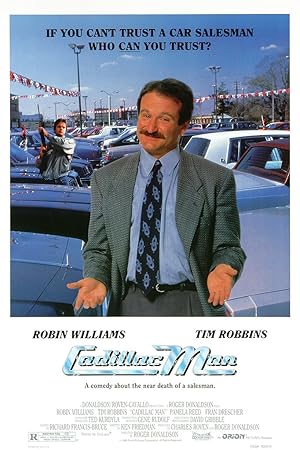
Cadillac Man
Joe's a car salesman with a problem. He has two days to sell 12 cars or he loses his job. This would be a difficult task at the best of times but Joe has to contend with his girlfriends (he's two timing), a missing teenage daughter and an ex-wife. What more could go wrong ?.. a lot, enter a crazy jealous husband with a machine gun..
The film earned $27.6M at the global box office.


Plot Structure
Story beats plotted across runtime


Narrative Arc
Emotional journey through the story's key moments
Story Circle
Blueprint 15-beat structure
Arcplot Score Breakdown
Weighted: Precision (70%) + Arc (15%) + Theme (15%)
Cadillac Man (1990) exhibits precise dramatic framework, characteristic of Roger Donaldson's storytelling approach. This structural analysis examines how the film's 15-point plot structure maps to proven narrative frameworks across 1 hour and 37 minutes. With an Arcplot score of 7.6, the film showcases strong structural fundamentals.
Characters
Cast & narrative archetypes

Joey O'Brien
Larry
Donna
Lila
Molly
Joy Munchack
Tina
Main Cast & Characters
Joey O'Brien
Played by Robin Williams
A smooth-talking car salesman juggling personal crises and romantic entanglements during a desperate sales day.
Larry
Played by Tim Robbins
An unstable, jealous husband who takes the dealership hostage while searching for his wife's alleged lover.
Donna
Played by Annabella Sciorra
Larry's wife, a fashion designer whose suspected infidelity triggers the hostage crisis.
Lila
Played by Pamela Reed
Joey's demanding girlfriend who pressures him for commitment and financial security.
Molly
Played by Fran Drescher
Joey's estranged wife and mother of his children, still emotionally connected despite their separation.
Joy Munchack
Played by Zack Norman
A wealthy, sexually forward customer whom Joey has been romancing to close a deal.
Tina
Played by Judith Hoag
Joey's young daughter who represents his family responsibilities and emotional vulnerability.
Structural Analysis
The Status Quo at 1 minutes (1% through the runtime) establishes Joey O'Brien wakes up late, juggling multiple women and debts. His chaotic life as a desperate car salesman is established - he's a smooth-talking charmer living on the edge of financial and romantic disaster.. Significantly, this early placement immediately immerses viewers in the story world.
The inciting incident occurs at 12 minutes when The impossible deadline is set: Joey must sell a dozen cars today or he's fired. His carefully balanced house of cards is about to collapse, and the pressure intensifies his already frantic sales tactics.. At 13% through the film, this Disruption is delayed, allowing extended setup of the story world. This beat shifts the emotional landscape, launching the protagonist into the central conflict.
The First Threshold at 26 minutes marks the transition into Act II, occurring at 26% of the runtime. This illustrates the protagonist's commitment to Larry crashes into the dealership on a motorcycle, armed and dangerous, taking everyone hostage. Joey must now navigate a life-or-death situation rather than just a sales deadline. The stakes escalate from losing his job to losing his life., moving from reaction to action.
At 49 minutes, the Midpoint arrives at 51% of the runtime—precisely centered, creating perfect narrative symmetry. Notably, this crucial beat False defeat: Larry discovers one of the hostages might be his wife's lover, or Joey's lies are exposed. The situation deteriorates and violence seems inevitable. Larry becomes more unstable and Joey's control over the situation slips., fundamentally raising what's at risk. The emotional intensity shifts, dividing the narrative into clear before-and-after phases.
The Collapse moment at 72 minutes (75% through) represents the emotional nadir. Here, Larry reaches his breaking point and threatens to kill someone or himself. The situation spirals to its darkest moment. Joey's manipulation tactics have failed, and someone may die. All of Joey's lies and facades are completely stripped away., demonstrates the protagonist at their lowest point. This beat's placement in the final quarter sets up the climactic reversal.
The Second Threshold at 78 minutes initiates the final act resolution at 80% of the runtime. Joey has a breakthrough with Larry through genuine honesty and empathy. He realizes that his gift for communication works best when it comes from authenticity rather than manipulation. He can help Larry by being real., demonstrating the transformation achieved throughout the journey.
Emotional Journey
Cadillac Man's emotional architecture traces a deliberate progression across 15 carefully calibrated beats.
Narrative Framework
This structural analysis employs structural analysis methodology used to understand storytelling architecture. By mapping Cadillac Man against these established plot points, we can identify how Roger Donaldson utilizes or subverts traditional narrative conventions. The plot point approach reveals not only adherence to structural principles but also creative choices that distinguish Cadillac Man within the comedy genre.
Roger Donaldson's Structural Approach
Among the 13 Roger Donaldson films analyzed on Arcplot, the average structural score is 7.2, reflecting strong command of classical structure. Cadillac Man represents one of the director's most structurally precise works. For comparative analysis, explore the complete Roger Donaldson filmography.
Comparative Analysis
Additional comedy films include The Bad Guys, Ella Enchanted and The Evening Star. For more Roger Donaldson analyses, see Species, Dante's Peak and Seeking Justice.
Plot Points by Act
Act I
SetupStatus Quo
Joey O'Brien wakes up late, juggling multiple women and debts. His chaotic life as a desperate car salesman is established - he's a smooth-talking charmer living on the edge of financial and romantic disaster.
Theme
Joey's boss or colleague mentions that honesty and real connection matter more than the sale. The theme of authenticity vs. performance is introduced - can Joey be real with anyone, or is everything just a pitch?
Worldbuilding
Joey's desperate world: he owes money to the mob, is juggling affairs with multiple women, faces losing his job if he doesn't sell 12 cars by the end of the day, and his ex-wife is demanding support payments. The dealership setting and cast of characters are established.
Disruption
The impossible deadline is set: Joey must sell a dozen cars today or he's fired. His carefully balanced house of cards is about to collapse, and the pressure intensifies his already frantic sales tactics.
Resistance
Joey scrambles through the day attempting impossible sales, lying to customers, dodging his various romantic entanglements. He debates whether to continue his dishonest approach or try something different, but desperation keeps him hustling.
Act II
ConfrontationFirst Threshold
Larry crashes into the dealership on a motorcycle, armed and dangerous, taking everyone hostage. Joey must now navigate a life-or-death situation rather than just a sales deadline. The stakes escalate from losing his job to losing his life.
Mirror World
Joey begins talking to Larry, the jealous husband. Larry represents raw, dangerous emotion and honesty - everything Joey avoids. Their relationship becomes the emotional center as Joey must be genuine to survive.
Premise
The hostage negotiation comedy unfolds. Joey uses his salesman skills to manage Larry, calm hostages, and navigate the chaos. Police surround the building. Joey discovers his gift for talking isn't just about manipulation - it can actually help people and save lives.
Midpoint
False defeat: Larry discovers one of the hostages might be his wife's lover, or Joey's lies are exposed. The situation deteriorates and violence seems inevitable. Larry becomes more unstable and Joey's control over the situation slips.
Opposition
Tensions escalate as Larry becomes more erratic. Joey's various lies and romantic entanglements are revealed to everyone. The police pressure increases. Joey must manage multiple crisis points while his own character flaws are exposed to all the hostages.
Collapse
Larry reaches his breaking point and threatens to kill someone or himself. The situation spirals to its darkest moment. Joey's manipulation tactics have failed, and someone may die. All of Joey's lies and facades are completely stripped away.
Crisis
Joey stops performing and becomes genuinely honest for perhaps the first time. He must find real truth and real connection to reach Larry. The crisis forces Joey to confront who he really is beneath all the sales pitches.
Act III
ResolutionSecond Threshold
Joey has a breakthrough with Larry through genuine honesty and empathy. He realizes that his gift for communication works best when it comes from authenticity rather than manipulation. He can help Larry by being real.
Synthesis
Joey talks Larry down using genuine connection rather than sales tactics. The hostage situation resolves peacefully. Joey faces the consequences of his actions but has transformed from pure performer to someone capable of authentic human connection.
Transformation
Joey emerges from the dealership changed. Whether he keeps his job or not, he's learned that genuine connection matters more than closing the deal. He's still a talker, but now he can be real - a transformed man who survived by dropping his mask.