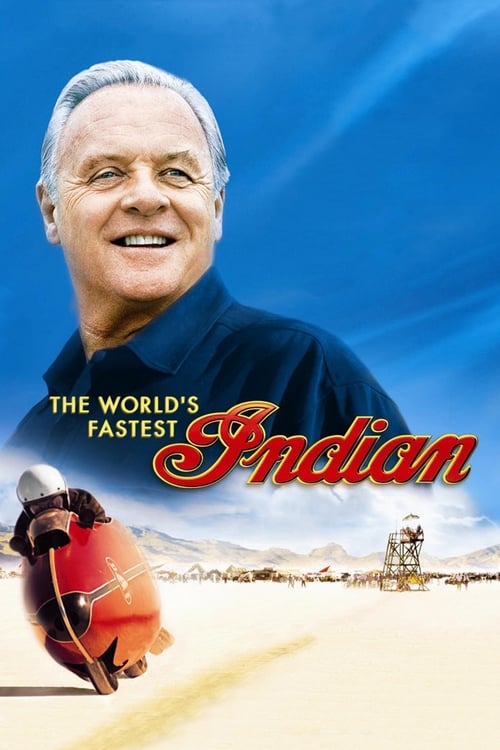
The World's Fastest Indian
The life story of New Zealander Burt Munro, who spent years building a 1920 Indian motorcycle—a bike which helped him set the land-speed world record at Utah's Bonneville Salt Flats in 1967.
The film struggled financially against its moderate budget of $25.0M, earning $18.3M globally (-27% loss). While initial box office returns were modest, the film has gained appreciation for its unique voice within the drama genre.
11 wins & 6 nominations


Plot Structure
Story beats plotted across runtime


Narrative Arc
Emotional journey through the story's key moments
Story Circle
Blueprint 15-beat structure
Arcplot Score Breakdown
Weighted: Precision (70%) + Arc (15%) + Theme (15%)
The World's Fastest Indian (2005) demonstrates meticulously timed narrative architecture, characteristic of Roger Donaldson's storytelling approach. This structural analysis examines how the film's 15-point plot structure maps to proven narrative frameworks across 2 hours and 7 minutes. With an Arcplot score of 7.2, the film balances conventional beats with creative variation.
Characters
Cast & narrative archetypes

Burt Munro
Tom
Ada
Tina
Jim Moffet
Fernando
Main Cast & Characters
Burt Munro
Played by Anthony Hopkins
A 63-year-old New Zealander determined to set a land speed record at Bonneville Salt Flats on his 1920 Indian motorcycle.
Tom
Played by Paul Rodriguez
A kind-hearted used car salesman in Los Angeles who befriends Burt and helps him on his journey.
Ada
Played by Chris Williams
A transvestite motel clerk who develops a friendship with Burt during his stay in California.
Tina
Played by Diane Ladd
A lonely widow who takes Burt in for the night and shares a brief romantic connection with him.
Jim Moffet
Played by Christopher Lawford
A racing veteran at Bonneville who initially skeptical of Burt but becomes supportive of his quest.
Fernando
Played by Aaron Murphy
A young car enthusiast who befriends Burt and helps him prepare his motorcycle at Bonneville.
Structural Analysis
The Status Quo at 1 minutes (1% through the runtime) establishes Burt Munro, an eccentric elderly New Zealander, wakes early in his small shed home in Invercargill, surrounded by his beloved 1920 Indian Scout motorcycle. His modest, routine-driven life revolves entirely around tinkering with and perfecting his vintage bike.. Notably, this early placement immediately immerses viewers in the story world.
The inciting incident occurs at 15 minutes when Burt's neighbors raise money to help send him to America for Bonneville Speed Week. This external support transforms his lifelong dream from impossible fantasy into achievable reality, forcing him to actually commit to the journey he's talked about for decades.. At 12% through the film, this Disruption aligns precisely with traditional story structure. This beat shifts the emotional landscape, launching the protagonist into the central conflict.
The First Threshold at 31 minutes marks the transition into Act II, occurring at 25% of the runtime. This indicates the protagonist's commitment to Burt arrives in Los Angeles and begins the cross-country journey to Utah with his bike. He makes the definitive choice to pursue his dream on American soil, leaving behind the safety of home and entering the unknown world of his quest., moving from reaction to action.
At 62 minutes, the Midpoint arrives at 49% of the runtime—precisely centered, creating perfect narrative symmetry. Structural examination shows that this crucial beat Burt arrives at Bonneville Salt Flats only to discover he has no official entry, no safety inspection certificate, and his homemade modifications violate multiple regulations. Officials tell him he cannot race. His dream appears crushed after coming so far., fundamentally raising what's at risk. The emotional intensity shifts, dividing the narrative into clear before-and-after phases.
The Collapse moment at 94 minutes (74% through) represents the emotional nadir. Here, During a test run, Burt's motorcycle suffers a serious mechanical failure, and he has a health scare related to his heart condition. Both his body and his bike seem ready to give out, and he faces the real possibility that his dream will die here, so close to achievement., demonstrates the protagonist at their lowest point. This beat's placement in the final quarter sets up the climactic reversal.
The Second Threshold at 101 minutes initiates the final act resolution at 80% of the runtime. Burt realizes that living fully means accepting risk and that his years of preparation have led to this moment. He synthesizes his mechanical knowledge, life experience, and pure courage. He commits to making the record attempt regardless of the danger., demonstrating the transformation achieved throughout the journey.
Emotional Journey
The World's Fastest Indian's emotional architecture traces a deliberate progression across 15 carefully calibrated beats.
Narrative Framework
This structural analysis employs a 15-point narrative structure framework that maps key story moments. By mapping The World's Fastest Indian against these established plot points, we can identify how Roger Donaldson utilizes or subverts traditional narrative conventions. The plot point approach reveals not only adherence to structural principles but also creative choices that distinguish The World's Fastest Indian within the drama genre.
Roger Donaldson's Structural Approach
Among the 13 Roger Donaldson films analyzed on Arcplot, the average structural score is 7.2, reflecting strong command of classical structure. The World's Fastest Indian represents one of the director's most structurally precise works. For comparative analysis, explore the complete Roger Donaldson filmography.
Comparative Analysis
Additional drama films include After Thomas, South Pacific and Dirty Dancing: Havana Nights. For more Roger Donaldson analyses, see Species, Dante's Peak and Seeking Justice.
Plot Points by Act
Act I
SetupStatus Quo
Burt Munro, an eccentric elderly New Zealander, wakes early in his small shed home in Invercargill, surrounded by his beloved 1920 Indian Scout motorcycle. His modest, routine-driven life revolves entirely around tinkering with and perfecting his vintage bike.
Theme
A neighbor or local tells Burt, "You're dreaming if you think you'll ever make it to America at your age," foreshadowing the film's exploration of dreams, age, determination, and living fully regardless of limitations.
Worldbuilding
Establishment of Burt's world: his daily routines, relationship with neighbors (including the young boy Tom), his heart condition, financial struggles, and his decades-long obsession with breaking the land speed record at Bonneville Salt Flats. We see his ingenuity, charm, and single-minded passion.
Disruption
Burt's neighbors raise money to help send him to America for Bonneville Speed Week. This external support transforms his lifelong dream from impossible fantasy into achievable reality, forcing him to actually commit to the journey he's talked about for decades.
Resistance
Burt prepares for the journey, securing passage on a freighter, saying goodbye to Tom and his community, and beginning the voyage to Los Angeles. Doubts surface about his health, age, and whether this dream is foolish, but he persists.
Act II
ConfrontationFirst Threshold
Burt arrives in Los Angeles and begins the cross-country journey to Utah with his bike. He makes the definitive choice to pursue his dream on American soil, leaving behind the safety of home and entering the unknown world of his quest.
Mirror World
Burt meets various Americans on his journey who represent different approaches to life: the widow Fran, the transvestite Tina, the Native American car salesman, the young soldier. These relationships reflect the theme of authenticity, human connection, and living without fear.
Premise
The "road movie" section delivering the promise of the premise: Burt's cross-country adventure through America. Multiple encounters showcase his charm, resourcefulness, and ability to connect with people from all walks of life while overcoming mechanical and health challenges.
Midpoint
Burt arrives at Bonneville Salt Flats only to discover he has no official entry, no safety inspection certificate, and his homemade modifications violate multiple regulations. Officials tell him he cannot race. His dream appears crushed after coming so far.
Opposition
Burt faces bureaucratic obstacles and skepticism from racing officials and other competitors. He must navigate rules, prove his bike's worthiness, pass safety inspections, and convince doubters that he and his ancient motorcycle deserve a chance. Tension builds as time runs short.
Collapse
During a test run, Burt's motorcycle suffers a serious mechanical failure, and he has a health scare related to his heart condition. Both his body and his bike seem ready to give out, and he faces the real possibility that his dream will die here, so close to achievement.
Crisis
Burt confronts his mortality and the reality that this may be his last chance. He must decide whether to risk everything—his health, his life—for one final run. The racing community, moved by his spirit, rallies to help repair his bike.
Act III
ResolutionSecond Threshold
Burt realizes that living fully means accepting risk and that his years of preparation have led to this moment. He synthesizes his mechanical knowledge, life experience, and pure courage. He commits to making the record attempt regardless of the danger.
Synthesis
Burt makes his record-breaking run at Bonneville, achieving a speed over 200 mph on his 1920 Indian Scout. The finale integrates all elements: his mechanical genius, determination, the support of new friends, and his willingness to risk everything for a dream. He succeeds triumphantly.
Transformation
Closing images show Burt celebrated by the racing community, his record acknowledged. Text reveals his record stood for years. The elderly dreamer who started in a small shed in New Zealand has become a legend, proving that passion, courage, and persistence transcend age and circumstance.