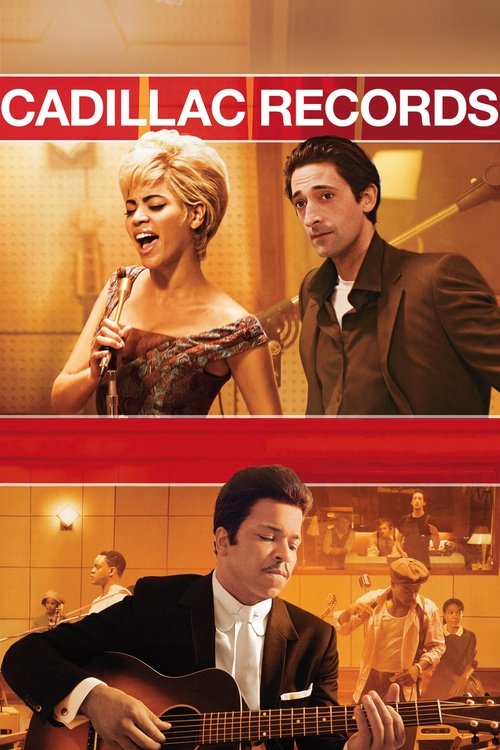
Cadillac Records
The story of sex, violence, race and rock and roll in 1950s Chicago, and the exciting but turbulent lives of some of America's musical legends, including Muddy Waters, Leonard Chess, Little Walter, Howlin' Wolf, Etta James and Chuck Berry.
The film struggled financially against its tight budget of $12.0M, earning $8.9M globally (-26% loss). While initial box office returns were modest, the film has gained appreciation for its innovative storytelling within the drama genre.
6 wins & 22 nominations


Plot Structure
Story beats plotted across runtime


Narrative Arc
Emotional journey through the story's key moments
Story Circle
Blueprint 15-beat structure
Arcplot Score Breakdown
Weighted: Precision (70%) + Arc (15%) + Theme (15%)
Cadillac Records (2008) reveals strategically placed story structure, characteristic of Darnell Martin's storytelling approach. This structural analysis examines how the film's 15-point plot structure maps to proven narrative frameworks across 1 hour and 49 minutes. With an Arcplot score of 7.1, the film balances conventional beats with creative variation.
Characters
Cast & narrative archetypes

Leonard Chess
Muddy Waters
Etta James
Little Walter
Howlin' Wolf
Chuck Berry
Willie Dixon
Geneva Wade
Main Cast & Characters
Leonard Chess
Played by Adrien Brody
Polish immigrant who founded Chess Records and helped shape the sound of Chicago blues and rock and roll.
Muddy Waters
Played by Jeffrey Wright
Legendary blues musician whose electric sound revolutionized the genre and became the foundation of Chess Records.
Etta James
Played by Beyoncé Knowles
Powerhouse vocalist who struggled with addiction while achieving legendary status with hits like "At Last."
Little Walter
Played by Columbus Short
Harmonica virtuoso and volatile talent whose innovations defined the Chess Records sound.
Howlin' Wolf
Played by Eamonn Walker
Deep-voiced blues legend and rival to Muddy Waters, known for his powerful stage presence.
Chuck Berry
Played by Mos Def
Rock and roll pioneer whose guitar riffs and showmanship influenced generations of musicians.
Willie Dixon
Played by Cedric the Entertainer
Bassist, songwriter, and producer who wrote many of Chess Records' greatest hits.
Geneva Wade
Played by Gabrielle Union
Muddy Waters' common-law wife who struggles with his infidelity and the demands of his career.
Structural Analysis
The Status Quo at 2 minutes (2% through the runtime) establishes Leonard Chess runs a small nightclub on Chicago's South Side in 1947, struggling to make ends meet in a segregated world where blues music thrives in the margins.. Of particular interest, this early placement immediately immerses viewers in the story world.
The inciting incident occurs at 12 minutes when Leonard hears Muddy Waters perform and recognizes the commercial potential of authentic blues music, seeing an opportunity to build something bigger than his small club.. At 11% through the film, this Disruption aligns precisely with traditional story structure. This beat shifts the emotional landscape, launching the protagonist into the central conflict.
The First Threshold at 26 minutes marks the transition into Act II, occurring at 24% of the runtime. This demonstrates the protagonist's commitment to Leonard commits fully to Chess Records, making his first recordings with Muddy Waters and choosing to invest everything in building a record label that will bring blues to mainstream America., moving from reaction to action.
At 55 minutes, the Midpoint arrives at 50% of the runtime—precisely centered, creating perfect narrative symmetry. Of particular interest, this crucial beat False victory collapses: Little Walter's violence and addiction spiral out of control, leading to his removal from the label. The dream begins to crack as success breeds destruction and the artists' pain becomes visible., fundamentally raising what's at risk. The emotional intensity shifts, dividing the narrative into clear before-and-after phases.
The Collapse moment at 81 minutes (74% through) represents the emotional nadir. Here, Leonard discovers Etta James near death from an overdose. The metaphorical death of innocence and the dream—his realization that his pursuit of success has destroyed the people he claims to love., indicates the protagonist at their lowest point. This beat's placement in the final quarter sets up the climactic reversal.
The Second Threshold at 88 minutes initiates the final act resolution at 81% of the runtime. Leonard sells Chess Records, accepting that the era is over. He gains clarity that he cannot undo the damage but can acknowledge the truth of what was built and what it cost., demonstrating the transformation achieved throughout the journey.
Emotional Journey
Cadillac Records's emotional architecture traces a deliberate progression across 15 carefully calibrated beats.
Narrative Framework
This structural analysis employs a 15-point narrative structure framework that maps key story moments. By mapping Cadillac Records against these established plot points, we can identify how Darnell Martin utilizes or subverts traditional narrative conventions. The plot point approach reveals not only adherence to structural principles but also creative choices that distinguish Cadillac Records within the drama genre.
Comparative Analysis
Additional drama films include After Thomas, South Pacific and Dirty Dancing: Havana Nights.
Plot Points by Act
Act I
SetupStatus Quo
Leonard Chess runs a small nightclub on Chicago's South Side in 1947, struggling to make ends meet in a segregated world where blues music thrives in the margins.
Theme
Muddy Waters tells Leonard, "The blues is about wanting what you ain't got." This statement encapsulates the film's exploration of desire, exploitation, and the cost of success.
Worldbuilding
Establishment of the Chicago blues scene, Leonard's relationship with his brother Phil, introduction to Muddy Waters and Little Walter, and the racial dynamics of the music industry in post-war America.
Disruption
Leonard hears Muddy Waters perform and recognizes the commercial potential of authentic blues music, seeing an opportunity to build something bigger than his small club.
Resistance
Leonard debates entering the record business, learns about recording and distribution, and navigates the challenges of being a white man selling black music. Muddy and Little Walter debate whether to trust him.
Act II
ConfrontationFirst Threshold
Leonard commits fully to Chess Records, making his first recordings with Muddy Waters and choosing to invest everything in building a record label that will bring blues to mainstream America.
Mirror World
Introduction of the artists-as-family dynamic at Chess Records. The relationships between Leonard and his artists (particularly Muddy, Little Walter, and later Etta James) represent the thematic heart: the exploitation disguised as love.
Premise
Chess Records' rise to success: hit records, touring, the introduction of Chuck Berry, the promise of Cadillacs for hits, growing wealth and fame. The fun of building an empire and making revolutionary music.
Midpoint
False victory collapses: Little Walter's violence and addiction spiral out of control, leading to his removal from the label. The dream begins to crack as success breeds destruction and the artists' pain becomes visible.
Opposition
The costs mount: addiction ravages the artists, Leonard's exploitation becomes clearer (unpaid royalties, controlling behavior), Etta James descends into heroin addiction, Chuck Berry faces legal troubles, and the British Invasion threatens to make them obsolete.
Collapse
Leonard discovers Etta James near death from an overdose. The metaphorical death of innocence and the dream—his realization that his pursuit of success has destroyed the people he claims to love.
Crisis
Leonard confronts the wreckage of his choices. Muddy Waters and others challenge him about unpaid royalties and exploitation. Leonard processes the cost of his ambition and the humanity he sacrificed for success.
Act III
ResolutionSecond Threshold
Leonard sells Chess Records, accepting that the era is over. He gains clarity that he cannot undo the damage but can acknowledge the truth of what was built and what it cost.
Synthesis
Epilogue showing the fates of the artists: Little Walter's death, Muddy's continued performing, Etta's recovery and eventual recognition. Leonard's death and the legacy of Chess Records in shaping American music.
Transformation
Final montage and text cards reveal the enduring impact of Chess Records and its artists on rock and roll history. The transformation is bittersweet: the music survives and triumphs, but at tremendous human cost.