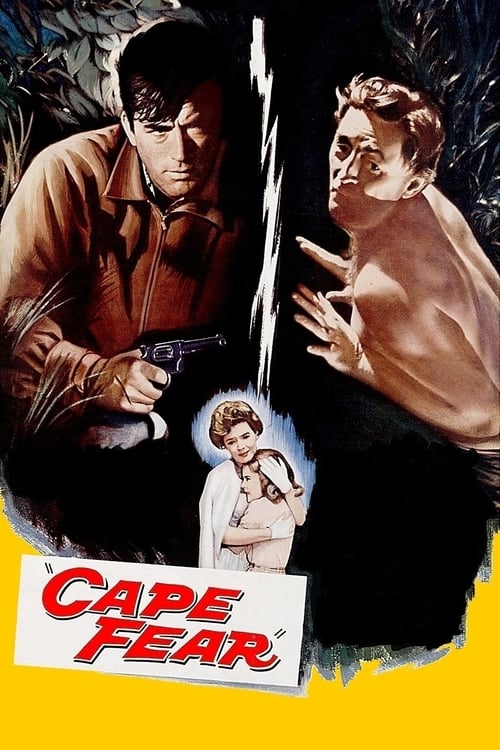
Cape Fear
Sam Bowden witnesses a rape committed by Max Cady and testifies against him. When released after 8 years in prison, Cady begins stalking Bowden and his family but is always clever enough not to violate the law.
Despite a mid-range budget of $35.0M, Cape Fear became a commercial success, earning $103.0M worldwide—a 194% return.


Plot Structure
Story beats plotted across runtime


Narrative Arc
Emotional journey through the story's key moments
Story Circle
Blueprint 15-beat structure
Arcplot Score Breakdown
Weighted: Precision (70%) + Arc (15%) + Theme (15%)
Cape Fear (1962) exemplifies carefully calibrated story structure, characteristic of J. Lee Thompson's storytelling approach. This structural analysis examines how the film's 15-point plot structure maps to proven narrative frameworks across 1 hour and 45 minutes. With an Arcplot score of 7.3, the film balances conventional beats with creative variation.
Characters
Cast & narrative archetypes

Sam Bowden
Max Cady
Peggy Bowden
Nancy Bowden
Chief Dutton
Charlie Sievers
Main Cast & Characters
Sam Bowden
Played by Gregory Peck
A defense attorney whose family is terrorized by an ex-convict he helped imprison eight years earlier.
Max Cady
Played by Robert Mitchum
A ruthless ex-convict seeking revenge against the lawyer who testified against him, tormenting his family through legal loopholes.
Peggy Bowden
Played by Polly Bergen
Sam's loyal wife who becomes increasingly fearful as Cady's psychological terror escalates.
Nancy Bowden
Played by Lori Martin
The teenage daughter of Sam and Peggy who becomes a target of Cady's menacing attention.
Chief Dutton
Played by Martin Balsam
The police chief who wants to help Sam but is constrained by legal limitations regarding Cady.
Charlie Sievers
Played by Telly Savalas
A private investigator hired by Sam to find evidence against Cady and protect his family.
Structural Analysis
The Status Quo at 1 minutes (1% through the runtime) establishes Sam Bowden, successful lawyer, walks confidently through his idyllic small town with his family, establishing his respected position and peaceful life.. Of particular interest, this early placement immediately immerses viewers in the story world.
The inciting incident occurs at 12 minutes when Max Cady appears at the courthouse, watching Sam. Released after 8 years in prison, Cady makes clear he blames Sam (his former lawyer) for his conviction and has come for revenge.. At 12% through the film, this Disruption aligns precisely with traditional story structure. This beat shifts the emotional landscape, launching the protagonist into the central conflict.
The First Threshold at 26 minutes marks the transition into Act II, occurring at 25% of the runtime. This shows the protagonist's commitment to Sam makes the active choice to fight Cady outside the law, hiring thugs to beat him up and drive him out of town, crossing his own moral boundaries., moving from reaction to action.
At 53 minutes, the Midpoint arrives at 50% of the runtime—precisely centered, creating perfect narrative symmetry. Significantly, this crucial beat Cady gets too close to Nancy at school. Sam realizes legal protection is impossible and his family will never be safe. Stakes raise from harassment to imminent deadly threat., fundamentally raising what's at risk. The emotional intensity shifts, dividing the narrative into clear before-and-after phases.
The Collapse moment at 79 minutes (75% through) represents the emotional nadir. Here, Sam's private detective Sievers is murdered by Cady. All professional help is gone, the law has completely failed, and Sam is utterly alone against a killer., indicates the protagonist at their lowest point. This beat's placement in the final quarter sets up the climactic reversal.
The Second Threshold at 84 minutes initiates the final act resolution at 80% of the runtime. Sam devises the plan to use his family as bait on the houseboat at Cape Fear, combining his knowledge of law (to make it justifiable) with willingness to kill. Final confrontation begins., demonstrating the transformation achieved throughout the journey.
Emotional Journey
Cape Fear's emotional architecture traces a deliberate progression across 15 carefully calibrated beats.
Narrative Framework
This structural analysis employs systematic plot point analysis that identifies crucial turning points. By mapping Cape Fear against these established plot points, we can identify how J. Lee Thompson utilizes or subverts traditional narrative conventions. The plot point approach reveals not only adherence to structural principles but also creative choices that distinguish Cape Fear within the thriller genre.
J. Lee Thompson's Structural Approach
Among the 13 J. Lee Thompson films analyzed on Arcplot, the average structural score is 7.1, reflecting strong command of classical structure. Cape Fear represents one of the director's most structurally precise works. For comparative analysis, explore the complete J. Lee Thompson filmography.
Comparative Analysis
Additional thriller films include The Warriors, Thunderball and Rustom. For more J. Lee Thompson analyses, see The Greek Tycoon, Happy Birthday to Me and Battle for the Planet of the Apes.
Plot Points by Act
Act I
SetupStatus Quo
Sam Bowden, successful lawyer, walks confidently through his idyllic small town with his family, establishing his respected position and peaceful life.
Theme
Police Chief Dutton warns Sam: "The law protects you up to a point, but there are some men who just won't be stopped by bars and walls."
Worldbuilding
Introduction of Sam's family life - wife Peggy, teenage daughter Nancy. Sam's law practice, their comfortable home, and the safe community they inhabit.
Disruption
Max Cady appears at the courthouse, watching Sam. Released after 8 years in prison, Cady makes clear he blames Sam (his former lawyer) for his conviction and has come for revenge.
Resistance
Sam tries legal means to stop Cady - consulting police, hiring private detective Sievers. Cady stalks the family but stays within legal bounds. Sam debates how far to go to protect his family.
Act II
ConfrontationFirst Threshold
Sam makes the active choice to fight Cady outside the law, hiring thugs to beat him up and drive him out of town, crossing his own moral boundaries.
Mirror World
Cady brutally attacks Diane Taylor, a woman Sam asked to help entrap him. The violence shows Sam the true cost of his decisions and the mirror of degradation he's entered.
Premise
Cat-and-mouse game intensifies. Cady cannot be touched legally, terrorizes the family psychologically, poisons their dog. Sam becomes increasingly desperate and morally compromised.
Midpoint
Cady gets too close to Nancy at school. Sam realizes legal protection is impossible and his family will never be safe. Stakes raise from harassment to imminent deadly threat.
Opposition
Cady grows bolder, approaching the family directly. Sam's attempts to protect them fail repeatedly. The family fractures under pressure - Peggy and Nancy terrified, Sam consumed with stopping Cady.
Collapse
Sam's private detective Sievers is murdered by Cady. All professional help is gone, the law has completely failed, and Sam is utterly alone against a killer.
Crisis
Sam sits in darkness, processing that he must become the thing he feared - a man willing to kill. He surrenders his identity as civilized man and accepts what must be done.
Act III
ResolutionSecond Threshold
Sam devises the plan to use his family as bait on the houseboat at Cape Fear, combining his knowledge of law (to make it justifiable) with willingness to kill. Final confrontation begins.
Synthesis
The brutal showdown on the houseboat at Cape Fear. Cady attacks, terrorizes Peggy and Nancy. Sam fights him in primal combat, ultimately overpowering him and choosing to let the law finish it.
Transformation
Sam stands with his family on the shore, watching police take Cady away. He is victorious but forever changed - no longer the innocent man who believed in the law's absolute protection.