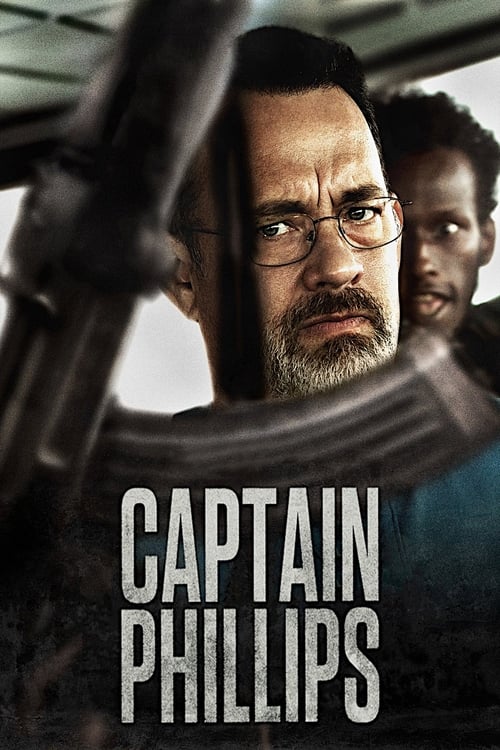
Captain Phillips
The true story of Captain Richard Phillips and the 2009 hijacking by Somali pirates of the US-flagged MV Maersk Alabama, the first American cargo ship to be hijacked in two hundred years.
Despite a moderate budget of $55.0M, Captain Phillips became a financial success, earning $218.8M worldwide—a 298% return.
Nominated for 6 Oscars. 17 wins & 155 nominations


Plot Structure
Story beats plotted across runtime


Narrative Arc
Emotional journey through the story's key moments
Story Circle
Blueprint 15-beat structure
Arcplot Score Breakdown
Weighted: Precision (70%) + Arc (15%) + Theme (15%)
Captain Phillips (2013) exemplifies meticulously timed dramatic framework, characteristic of Paul Greengrass's storytelling approach. This structural analysis examines how the film's 15-point plot structure maps to proven narrative frameworks across 2 hours and 14 minutes. With an Arcplot score of 7.4, the film balances conventional beats with creative variation.
Characters
Cast & narrative archetypes

Richard Phillips
Abduwali Muse
Najee
Bilal
Elmi
Shane Murphy
Main Cast & Characters
Richard Phillips
Played by Tom Hanks
Captain of the Maersk Alabama who faces a Somali pirate hijacking and fights to protect his crew while becoming a hostage.
Abduwali Muse
Played by Barkhad Abdi
Young Somali pirate leader who hijacks the Maersk Alabama, driven by desperation and pressure from his warlord.
Najee
Played by Faysal Ahmed
Volatile and aggressive Somali pirate who becomes increasingly unstable during the hijacking.
Bilal
Played by Barkhad Abdirahman
Young, inexperienced Somali pirate who shows moments of doubt and fear during the ordeal.
Elmi
Played by Mahat M. Ali
Somali pirate who is injured during the hijacking attempt and becomes a liability to the group.
Shane Murphy
Played by Michael Chernus
First officer of the Maersk Alabama who works closely with Phillips to protect the crew.
Structural Analysis
The Status Quo at 1 minutes (1% through the runtime) establishes Captain Richard Phillips prepares to leave his Vermont home for a routine cargo run to Mombasa. He expresses concern to his wife Andrea about their children's future in an increasingly competitive world, establishing his role as a responsible, cautious professional.. Significantly, this early placement immediately immerses viewers in the story world.
The inciting incident occurs at 17 minutes when Phillips receives security warnings about pirate activity near the Horn of Africa. Two small skiffs with armed Somalis begin pursuing the Maersk Alabama. The threat becomes immediate and undeniable.. At 13% through the film, this Disruption is delayed, allowing extended setup of the story world. This beat shifts the emotional landscape, launching the protagonist into the central conflict.
The First Threshold at 34 minutes marks the transition into Act II, occurring at 25% of the runtime. This demonstrates the protagonist's commitment to The four Somali pirates successfully board the Maersk Alabama. Phillips makes the active choice to confront them directly, attempting to maintain control through authority and negotiation rather than hiding. He enters a deadly cat-and-mouse game., moving from reaction to action.
At 67 minutes, the Midpoint arrives at 50% of the runtime—precisely centered, creating perfect narrative symmetry. Of particular interest, this crucial beat The crew captures pirate leader Muse as a hostage, creating a seeming advantage. However, the exchange goes wrong—the pirates take Phillips hostage and force him into the enclosed lifeboat. What seemed like possible victory becomes a false defeat as Phillips' situation becomes drastically worse, isolated and trapped., fundamentally raising what's at risk. The emotional intensity shifts, dividing the narrative into clear before-and-after phases.
The Collapse moment at 101 minutes (75% through) represents the emotional nadir. Here, The youngest pirate, Bilal, holds an AK-47 to Phillips' head and threatens to execute him. Phillips is forced to write a goodbye letter to his family, believing he will die. This is his darkest moment—the literal "whiff of death" as he faces his mortality., demonstrates the protagonist at their lowest point. This beat's placement in the final quarter sets up the climactic reversal.
The Second Threshold at 107 minutes initiates the final act resolution at 80% of the runtime. The Navy gets presidential authorization for lethal force. SEAL snipers take position. Muse is convinced to board the USS Bainbridge for negotiations, removing the leader from the lifeboat. The situation shifts—Phillips realizes rescue is possible, and the SEALs have the clear shot they need., demonstrating the transformation achieved throughout the journey.
Emotional Journey
Captain Phillips's emotional architecture traces a deliberate progression across 15 carefully calibrated beats.
Narrative Framework
This structural analysis employs systematic plot point analysis that identifies crucial turning points. By mapping Captain Phillips against these established plot points, we can identify how Paul Greengrass utilizes or subverts traditional narrative conventions. The plot point approach reveals not only adherence to structural principles but also creative choices that distinguish Captain Phillips within the action genre.
Paul Greengrass's Structural Approach
Among the 7 Paul Greengrass films analyzed on Arcplot, the average structural score is 6.9, demonstrating varied approaches to story architecture. Captain Phillips represents one of the director's most structurally precise works. For comparative analysis, explore the complete Paul Greengrass filmography.
Comparative Analysis
Additional action films include The Bad Guys, Puss in Boots and Venom: The Last Dance. For more Paul Greengrass analyses, see The Bourne Supremacy, Green Zone and News of the World.
Plot Points by Act
Act I
SetupStatus Quo
Captain Richard Phillips prepares to leave his Vermont home for a routine cargo run to Mombasa. He expresses concern to his wife Andrea about their children's future in an increasingly competitive world, establishing his role as a responsible, cautious professional.
Theme
Andrea Phillips says to Richard, "You're just the same guy you always were, except now you're older." The theme of adaptability versus rigidity is stated—whether experience and caution are enough in a changing, dangerous world.
Worldbuilding
Phillips arrives in Oman, boards the Maersk Alabama container ship, and conducts safety briefings with his multinational crew. Parallel scenes establish Somali pirate Muse recruiting desperate young men for hijacking operations. The worlds of organized maritime commerce and desperate piracy are established.
Disruption
Phillips receives security warnings about pirate activity near the Horn of Africa. Two small skiffs with armed Somalis begin pursuing the Maersk Alabama. The threat becomes immediate and undeniable.
Resistance
Phillips debates defensive options with his crew: evasive maneuvers, fire hoses, calling for naval support. They attempt to outrun the pirates and fake radio communications to scare them away. One skiff turns back due to rough seas, but Muse's skiff continues pursuit. Phillips prepares for possible boarding.
Act II
ConfrontationFirst Threshold
The four Somali pirates successfully board the Maersk Alabama. Phillips makes the active choice to confront them directly, attempting to maintain control through authority and negotiation rather than hiding. He enters a deadly cat-and-mouse game.
Mirror World
Phillips has his first extended interaction with pirate leader Muse. Despite their opposing positions, both men reveal themselves as professionals under pressure from larger forces—Muse answers to dangerous Somali warlords just as Phillips answers to corporate interests. Their mirror relationship embodies the theme of survival within broken systems.
Premise
The "premise" of the hijacking plays out: Phillips employs psychological tactics to protect his crew, hiding them in the engine room while negotiating with the pirates. Chief Engineer Mike Perry leads crew resistance from below. Phillips offers the ship's safe money ($30,000) to convince the pirates to leave. Tension escalates as the pirates search for the hidden crew.
Midpoint
The crew captures pirate leader Muse as a hostage, creating a seeming advantage. However, the exchange goes wrong—the pirates take Phillips hostage and force him into the enclosed lifeboat. What seemed like possible victory becomes a false defeat as Phillips' situation becomes drastically worse, isolated and trapped.
Opposition
Phillips is held in the cramped lifeboat with four increasingly desperate pirates. The USS Bainbridge arrives, followed by Navy SEALs. Negotiations fail repeatedly. The pirates become more volatile as they realize escape is impossible. Phillips' physical and psychological condition deteriorates. Muse's leadership fractures as his men panic.
Collapse
The youngest pirate, Bilal, holds an AK-47 to Phillips' head and threatens to execute him. Phillips is forced to write a goodbye letter to his family, believing he will die. This is his darkest moment—the literal "whiff of death" as he faces his mortality.
Crisis
Phillips endures psychological torture and physical deterioration in the lifeboat. The pirates debate killing him. He processes his likely death, oscillating between hope and despair. The Navy prepares for a potential rescue operation, but the window for peaceful resolution has closed.
Act III
ResolutionSecond Threshold
The Navy gets presidential authorization for lethal force. SEAL snipers take position. Muse is convinced to board the USS Bainbridge for negotiations, removing the leader from the lifeboat. The situation shifts—Phillips realizes rescue is possible, and the SEALs have the clear shot they need.
Synthesis
The lifeboat is taken under tow, stabilizing it for the snipers. Three pirates remain with Phillips in the lifeboat, increasingly agitated. At the critical moment when all three pirates are visible through the windows simultaneously, the SEAL snipers execute three simultaneous shots, killing them instantly. Phillips is extracted alive.
Transformation
In the medical bay, Phillips breaks down emotionally, repeating "I'm not hurt" while clearly traumatized. The corpsman gently tends to him, saying "You're safe now." The controlled, authoritative captain from the opening has been shattered and remade—no longer the "same guy," but transformed by surviving the unthinkable.