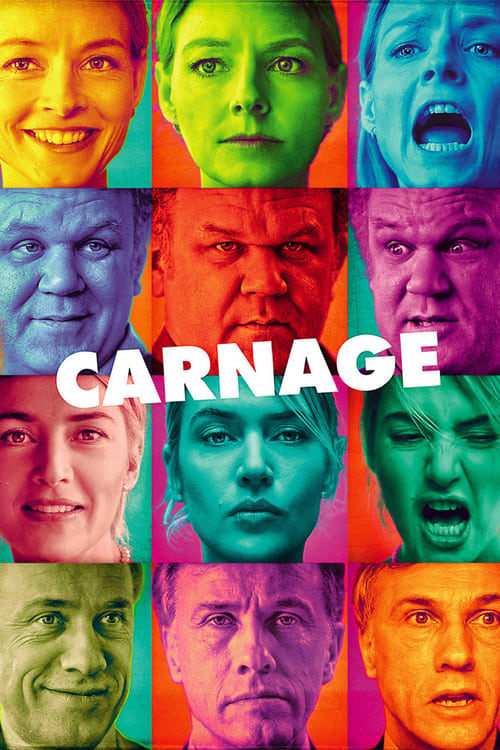
Carnage
Two pairs of parents hold a cordial meeting after their sons are involved in a fight, though as their time together progresses, increasingly childish behavior throws the discussion into chaos.
Working with a mid-range budget of $25.0M, the film achieved a respectable showing with $30.7M in global revenue (+23% profit margin).
7 wins & 20 nominations


Plot Structure
Story beats plotted across runtime


Narrative Arc
Emotional journey through the story's key moments
Story Circle
Blueprint 15-beat structure
Arcplot Score Breakdown
Weighted: Precision (70%) + Arc (15%) + Theme (15%)
Carnage (2011) showcases precise narrative architecture, characteristic of Roman Polanski's storytelling approach. This structural analysis examines how the film's 15-point plot structure maps to proven narrative frameworks across 1 hour and 20 minutes. With an Arcplot score of 7.3, the film balances conventional beats with creative variation.
Characters
Cast & narrative archetypes

Penelope Longstreet
Nancy Cowan
Alan Cowan
Michael Longstreet
Main Cast & Characters
Penelope Longstreet
Played by Jodie Foster
An investment broker and liberal activist mother who invites the Cowans to discuss their sons' playground altercation.
Nancy Cowan
Played by Kate Winslet
A composed, traditional mother trying to maintain civility while defending her son and marriage.
Alan Cowan
Played by Christoph Waltz
An arrogant corporate lawyer constantly distracted by work calls, married to Nancy.
Michael Longstreet
Played by John C. Reilly
A wholesaler of housewares and Penelope's husband who gradually loses his temper as civility breaks down.
Structural Analysis
The Status Quo at 1 minutes (1% through the runtime) establishes Opening image of a Brooklyn playground where Zachary hits Ethan with a stick. The civilized world before the veneer cracks - parents intervening calmly in their children's violence.. Structural examination shows that this early placement immediately immerses viewers in the story world.
The inciting incident occurs at 9 minutes when The Cowans prepare to leave after reaching agreement, but Nancy suggests they shouldn't end on a sour note. This decision to stay "just a bit longer" traps all four in the apartment where their facades will crumble.. At 11% through the film, this Disruption aligns precisely with traditional story structure. This beat shifts the emotional landscape, launching the protagonist into the central conflict.
The First Threshold at 19 minutes marks the transition into Act II, occurring at 24% of the runtime. This shows the protagonist's commitment to Nancy vomits violently all over Penelope's coffee table books after drinking too much coffee and eating cobbler. This physical eruption destroys all pretense of civility and marks the point of no return - they cannot maintain the facade anymore., moving from reaction to action.
At 39 minutes, the Midpoint arrives at 49% of the runtime—precisely centered, creating perfect narrative symmetry. Notably, this crucial beat Alan deliberately destroys his own cell phone by dunking it in a vase of tulips after Nancy throws water on it. This symbolic destruction of his connection to the outside world traps him fully in the apartment warfare. False defeat - he seems liberated but is actually more trapped., fundamentally raising what's at risk. The emotional intensity shifts, dividing the narrative into clear before-and-after phases.
The Collapse moment at 58 minutes (72% through) represents the emotional nadir. Here, Penelope has a complete breakdown, drunkenly ranting and physically destroying her art books about Kokoschka. The death of her carefully constructed identity as a cultured, moral person. All four have devolved into screaming, spiteful children., indicates the protagonist at their lowest point. This beat's placement in the final quarter sets up the climactic reversal.
The Second Threshold at 64 minutes initiates the final act resolution at 80% of the runtime. A moment of mutual recognition - they are all equally ridiculous, equally savage beneath the surface. The acceptance that civilization is indeed a veneer and they are all worshippers at the altar of carnage., demonstrating the transformation achieved throughout the journey.
Emotional Journey
Carnage's emotional architecture traces a deliberate progression across 15 carefully calibrated beats.
Narrative Framework
This structural analysis employs structural analysis methodology used to understand storytelling architecture. By mapping Carnage against these established plot points, we can identify how Roman Polanski utilizes or subverts traditional narrative conventions. The plot point approach reveals not only adherence to structural principles but also creative choices that distinguish Carnage within the comedy genre.
Roman Polanski's Structural Approach
Among the 11 Roman Polanski films analyzed on Arcplot, the average structural score is 6.5, demonstrating varied approaches to story architecture. Carnage represents one of the director's most structurally precise works. For comparative analysis, explore the complete Roman Polanski filmography.
Comparative Analysis
Additional comedy films include The Bad Guys, Ella Enchanted and The Evening Star. For more Roman Polanski analyses, see Frantic, Tess and The Tenant.
Plot Points by Act
Act I
SetupStatus Quo
Opening image of a Brooklyn playground where Zachary hits Ethan with a stick. The civilized world before the veneer cracks - parents intervening calmly in their children's violence.
Theme
Penelope states: "We believe in the god of carnage" - the central thesis that civilization is a thin mask over our primal, violent nature. Spoken while drafting their joint statement about the incident.
Worldbuilding
The Longstreets (Penelope and Michael) host the Cowans (Nancy and Alan) in their Brooklyn apartment. Polite introductions, coffee service, discussion of the playground incident. Everyone performing civility - Penelope the earnest liberal, Michael the wholesaler, Nancy the investment broker, Alan the lawyer constantly on his phone.
Disruption
The Cowans prepare to leave after reaching agreement, but Nancy suggests they shouldn't end on a sour note. This decision to stay "just a bit longer" traps all four in the apartment where their facades will crumble.
Resistance
Debate over whether Zachary is a "snitch" for naming Ethan. Alan's constant business calls about a pharmaceutical client irritate everyone. Discussion of parenting philosophies and responsibility. Tension simmers beneath forced politeness as they drink coffee and nibble cobbler.
Act II
ConfrontationFirst Threshold
Nancy vomits violently all over Penelope's coffee table books after drinking too much coffee and eating cobbler. This physical eruption destroys all pretense of civility and marks the point of no return - they cannot maintain the facade anymore.
Mirror World
The two marriages serve as mirrors to each other. Nancy and Alan's transactional, cynical relationship reflects what Penelope and Michael's "principled" marriage might become. Each couple embodies different responses to the carnage beneath civilization.
Premise
The promise of the premise - watching civilized adults devolve into children. Alan continues taking calls, infuriating everyone. They switch to alcohol. Penelope's self-righteousness clashes with Alan's cynicism. Michael reveals he released his daughter's hamster. Gender alliances form and dissolve. The veneer of politeness cracks further with each drink.
Midpoint
Alan deliberately destroys his own cell phone by dunking it in a vase of tulips after Nancy throws water on it. This symbolic destruction of his connection to the outside world traps him fully in the apartment warfare. False defeat - he seems liberated but is actually more trapped.
Opposition
Total warfare. Gender lines dissolve as Michael and Alan bond over cigars and misogyny. Penelope and Nancy unite against the men, then turn on each other. Penelope's liberal values are exposed as hollow. Alan's pharmaceutical cover-up is condemned. Michael's coarseness fully emerges. Everyone's worst qualities surface.
Collapse
Penelope has a complete breakdown, drunkenly ranting and physically destroying her art books about Kokoschka. The death of her carefully constructed identity as a cultured, moral person. All four have devolved into screaming, spiteful children.
Crisis
The aftermath of total social collapse. Brief moments of exhausted calm punctuated by renewed hostilities. They've destroyed each other's pretenses and their own. The apartment is a wreck. They are spent but cannot escape each other or what they've revealed.
Act III
ResolutionSecond Threshold
A moment of mutual recognition - they are all equally ridiculous, equally savage beneath the surface. The acceptance that civilization is indeed a veneer and they are all worshippers at the altar of carnage.
Synthesis
Exhausted détente. They prepare to leave, gathering coats and belongings. Small talk resumes but now everyone knows the truth about each other and themselves. The joint statement about the boys is abandoned as meaningless.
Transformation
Final image returns to the playground where Zachary and Ethan are now peacefully sharing a snack and laughing together. The children have moved on while the adults remain trapped in their carnage. The ironic inversion of the opening - children are more civilized than their parents.