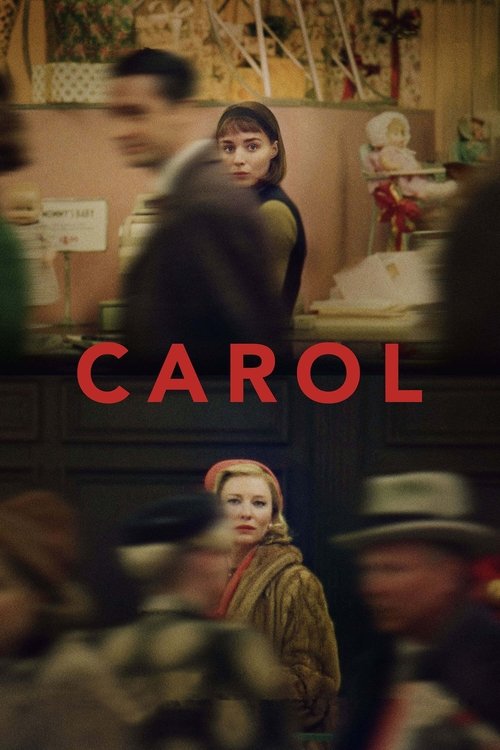
Carol
In 1950s New York, a department-store clerk who dreams of a better life falls for an older, married woman.
Despite its limited budget of $11.8M, Carol became a commercial success, earning $40.3M worldwide—a 241% return. The film's bold vision connected with viewers, proving that strong storytelling can transcend budget limitations.
Nominated for 6 Oscars. 76 wins & 255 nominations


Plot Structure
Story beats plotted across runtime


Narrative Arc
Emotional journey through the story's key moments
Story Circle
Blueprint 15-beat structure
Arcplot Score Breakdown
Weighted: Precision (70%) + Arc (15%) + Theme (15%)
Carol (2015) demonstrates carefully calibrated dramatic framework, characteristic of Todd Haynes's storytelling approach. This structural analysis examines how the film's 15-point plot structure maps to proven narrative frameworks across 1 hour and 58 minutes. With an Arcplot score of 7.0, the film balances conventional beats with creative variation.
Characters
Cast & narrative archetypes

Therese Belivet
Carol Aird
Abby Gerhard
Richard Semco
Harge Aird
Main Cast & Characters
Therese Belivet
Played by Rooney Mara
A young photographer working at a department store who falls in love with an older woman during 1950s New York.
Carol Aird
Played by Cate Blanchett
An elegant, sophisticated woman in the midst of a divorce who begins a transformative affair with a younger woman.
Abby Gerhard
Played by Sarah Paulson
Carol's close friend and former lover who provides support and understanding throughout her struggles.
Richard Semco
Played by Jake Lacy
Therese's boyfriend who represents conventional expectations and the life she's expected to lead.
Harge Aird
Played by Kyle Chandler
Carol's estranged husband who uses their daughter as leverage in their custody battle.
Structural Analysis
The Status Quo at 1 minutes (1% through the runtime) establishes Therese works at the Frankenberg's department store toy counter during Christmas season, going through the motions of a conventional 1950s life - polite, reserved, unfulfilled.. Notably, this early placement immediately immerses viewers in the story world.
The inciting incident occurs at 14 minutes when Carol Aird walks into the department store. Their eyes meet across the toy counter. Carol's elegance, confidence, and direct gaze disrupt Therese's carefully maintained numbness. Carol purchases a train set for her daughter.. At 12% through the film, this Disruption aligns precisely with traditional story structure. This beat shifts the emotional landscape, launching the protagonist into the central conflict.
The First Threshold at 28 minutes marks the transition into Act II, occurring at 23% of the runtime. This shows the protagonist's commitment to Therese accepts Carol's invitation to visit her home in New Jersey. This is Therese's active choice to step into Carol's world, crossing from observation into participation. She boards the train to Carol's house., moving from reaction to action.
At 60 minutes, the Midpoint arrives at 50% of the runtime—precisely centered, creating perfect narrative symmetry. The analysis reveals that this crucial beat Carol decides to escape the pressure by taking Therese on a cross-country road trip. This is a false victory - they're together and free, driving west with possibility ahead. But Harge's threats and the morality clause loom unseen., fundamentally raising what's at risk. The emotional intensity shifts, dividing the narrative into clear before-and-after phases.
The Collapse moment at 87 minutes (74% through) represents the emotional nadir. Here, Carol abruptly leaves Therese at the hotel without explanation, returning to New York to face Harge's custody proceedings. Therese is abandoned, heartbroken, not understanding why. The dream dies. Their relationship appears over., illustrates the protagonist at their lowest point. This beat's placement in the final quarter sets up the climactic reversal.
The Second Threshold at 94 minutes initiates the final act resolution at 80% of the runtime. Carol calls Therese and asks to meet. At the meeting, Carol reveals her choice: she refused the morality clause, refused to deny who she is, even knowing it means losing custody. She chose truth over compromise. This realization empowers Therese., demonstrating the transformation achieved throughout the journey.
Emotional Journey
Carol's emotional architecture traces a deliberate progression across 15 carefully calibrated beats.
Narrative Framework
This structural analysis employs systematic plot point analysis that identifies crucial turning points. By mapping Carol against these established plot points, we can identify how Todd Haynes utilizes or subverts traditional narrative conventions. The plot point approach reveals not only adherence to structural principles but also creative choices that distinguish Carol within the romance genre.
Todd Haynes's Structural Approach
Among the 4 Todd Haynes films analyzed on Arcplot, the average structural score is 7.0, reflecting strong command of classical structure. Carol takes a more unconventional approach compared to the director's typical style. For comparative analysis, explore the complete Todd Haynes filmography.
Comparative Analysis
Additional romance films include South Pacific, Dirty Dancing: Havana Nights and The Evening Star. For more Todd Haynes analyses, see Dark Waters, Far from Heaven and I'm Not There.
Plot Points by Act
Act I
SetupStatus Quo
Therese works at the Frankenberg's department store toy counter during Christmas season, going through the motions of a conventional 1950s life - polite, reserved, unfulfilled.
Theme
Richard tells Therese "You're not even there" when discussing her lack of engagement with their relationship, establishing the theme of living authentically versus existing as a ghost in one's own life.
Worldbuilding
We see Therese's constrained world: working retail, dating boyfriend Richard without passion, taking photographs as an outlet for unexpressed desires, living in a small apartment, navigating 1950s New York social expectations.
Disruption
Carol Aird walks into the department store. Their eyes meet across the toy counter. Carol's elegance, confidence, and direct gaze disrupt Therese's carefully maintained numbness. Carol purchases a train set for her daughter.
Resistance
Carol leaves her gloves behind (deliberately or not). Therese mails them back. Carol calls to thank her and invites her to lunch. Therese hesitates but is drawn to Carol. They meet at a restaurant - Carol is worldly, Therese is nervous but captivated.
Act II
ConfrontationFirst Threshold
Therese accepts Carol's invitation to visit her home in New Jersey. This is Therese's active choice to step into Carol's world, crossing from observation into participation. She boards the train to Carol's house.
Mirror World
At Carol's elegant home, Therese meets Carol in her natural environment. Carol embodies the possibility of living with grace despite society's judgments. They share intimate conversation. Carol represents what Therese could become if she embraces her truth.
Premise
The promise of the premise: two women falling in love in 1950s America. They meet for lunches, go shopping, Carol teaches Therese about photography and life. Carol's husband Harge grows suspicious and manipulative. Tension builds but their connection deepens.
Midpoint
Carol decides to escape the pressure by taking Therese on a cross-country road trip. This is a false victory - they're together and free, driving west with possibility ahead. But Harge's threats and the morality clause loom unseen.
Opposition
During the road trip, Carol and Therese consummate their relationship in a hotel room. The intimacy is profound but the opposition closes in: a private investigator hired by Harge records them. Carol receives devastating news about the custody battle. Reality intrudes on their escape.
Collapse
Carol abruptly leaves Therese at the hotel without explanation, returning to New York to face Harge's custody proceedings. Therese is abandoned, heartbroken, not understanding why. The dream dies. Their relationship appears over.
Crisis
Therese returns to New York devastated. She throws herself into work at the New York Times. Richard proposes marriage - a return to conventional safety. Carol faces her own dark night, choosing between her daughter and her truth.
Act III
ResolutionSecond Threshold
Carol calls Therese and asks to meet. At the meeting, Carol reveals her choice: she refused the morality clause, refused to deny who she is, even knowing it means losing custody. She chose truth over compromise. This realization empowers Therese.
Synthesis
Carol invites Therese to live with her. Therese, still wounded, says she has other plans - but she's finding her own voice now. Carol accepts this with grace. At a party, Therese sees Carol across the room. She must choose: stay with colleagues or cross the room to Carol.
Transformation
Therese makes her choice. She walks across the restaurant toward Carol's table. Carol looks up and smiles - recognition, hope, possibility. Therese has transformed from the passive young woman at the toy counter into someone who chooses her own authentic path.