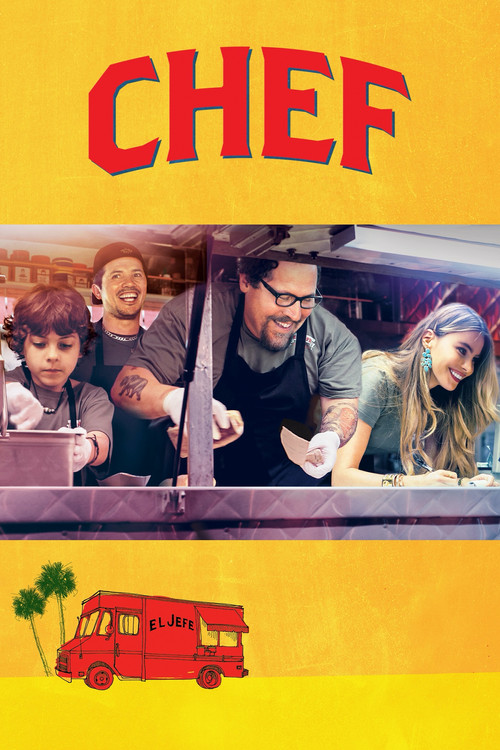
Chef
When Chef Carl Casper suddenly quits his job at a prominent Los Angeles restaurant after refusing to compromise his creative integrity for its controlling owner, he is left to figure out what's next. Finding himself in Miami, he teams up with his ex-wife, his friend and his son to launch a food truck. Taking to the road, Chef Carl goes back to his roots to reignite his passion for the kitchen -- and zest for life and love.
Despite its tight budget of $11.0M, Chef became a financial success, earning $50.4M worldwide—a 359% return. The film's bold vision found its audience, demonstrating that strong storytelling can transcend budget limitations.
2 wins & 4 nominations


Plot Structure
Story beats plotted across runtime


Narrative Arc
Emotional journey through the story's key moments
Story Circle
Blueprint 15-beat structure
Arcplot Score Breakdown
Weighted: Precision (70%) + Arc (15%) + Theme (15%)
Chef (2014) reveals carefully calibrated story structure, characteristic of Jon Favreau's storytelling approach. This structural analysis examines how the film's 15-point plot structure maps to proven narrative frameworks across 1 hour and 54 minutes. With an Arcplot score of 6.5, the film balances conventional beats with creative variation.
Characters
Cast & narrative archetypes

Carl Casper
Percy
Inez
Martin
Molly
Riva
Marvin
Main Cast & Characters
Carl Casper
Played by Jon Favreau
A talented chef who loses his restaurant job and reinvents himself with a food truck, rediscovering his passion and reconnecting with his son.
Percy
Played by Emjay Anthony
Carl's 10-year-old son who joins him on the food truck journey, managing social media and bonding with his father.
Inez
Played by Sofía Vergara
Carl's ex-wife who supports his fresh start and facilitates his relationship with their son.
Martin
Played by John Leguizamo
Carl's loyal sous chef and best friend who quits his job to help run the food truck.
Molly
Played by Scarlett Johansson
The hostess at Carl's restaurant and his love interest who believes in his talent.
Riva
Played by Dustin Hoffman
The controlling restaurant owner whose creative limitations stifle Carl and trigger his breakdown.
Marvin
Played by Robert Downey Jr.
Inez's wealthy ex-husband who helps Carl get the food truck and supports his new venture.
Structural Analysis
The Status Quo at 1 minutes (1% through the runtime) establishes Carl Casper prepares an elaborate breakfast for his son Percy at his apartment, showcasing his passion for cooking while simultaneously revealing his disconnect from his family life as a divorced father with limited custody.. Notably, this early placement immediately immerses viewers in the story world.
The inciting incident occurs at 14 minutes when Influential food critic Ramsey Michel announces he will review the restaurant. Carl wants to create an innovative new menu, but Riva forces him to serve the same boring dishes, setting up the conflict between art and commerce.. At 12% through the film, this Disruption aligns precisely with traditional story structure. This beat shifts the emotional landscape, launching the protagonist into the central conflict.
The First Threshold at 29 minutes marks the transition into Act II, occurring at 25% of the runtime. This illustrates the protagonist's commitment to Carl's viral video meltdown at the restaurant, where he confronts Ramsey Michel in a profanity-laced tirade, costs him his job and reputation. He chooses to quit rather than apologize, crossing the point of no return., moving from reaction to action.
At 57 minutes, the Midpoint arrives at 50% of the runtime—precisely centered, creating perfect narrative symmetry. Of particular interest, this crucial beat The food truck launches successfully in Miami with huge lines. Percy's Twitter skills create a viral following, and Carl experiences the joy of cooking on his own terms again. A false victory as the road trip challenges lie ahead., fundamentally raising what's at risk. The emotional intensity shifts, dividing the narrative into clear before-and-after phases.
The Collapse moment at 86 minutes (75% through) represents the emotional nadir. Here, Carl breaks his promise to take Percy to the Alamo, prioritizing the food truck over his son. Percy's heartbroken reaction forces Carl to confront that he's repeating the same mistakes that cost him his marriage—choosing work over family., indicates the protagonist at their lowest point. This beat's placement in the final quarter sets up the climactic reversal.
The Second Threshold at 91 minutes initiates the final act resolution at 80% of the runtime. Carl commits fully to balancing his passion with family, arriving in Los Angeles transformed. Ramsey Michel reaches out after following the food truck's journey, requesting a private meal—offering Carl a chance at professional redemption on his own terms., demonstrating the transformation achieved throughout the journey.
Emotional Journey
Chef's emotional architecture traces a deliberate progression across 15 carefully calibrated beats.
Narrative Framework
This structural analysis employs proven narrative structure principles that track dramatic progression. By mapping Chef against these established plot points, we can identify how Jon Favreau utilizes or subverts traditional narrative conventions. The plot point approach reveals not only adherence to structural principles but also creative choices that distinguish Chef within the comedy genre.
Jon Favreau's Structural Approach
Among the 8 Jon Favreau films analyzed on Arcplot, the average structural score is 6.8, demonstrating varied approaches to story architecture. Chef takes a more unconventional approach compared to the director's typical style. For comparative analysis, explore the complete Jon Favreau filmography.
Comparative Analysis
Additional comedy films include The Bad Guys, Ella Enchanted and The Evening Star. For more Jon Favreau analyses, see Made, The Lion King and Iron Man 2.
Plot Points by Act
Act I
SetupStatus Quo
Carl Casper prepares an elaborate breakfast for his son Percy at his apartment, showcasing his passion for cooking while simultaneously revealing his disconnect from his family life as a divorced father with limited custody.
Theme
Sous chef Martin tells Carl that he used to be fearless and creative, asking what happened to the chef who took risks. This plants the thematic question of artistic integrity versus playing it safe.
Worldbuilding
We see Carl's world: his position as head chef at Gauloises restaurant, his strained relationship with owner Riva who demands he play it safe, his friendship with line cook Martin, and his co-parenting arrangement with ex-wife Inez.
Disruption
Influential food critic Ramsey Michel announces he will review the restaurant. Carl wants to create an innovative new menu, but Riva forces him to serve the same boring dishes, setting up the conflict between art and commerce.
Resistance
Carl debates whether to follow Riva's orders or his creative instincts. Ramsey Michel writes a devastating review calling Carl a sellout. Percy inadvertently teaches Carl about Twitter, leading Carl to publicly insult the critic, not realizing his response is public.
Act II
ConfrontationFirst Threshold
Carl's viral video meltdown at the restaurant, where he confronts Ramsey Michel in a profanity-laced tirade, costs him his job and reputation. He chooses to quit rather than apologize, crossing the point of no return.
Mirror World
Carl travels to Miami with Inez and Percy, reconnecting with his Cuban roots. His ex-wife's new husband Marvin offers to give Carl a food truck, representing the opportunity to rebuild both his career and his relationship with his son.
Premise
The promise of the premise unfolds as Carl, Percy, and Martin restore the rundown food truck in Miami. They create the Cubanos menu, and Carl begins teaching Percy to cook while learning to use social media to promote their business.
Midpoint
The food truck launches successfully in Miami with huge lines. Percy's Twitter skills create a viral following, and Carl experiences the joy of cooking on his own terms again. A false victory as the road trip challenges lie ahead.
Opposition
The cross-country road trip from Miami to LA via New Orleans and Austin. While the business thrives and Carl bonds with Percy, tensions arise over Carl's obsessive work habits. Carl struggles to balance his rekindled passion with being present for his son.
Collapse
Carl breaks his promise to take Percy to the Alamo, prioritizing the food truck over his son. Percy's heartbroken reaction forces Carl to confront that he's repeating the same mistakes that cost him his marriage—choosing work over family.
Crisis
Carl realizes he's been so focused on his professional redemption that he nearly lost what matters most. He takes Percy to the Alamo despite losing customers, choosing his son over the business for the first time.
Act III
ResolutionSecond Threshold
Carl commits fully to balancing his passion with family, arriving in Los Angeles transformed. Ramsey Michel reaches out after following the food truck's journey, requesting a private meal—offering Carl a chance at professional redemption on his own terms.
Synthesis
Carl serves Ramsey Michel from the food truck, who is genuinely impressed. Ramsey offers to back Carl in opening his own restaurant. Carl accepts but only with conditions that preserve his creative freedom and time with Percy.
Transformation
Carl runs his own restaurant with Ramsey as a partner, cooking Percy's grilled cheese on the menu. He remarries Inez in the kitchen surrounded by his crew. The broken, frustrated chef is now a fulfilled artist and present father.