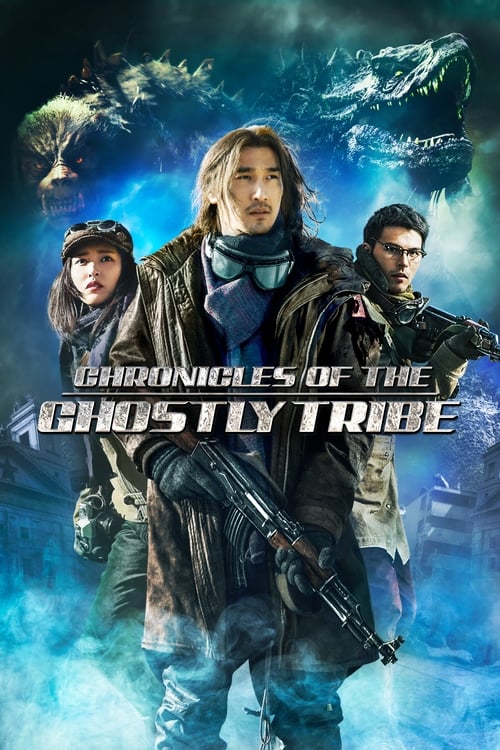
Chronicles of the Ghostly Tribe
In 1979, a young soldier is working in China's snowcapped mountains when an explosion reveals bizarre fossils hidden deep in the mountain caverns. What they discover next will change his life and human history forever.
The film earned $106.4M at the global box office.


Plot Structure
Story beats plotted across runtime


Narrative Arc
Emotional journey through the story's key moments
Story Circle
Blueprint 15-beat structure
Arcplot Score Breakdown
Weighted: Precision (70%) + Arc (15%) + Theme (15%)
Chronicles of the Ghostly Tribe (2015) demonstrates precise narrative design, characteristic of Lu Chuan's storytelling approach. This structural analysis examines how the film's 15-point plot structure maps to proven narrative frameworks across 1 hour and 55 minutes. With an Arcplot score of 7.2, the film balances conventional beats with creative variation.
Characters
Cast & narrative archetypes

Hu Bayi
Wang Kaixuan
Ding Sitian
Professor Yang
Julie Yang
Main Cast & Characters
Hu Bayi
Played by Mark Chao
A former soldier turned explorer who leads expeditions into dangerous ancient ruins searching for lost civilizations.
Wang Kaixuan
Played by Yao Chen
Hu Bayi's loyal partner and comic relief, a practical survivor who balances idealism with pragmatism.
Ding Sitian
Played by Tang Yixin
A passionate young woman from Hu Bayi's past whose mysterious fate drives much of his journey.
Professor Yang
Played by Chin Shih-chieh
An academic scholar who provides knowledge and guidance about the ancient Ghostly Tribe civilization.
Julie Yang
Played by Angelababy
Professor Yang's daughter, a modern woman who joins the expedition seeking answers about ancient mysteries.
Structural Analysis
The Status Quo at 1 minutes (1% through the runtime) establishes Hu Bayi is introduced as a young man in 1980s China, living an ordinary life before being assigned to a geological survey team heading to the remote Kunlun Mountains.. Structural examination shows that this early placement immediately immerses viewers in the story world.
The inciting incident occurs at 14 minutes when The survey team encounters a massive underground cavern during their exploration. Strange phenomena begin occurring, and they discover ancient artifacts suggesting a lost civilization existed beneath the mountains.. At 12% through the film, this Disruption aligns precisely with traditional story structure. This beat shifts the emotional landscape, launching the protagonist into the central conflict.
The First Threshold at 29 minutes marks the transition into Act II, occurring at 25% of the runtime. This indicates the protagonist's commitment to Hu Bayi makes the decision to descend deeper into the underground ruins despite warnings. He crosses into the realm of the Ghostly Tribe, committing himself to uncovering the truth about the ancient civilization., moving from reaction to action.
At 58 minutes, the Midpoint arrives at 50% of the runtime—precisely centered, creating perfect narrative symmetry. Significantly, this crucial beat The team discovers the central chamber of the Ghostly Tribe civilization and what appears to be a source of immense power. This false victory gives them hope they can understand and potentially harness the ancient secrets., fundamentally raising what's at risk. The emotional intensity shifts, dividing the narrative into clear before-and-after phases.
The Collapse moment at 86 minutes (75% through) represents the emotional nadir. Here, Professor Yang sacrifices himself to save the remaining survivors from a demon attack. Hu Bayi watches his mentor die and realizes the true cost of their expedition. Most of the team has been lost to the horrors below., reveals the protagonist at their lowest point. This beat's placement in the final quarter sets up the climactic reversal.
The Second Threshold at 92 minutes initiates the final act resolution at 80% of the runtime. Hu Bayi discovers ancient texts revealing the weakness of the demons and how the original Ghostly Tribe sealed them away. He realizes that the same methods can be used again to stop the awakened evil., demonstrating the transformation achieved throughout the journey.
Emotional Journey
Chronicles of the Ghostly Tribe's emotional architecture traces a deliberate progression across 15 carefully calibrated beats.
Narrative Framework
This structural analysis employs systematic plot point analysis that identifies crucial turning points. By mapping Chronicles of the Ghostly Tribe against these established plot points, we can identify how Lu Chuan utilizes or subverts traditional narrative conventions. The plot point approach reveals not only adherence to structural principles but also creative choices that distinguish Chronicles of the Ghostly Tribe within the adventure genre.
Lu Chuan's Structural Approach
Among the 2 Lu Chuan films analyzed on Arcplot, the average structural score is 7.0, reflecting strong command of classical structure. Chronicles of the Ghostly Tribe represents one of the director's most structurally precise works. For comparative analysis, explore the complete Lu Chuan filmography.
Comparative Analysis
Additional adventure films include The Black Stallion, The Bad Guys and Puss in Boots. For more Lu Chuan analyses, see City of Life and Death.
Plot Points by Act
Act I
SetupStatus Quo
Hu Bayi is introduced as a young man in 1980s China, living an ordinary life before being assigned to a geological survey team heading to the remote Kunlun Mountains.
Theme
An elder team member speaks of ancient legends in the mountains, warning that "some secrets are buried for a reason" - establishing the theme of confronting buried truths and the cost of unearthing the past.
Worldbuilding
The geological survey team is assembled and travels to the Kunlun Mountains. Hu Bayi meets fellow team members including the mysterious Ping. The harsh environment and local superstitions about the region are established.
Disruption
The survey team encounters a massive underground cavern during their exploration. Strange phenomena begin occurring, and they discover ancient artifacts suggesting a lost civilization existed beneath the mountains.
Resistance
The team debates whether to investigate further or report back. Professor Yang serves as a guide figure, sharing knowledge about ancient legends of the Ghostly Tribe. Hu Bayi struggles with his curiosity versus the mounting dangers.
Act II
ConfrontationFirst Threshold
Hu Bayi makes the decision to descend deeper into the underground ruins despite warnings. He crosses into the realm of the Ghostly Tribe, committing himself to uncovering the truth about the ancient civilization.
Mirror World
Hu Bayi's relationship with Ping deepens as they explore the ruins together. She reveals her own connection to the mysteries they're uncovering, representing the human connection that gives meaning to his dangerous quest.
Premise
The team explores the vast underground world of the Ghostly Tribe. They encounter incredible ancient technology, mysterious creatures, and evidence of a sophisticated civilization. Hu Bayi begins to understand the scope of what they've discovered.
Midpoint
The team discovers the central chamber of the Ghostly Tribe civilization and what appears to be a source of immense power. This false victory gives them hope they can understand and potentially harness the ancient secrets.
Opposition
The discovery awakens ancient guardians and demonic creatures. Team members begin dying as the supernatural forces of the Ghostly Tribe turn hostile. The underground realm becomes a death trap, and escape routes are cut off.
Collapse
Professor Yang sacrifices himself to save the remaining survivors from a demon attack. Hu Bayi watches his mentor die and realizes the true cost of their expedition. Most of the team has been lost to the horrors below.
Crisis
Hu Bayi and the few survivors are trapped in the depths, surrounded by demonic forces. He confronts his guilt over leading them into danger and questions whether any knowledge is worth such sacrifice.
Act III
ResolutionSecond Threshold
Hu Bayi discovers ancient texts revealing the weakness of the demons and how the original Ghostly Tribe sealed them away. He realizes that the same methods can be used again to stop the awakened evil.
Synthesis
Hu Bayi leads the survivors in a desperate plan to reseal the demons and escape the underground realm. They battle through horrors, using the ancient knowledge combined with their modern skills to reach the surface.
Transformation
Hu Bayi emerges from the mountains forever changed. He has survived the encounter with the Ghostly Tribe, carrying the weight of lost comrades but also a deeper understanding of the mysteries that lie beneath the earth.