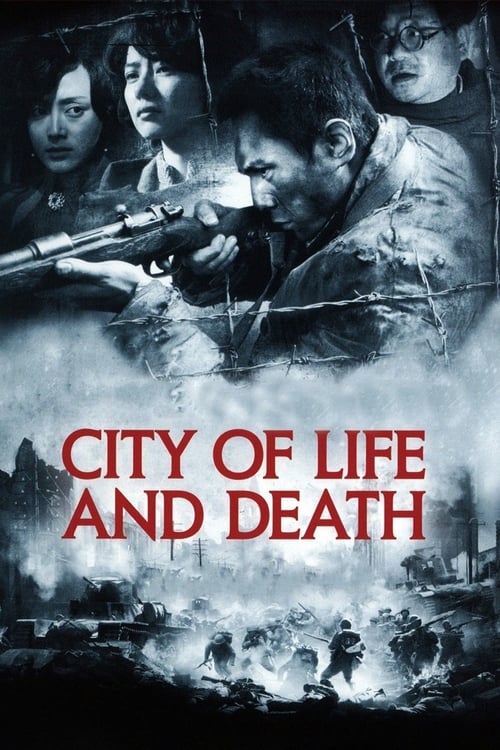
City of Life and Death
In 1937, during the height of the Second Sino-Japanese War, the Imperial Japanese Army has just captured Nanjing, then-capital of the Republic of China. What followed was known as the Nanking Massacre, or the Rape of Nanking, a six week period wherein tens of thousands of Chinese soldiers and civilians were killed.
The film struggled financially against its tight budget of $12.0M, earning $10.7M globally (-11% loss).
17 wins & 15 nominations
Plot Structure
Story beats plotted across runtime


Narrative Arc
Emotional journey through the story's key moments
Story Circle
Blueprint 15-beat structure
Arcplot Score Breakdown
Weighted: Precision (70%) + Arc (15%) + Theme (15%)
City of Life and Death (2009) demonstrates meticulously timed dramatic framework, characteristic of Lu Chuan's storytelling approach. This structural analysis examines how the film's 15-point plot structure maps to proven narrative frameworks across 2 hours and 12 minutes. With an Arcplot score of 6.8, the film balances conventional beats with creative variation.
Characters
Cast & narrative archetypes

Kadokawa
Lu Jianxiong
Jiang Shuyun
John Rabe
Xiaojiang
Miss Jiang
Main Cast & Characters
Kadokawa
Played by Hideo Nakaizumi
A Japanese soldier who witnesses atrocities and struggles with his conscience and humanity during the massacre.
Lu Jianxiong
Played by Liu Ye
A Chinese soldier who defends Nanjing and later tries to survive among refugees in the safety zone.
Jiang Shuyun
Played by Gao Yuanyuan
A resilient woman who becomes a comfort woman to protect other women in the refugee camp.
John Rabe
Played by John Paisley
A German businessman who creates a safety zone to protect Chinese civilians from Japanese forces.
Xiaojiang
Played by Fan Wei
A kind-hearted Chinese man who works with Rabe and helps protect refugees in the safety zone.
Miss Jiang
Played by Jiang Yiyan
A teacher and educated woman who works to maintain dignity and hope among refugees.
Structural Analysis
The Status Quo at 1 minutes (1% through the runtime) establishes December 1937: Chinese soldiers defend Nanjing against the advancing Japanese army. The city is still intact, soldiers have hope, and defensive positions are maintained. This establishes the "before" state of organized resistance and urban civilization.. Notably, this early placement immediately immerses viewers in the story world.
The inciting incident occurs at 14 minutes when The fall of Nanjing: Chinese defenses collapse and Japanese forces breach the city walls. The organized military resistance ends. The status quo of "war with rules" is shattered, beginning the descent into massacre.. At 11% through the film, this Disruption aligns precisely with traditional story structure. This beat shifts the emotional landscape, launching the protagonist into the central conflict.
The First Threshold at 31 minutes marks the transition into Act II, occurring at 23% of the runtime. This shows the protagonist's commitment to Japanese military formally occupies Nanjing and systematic violence begins. The massacre phase commences with organized executions of POWs. Characters cross into a new reality: this is not war but extermination. Survival requires different rules., moving from reaction to action.
At 64 minutes, the Midpoint arrives at 48% of the runtime—precisely centered, creating perfect narrative symmetry. Notably, this crucial beat A false hope collapses: perhaps a promise of safety is broken, or a major character's protection fails. The Japanese command tightens control, making clear that the nightmare will not end soon. Stakes escalate—survival becomes even less certain., fundamentally raising what's at risk. The emotional intensity shifts, dividing the narrative into clear before-and-after phases.
The Collapse moment at 95 minutes (72% through) represents the emotional nadir. Here, A central character dies—likely a woman forced into sexual slavery, or a protector figure who sacrifices themselves. This death embodies the "whiff of death" and represents the complete loss of innocence and hope. The massacre has consumed everything., reveals the protagonist at their lowest point. This beat's placement in the final quarter sets up the climactic reversal.
The Second Threshold at 103 minutes initiates the final act resolution at 78% of the runtime. Synthesis of understanding: characters recognize that survival itself is resistance, that bearing witness matters, that small acts of humanity are meaningful even when they cannot stop the horror. Acceptance of what cannot be changed, commitment to what can., demonstrating the transformation achieved throughout the journey.
Emotional Journey
City of Life and Death's emotional architecture traces a deliberate progression across 15 carefully calibrated beats.
Narrative Framework
This structural analysis employs systematic plot point analysis that identifies crucial turning points. By mapping City of Life and Death against these established plot points, we can identify how Lu Chuan utilizes or subverts traditional narrative conventions. The plot point approach reveals not only adherence to structural principles but also creative choices that distinguish City of Life and Death within the drama genre.
Lu Chuan's Structural Approach
Among the 2 Lu Chuan films analyzed on Arcplot, the average structural score is 7.0, reflecting strong command of classical structure. City of Life and Death takes a more unconventional approach compared to the director's typical style. For comparative analysis, explore the complete Lu Chuan filmography.
Comparative Analysis
Additional drama films include After Thomas, South Pacific and Dirty Dancing: Havana Nights. For more Lu Chuan analyses, see Chronicles of the Ghostly Tribe.
Plot Points by Act
Act I
SetupStatus Quo
December 1937: Chinese soldiers defend Nanjing against the advancing Japanese army. The city is still intact, soldiers have hope, and defensive positions are maintained. This establishes the "before" state of organized resistance and urban civilization.
Theme
A soldier or officer states the impossibility of defending the city, yet speaks of duty and humanity amid war. The thematic question: Can humanity survive when civilization collapses? What does it mean to remain human in inhumane circumstances?
Worldbuilding
Establish the ensemble: Chinese soldiers defending positions, Japanese forces advancing, civilians fleeing, and the International Safety Zone being prepared. We meet Lu Jianxiong (soldier), Kadokawa (Japanese soldier), John Rabe, and others who will carry the narrative.
Disruption
The fall of Nanjing: Chinese defenses collapse and Japanese forces breach the city walls. The organized military resistance ends. The status quo of "war with rules" is shattered, beginning the descent into massacre.
Resistance
Chaos and flight: soldiers shed uniforms, civilians flood the Safety Zone, Japanese troops enter the city. Characters debate impossible choices—surrender, hide, fight, flee. The Safety Zone becomes the only hope, though its protection is uncertain.
Act II
ConfrontationFirst Threshold
Japanese military formally occupies Nanjing and systematic violence begins. The massacre phase commences with organized executions of POWs. Characters cross into a new reality: this is not war but extermination. Survival requires different rules.
Mirror World
Focus on Kadokawa, a Japanese soldier who shows discomfort with the atrocities. His humanity and growing horror mirror the film's central question. He represents the possibility of conscience within the machinery of genocide. His arc will carry the thematic burden.
Premise
The full horror unfolds: mass executions, rape, arbitrary killings, and the Safety Zone under siege. Characters navigate impossible moral terrain—prostitution for protection, hiding identities, witnessing atrocities. This is "what the film is about": sustained inhumanity and attempts to preserve dignity.
Midpoint
A false hope collapses: perhaps a promise of safety is broken, or a major character's protection fails. The Japanese command tightens control, making clear that the nightmare will not end soon. Stakes escalate—survival becomes even less certain.
Opposition
Increasing brutality and desperation: the Safety Zone's resources dwindle, Japanese soldiers hunt for "comfort women," executions continue. Characters face impossible choices. Kadokawa's internal conflict deepens. Humanity is tested to breaking point.
Collapse
A central character dies—likely a woman forced into sexual slavery, or a protector figure who sacrifices themselves. This death embodies the "whiff of death" and represents the complete loss of innocence and hope. The massacre has consumed everything.
Crisis
The emotional aftermath of the Collapse. Survivors process unbearable loss. Kadokawa confronts his complicity. The darkness is complete—there is no rescue coming, no justice, only endurance. Characters sit in the rubble of civilization.
Act III
ResolutionSecond Threshold
Synthesis of understanding: characters recognize that survival itself is resistance, that bearing witness matters, that small acts of humanity are meaningful even when they cannot stop the horror. Acceptance of what cannot be changed, commitment to what can.
Synthesis
Final movements: Kadokawa's fate resolves (likely suicide as his only escape from complicity), remaining characters endure or perish, the Safety Zone persists though diminished. The massacre continues but the narrative arcs complete—showing who lived, who died, what was preserved.
Transformation
Final image: likely ruins, survivors in the Safety Zone, or a memorial gesture. Contrasts with the opening's intact city and organized defense. Transformation is negative—civilization destroyed, innocence lost—but witnesses survive to remember. The question "can humanity endure?" is answered: barely, but yes.