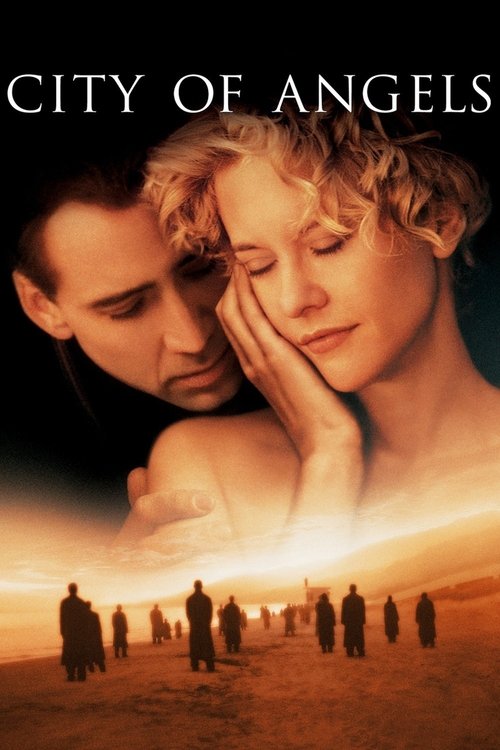
City of Angels
An angel on Earth, a doctor unable to believe, a patient with a secret, a love story made in Heaven.
Despite a moderate budget of $55.0M, City of Angels became a box office success, earning $198.7M worldwide—a 261% return.


Plot Structure
Story beats plotted across runtime


Narrative Arc
Emotional journey through the story's key moments
Story Circle
Blueprint 15-beat structure
Characters
Cast & narrative archetypes

Seth
Dr. Maggie Rice
Nathaniel Messinger
Cassiel
Main Cast & Characters
Seth
Played by Nicolas Cage
An angel who falls in love with a mortal surgeon and chooses to become human to experience life and love.
Dr. Maggie Rice
Played by Meg Ryan
A dedicated heart surgeon who falls in love with Seth and helps him understand what it means to be human.
Nathaniel Messinger
Played by Dennis Franz
A former angel who became human and now owns a pear orchard, serving as a guide for Seth's transformation.
Cassiel
Played by Andre Braugher
Seth's fellow angel and closest companion who witnesses his friend's journey toward humanity.
Structural Analysis
The Status Quo at 1 minutes (1% through the runtime) establishes Angel Seth observes the city from above at dawn, invisible to humans, watching over Los Angeles with other angels. He exists in a timeless, sensory-deprived state, bearing witness to human life and death without experiencing physical sensation.. Notably, this early placement immediately immerses viewers in the story world.
The inciting incident occurs at 13 minutes when Seth reveals himself to Maggie at the hospital, appearing as a visible man for the first time. She can see and hear him. This impossible connection disrupts both of their worlds—an angel breaking the rules to comfort a grieving doctor, and Maggie encountering something beyond her scientific understanding.. At 12% through the film, this Disruption aligns precisely with traditional story structure. This beat shifts the emotional landscape, launching the protagonist into the central conflict.
The First Threshold at 28 minutes marks the transition into Act II, occurring at 25% of the runtime. This indicates the protagonist's commitment to Seth actively chooses to pursue Maggie, following her to Lake Tahoe despite knowing it violates the natural order. This is his decision to fully enter the human world emotionally, even while still an angel. He can no longer remain a passive observer., moving from reaction to action.
At 56 minutes, the Midpoint arrives at 49% of the runtime—precisely centered, creating perfect narrative symmetry. Structural examination shows that this crucial beat Seth and Maggie kiss, and he experiences physical sensation for the first time through an angel's approximation. She fully accepts him despite not understanding what he is. This false victory raises the stakes—their love seems possible, but Seth still cannot truly experience human touch, taste, or mortality. The question becomes: will love be enough?., fundamentally raising what's at risk. The emotional intensity shifts, dividing the narrative into clear before-and-after phases.
The Collapse moment at 84 minutes (74% through) represents the emotional nadir. Here, Seth makes the ultimate choice: he "falls," giving up his immortality to become human. At dawn, he awakens on the beach, no longer an angel. This contains the "whiff of death"—he has died to his eternal existence and is now subject to mortality, pain, and eventual death. Everything he was is gone., indicates the protagonist at their lowest point. This beat's placement in the final quarter sets up the climactic reversal.
The Second Threshold at 91 minutes initiates the final act resolution at 80% of the runtime. Seth finds Maggie at the hospital and reveals what he's done—he became human for her. She is overwhelmed with joy and disbelief. They finally make love, truly touching for the first time. He has synthesized his angelic knowledge with human experience, choosing mortality and love over eternity and solitude., demonstrating the transformation achieved throughout the journey.
Emotional Journey
City of Angels's emotional architecture traces a deliberate progression across 15 carefully calibrated beats.
Narrative Framework
This structural analysis employs systematic plot point analysis that identifies crucial turning points. By mapping City of Angels against these established plot points, we can identify how Brad Silberling utilizes or subverts traditional narrative conventions. The plot point approach reveals not only adherence to structural principles but also creative choices that distinguish City of Angels within the drama genre.
Brad Silberling's Structural Approach
Among the 5 Brad Silberling films analyzed on Arcplot, the average structural score is 6.7, demonstrating varied approaches to story architecture. City of Angels exemplifies the director's characteristic narrative technique. For comparative analysis, explore the complete Brad Silberling filmography.
Comparative Analysis
Additional drama films include After Thomas, South Pacific and Dirty Dancing: Havana Nights. For more Brad Silberling analyses, see Casper, Moonlight Mile and Land of the Lost.
Plot Points by Act
Act I
SetupStatus Quo
Angel Seth observes the city from above at dawn, invisible to humans, watching over Los Angeles with other angels. He exists in a timeless, sensory-deprived state, bearing witness to human life and death without experiencing physical sensation.
Theme
Nathaniel Messinger, a patient who can see angels, tells Seth about the beauty of physical existence: "Some things are true whether you believe in them or not." This establishes the film's central question about faith, mortality, and the value of human experience.
Worldbuilding
Establishment of the dual worlds: angels moving invisibly through Los Angeles, and humans living their sensory lives. Seth meets Dr. Maggie Rice in the operating room as she loses a patient despite her best efforts. We see the angels' routine of comforting the dying and Seth's growing curiosity about the surgeon who fought so hard to save a life.
Disruption
Seth reveals himself to Maggie at the hospital, appearing as a visible man for the first time. She can see and hear him. This impossible connection disrupts both of their worlds—an angel breaking the rules to comfort a grieving doctor, and Maggie encountering something beyond her scientific understanding.
Resistance
Seth begins appearing to Maggie repeatedly, drawn to her in ways he doesn't understand. Maggie is torn between her rational medical worldview and her growing fascination with this mysterious stranger. Seth debates with fellow angel Cassiel about his feelings. Maggie hesitates, engaged to another man but increasingly captivated by Seth.
Act II
ConfrontationFirst Threshold
Seth actively chooses to pursue Maggie, following her to Lake Tahoe despite knowing it violates the natural order. This is his decision to fully enter the human world emotionally, even while still an angel. He can no longer remain a passive observer.
Mirror World
Seth encounters Nathaniel Messinger again, who reveals he was once an angel who chose to "fall" and become human for love. Messinger is the living embodiment of the theme—proof that an angel can choose mortality and that human sensation is worth the price of death.
Premise
The romance between Seth and Maggie deepens as he explores what it means to love while she opens herself to mystery beyond science. Seth experiences vicarious humanity through Maggie—music, poetry, emotion. Maggie breaks off her engagement. The "promise of the premise" delivers the impossible love story between mortal and immortal.
Midpoint
Seth and Maggie kiss, and he experiences physical sensation for the first time through an angel's approximation. She fully accepts him despite not understanding what he is. This false victory raises the stakes—their love seems possible, but Seth still cannot truly experience human touch, taste, or mortality. The question becomes: will love be enough?
Opposition
Seth realizes the impossibility of their situation intensifies. He can love her but never truly feel her touch, share a meal, or grow old with her. Maggie struggles with the relationship's limitations. Cassiel questions Seth's choices. The opposition is not a villain but reality itself—the unbridgeable gap between eternal spirit and mortal flesh.
Collapse
Seth makes the ultimate choice: he "falls," giving up his immortality to become human. At dawn, he awakens on the beach, no longer an angel. This contains the "whiff of death"—he has died to his eternal existence and is now subject to mortality, pain, and eventual death. Everything he was is gone.
Crisis
Seth experiences humanity for the first time—pain from stepping on rocks, the taste of a pear, rain on his skin, blood from a cut. He struggles to find Maggie, now vulnerable and mortal. The weight of his choice becomes real: he can die, he can be hurt, and he may lose everything.
Act III
ResolutionSecond Threshold
Seth finds Maggie at the hospital and reveals what he's done—he became human for her. She is overwhelmed with joy and disbelief. They finally make love, truly touching for the first time. He has synthesized his angelic knowledge with human experience, choosing mortality and love over eternity and solitude.
Synthesis
One perfect day together: Seth and Maggie ride her bike to the countryside, share breakfast, make love, experience pure joy. But tragedy strikes—Maggie is killed in a bicycle accident. Seth cradles her body, experiencing the full depth of human grief. He must answer the question: was one day of true love worth an eternity? He tells Cassiel he would do it again—that he'd rather have had one breath of her hair, one kiss, one touch, than an eternity without it.
Transformation
Seth stands on the beach at dawn, now fully human, alone but transformed. Where the opening showed him observing life as an eternal, detached angel, he now stands as a mortal man who has loved and lost. He has gained everything that makes us human—sensation, love, grief, mortality—and he declares it was worth the price. The film affirms that finite, feeling existence is more valuable than infinite, numb eternity.