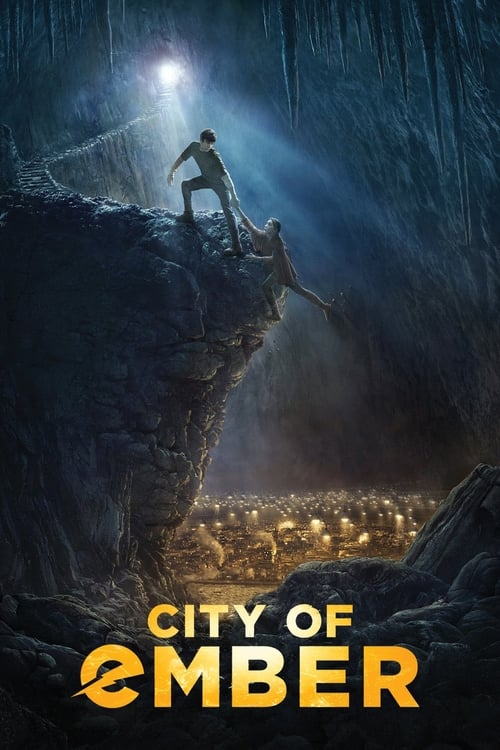
City of Ember
For generations, the people of the City of Ember have flourished in an amazing world of glittering lights. But Ember's once powerful generator is failing and the great lamps that illuminate the city are starting to flicker. Now, two teenagers, in a race against time, must search Ember for clues that will unlock the ancient mystery of the city's existence, before the the lights go out forever.
The film financial setback against its mid-range budget of $55.0M, earning $17.9M globally (-68% loss). While initial box office returns were modest, the film has gained appreciation for its distinctive approach within the adventure genre.


Plot Structure
Story beats plotted across runtime


Narrative Arc
Emotional journey through the story's key moments
Story Circle
Blueprint 15-beat structure
Arcplot Score Breakdown
Weighted: Precision (70%) + Arc (15%) + Theme (15%)
City of Ember (2008) reveals carefully calibrated story structure, characteristic of Gil Kenan's storytelling approach. This structural analysis examines how the film's 15-point plot structure maps to proven narrative frameworks across 1 hour and 30 minutes. With an Arcplot score of 7.7, the film showcases strong structural fundamentals.
Characters
Cast & narrative archetypes

Lina Mayfleet
Doon Harrow
Mayor Cole
Sul
Loris Harrow
Clary
Main Cast & Characters
Lina Mayfleet
Played by Saoirse Ronan
A young messenger who discovers clues to escape the dying underground city of Ember.
Doon Harrow
Played by Harry Treadaway
An intelligent pipeworks worker who teams up with Lina to find a way out of Ember.
Mayor Cole
Played by Bill Murray
The corrupt mayor of Ember who hoards supplies while the city crumbles.
Sul
Played by Martin Landau
A loyal friend who helps Lina and Doon in their quest to save Ember.
Loris Harrow
Played by Tim Robbins
Doon's father, a tinkerer who encourages his son's curiosity and problem-solving.
Clary
Played by Liz Smith
A greenhouse worker who cares for Poppy and helps Lina.
Structural Analysis
The Status Quo at 1 minutes (1% through the runtime) establishes Opening prologue showing the Builders creating Ember as humanity's last hope, then cut to present-day Ember: a dimly lit underground city powered by a failing generator, where citizens live in ignorance of the world above.. Notably, this early placement immediately immerses viewers in the story world.
The inciting incident occurs at 10 minutes when Lina and Doon trade jobs. Doon descends into the Pipeworks and discovers the generator is catastrophically failing—massive machinery breaking down, leaks everywhere. He realizes Ember has very little time left before permanent blackout.. At 11% through the film, this Disruption aligns precisely with traditional story structure. This beat shifts the emotional landscape, launching the protagonist into the central conflict.
The First Threshold at 21 minutes marks the transition into Act II, occurring at 23% of the runtime. This indicates the protagonist's commitment to Lina makes the active choice to trust Doon and share the Instructions document with him. They form a partnership to decode the instructions and find the way out of Ember, committing to the quest despite the danger., moving from reaction to action.
At 44 minutes, the Midpoint arrives at 49% of the runtime—precisely centered, creating perfect narrative symmetry. The analysis reveals that this crucial beat False defeat: Lina and Doon are discovered and pursued by guards. The Mayor publicly denounces them as troublemakers spreading dangerous lies. The city turns against them, and their evidence is confiscated. Stakes raise dramatically—now they're fugitives with the clock ticking faster., fundamentally raising what's at risk. The emotional intensity shifts, dividing the narrative into clear before-and-after phases.
The Collapse moment at 65 minutes (72% through) represents the emotional nadir. Here, The generator suffers a catastrophic failure, plunging Ember into extended darkness. Citizens riot. Lina's grandmother dies, representing the death of the old generation and the old ways. Lina and Doon are separated and nearly captured. All seems lost—the city is dying and they're no closer to escape., demonstrates the protagonist at their lowest point. This beat's placement in the final quarter sets up the climactic reversal.
The Second Threshold at 70 minutes initiates the final act resolution at 78% of the runtime. Lina and Doon reunite and have their breakthrough: they finally decode the complete instructions. They realize the river in the Pipeworks is the key—it leads to the exit. They synthesize all their clues and see the full picture. They choose to attempt the escape immediately despite the danger., demonstrating the transformation achieved throughout the journey.
Emotional Journey
City of Ember's emotional architecture traces a deliberate progression across 15 carefully calibrated beats.
Narrative Framework
This structural analysis employs structural analysis methodology used to understand storytelling architecture. By mapping City of Ember against these established plot points, we can identify how Gil Kenan utilizes or subverts traditional narrative conventions. The plot point approach reveals not only adherence to structural principles but also creative choices that distinguish City of Ember within the adventure genre.
Gil Kenan's Structural Approach
Among the 4 Gil Kenan films analyzed on Arcplot, the average structural score is 7.3, reflecting strong command of classical structure. City of Ember represents one of the director's most structurally precise works. For comparative analysis, explore the complete Gil Kenan filmography.
Comparative Analysis
Additional adventure films include The Black Stallion, The Bad Guys and Puss in Boots. For more Gil Kenan analyses, see Poltergeist, Ghostbusters: Frozen Empire and Monster House.
Plot Points by Act
Act I
SetupStatus Quo
Opening prologue showing the Builders creating Ember as humanity's last hope, then cut to present-day Ember: a dimly lit underground city powered by a failing generator, where citizens live in ignorance of the world above.
Theme
Lina's teacher at Assignment Day ceremony speaks about how "everyone has their part to play" in keeping Ember alive, establishing the theme of individual responsibility versus collective survival and the tension between hope and fear.
Worldbuilding
Assignment Day ceremony where graduates receive their jobs. Lina is assigned Pipeworks (underground), Doon gets Messenger (desired by Lina). We see Ember's infrastructure failing: flickering lights, food shortages, crumbling buildings. The citizens are kept ignorant of their true situation.
Disruption
Lina and Doon trade jobs. Doon descends into the Pipeworks and discovers the generator is catastrophically failing—massive machinery breaking down, leaks everywhere. He realizes Ember has very little time left before permanent blackout.
Resistance
Lina finds fragments of an ancient document ("Instructions for Egress") chewed by her baby sister. Doon tries to fix the generator but realizes it's beyond repair. Both independently realize they need to find a way out. Lina debates whether to trust Doon; Doon debates whether escape is even possible.
Act II
ConfrontationFirst Threshold
Lina makes the active choice to trust Doon and share the Instructions document with him. They form a partnership to decode the instructions and find the way out of Ember, committing to the quest despite the danger.
Mirror World
Lina and Doon's partnership deepens as they work together to decode the instructions. Their collaboration represents the film's theme: two people with different skills (Lina's hope and speed, Doon's technical knowledge) can achieve what neither could alone.
Premise
The "fun and games" of decoding the mystery: Lina and Doon explore forbidden areas, piece together clues, discover the Mayor is hoarding supplies in a secret bunker, and begin mapping a path through the Pipeworks following the instructions. They experience the thrill of discovery and rebellion.
Midpoint
False defeat: Lina and Doon are discovered and pursued by guards. The Mayor publicly denounces them as troublemakers spreading dangerous lies. The city turns against them, and their evidence is confiscated. Stakes raise dramatically—now they're fugitives with the clock ticking faster.
Opposition
The Mayor intensifies his hunt for Lina and Doon. The generator failures worsen—blackouts become longer and more frequent. Citizens panic. Lina and Doon must evade guards while continuing to decode the instructions. They face setbacks, wrong turns, and growing doubt.
Collapse
The generator suffers a catastrophic failure, plunging Ember into extended darkness. Citizens riot. Lina's grandmother dies, representing the death of the old generation and the old ways. Lina and Doon are separated and nearly captured. All seems lost—the city is dying and they're no closer to escape.
Crisis
In the darkness and chaos, Lina and Doon separately process their despair. Lina mourns her grandmother and confronts her fear. Doon faces the possibility that the Builders failed and there is no way out. Both must decide whether to surrender or make one final attempt.
Act III
ResolutionSecond Threshold
Lina and Doon reunite and have their breakthrough: they finally decode the complete instructions. They realize the river in the Pipeworks is the key—it leads to the exit. They synthesize all their clues and see the full picture. They choose to attempt the escape immediately despite the danger.
Synthesis
The finale: Lina, Doon, and Poppy navigate the Pipeworks, find the hidden boat, ride the underground river, and climb up through the exit pipe. The Mayor tries to follow but fails. They emerge onto the surface, seeing the sky and ruins of the old world for the first time. They send the instructions back down to Ember via rock drop.
Transformation
Final image mirrors the opening: Instead of the dark, enclosed city, Lina and Doon stand in sunlight on the surface, looking out at the vast world. The camera pulls back to show Ember's instructions falling into the city below. Hope has replaced fear; knowledge has replaced ignorance; the vast open world has replaced the dying closed one.