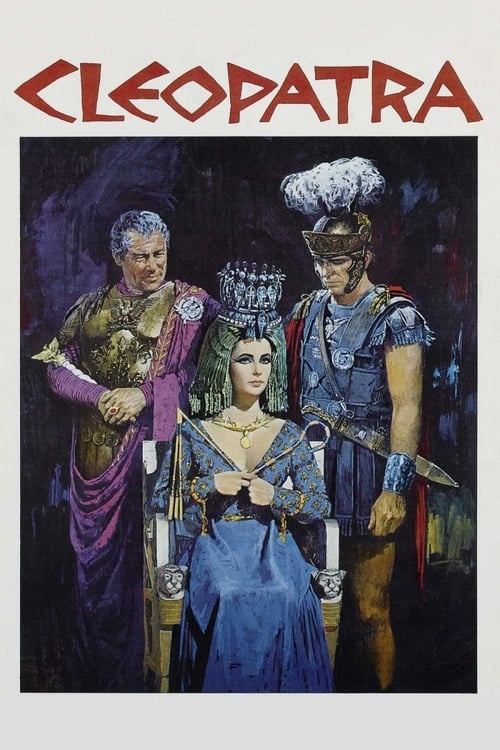
Cleopatra
Determined to hold on to the throne, Cleopatra seduces the Roman emperor Julius Caesar. When Caesar is murdered, she redirects her attentions to his general, Marc Antony, who vows to take power—but Caesar’s successor has other plans.
Working with a mid-range budget of $44.0M, the film achieved a steady performer with $57.8M in global revenue (+31% profit margin).
4 Oscars. 7 wins & 13 nominations


Plot Structure
Story beats plotted across runtime


Narrative Arc
Emotional journey through the story's key moments
Story Circle
Blueprint 15-beat structure
Arcplot Score Breakdown
Weighted: Precision (70%) + Arc (15%) + Theme (15%)
Cleopatra (1963) reveals carefully calibrated narrative design, characteristic of Joseph L. Mankiewicz's storytelling approach. This structural analysis examines how the film's 15-point plot structure maps to proven narrative frameworks across 4 hours and 11 minutes. With an Arcplot score of 7.4, the film balances conventional beats with creative variation.
Characters
Cast & narrative archetypes

Cleopatra
Julius Caesar
Marc Antony
Octavian
Apollodorus
Rufio
Sosigenes
Brutus
Cassius
Main Cast & Characters
Cleopatra
Played by Elizabeth Taylor
The last Pharaoh of Egypt, a brilliant and seductive ruler who uses alliances with Rome to preserve her kingdom and power.
Julius Caesar
Played by Rex Harrison
Roman general and statesman who becomes Cleopatra's lover and political ally, seeking to consolidate power in Rome.
Marc Antony
Played by Richard Burton
Roman general and Caesar's loyal friend who falls deeply in love with Cleopatra, ultimately choosing her over Rome.
Octavian
Played by Roddy McDowall
Caesar's adopted heir and political rival to Antony, calculating and ambitious in his pursuit of absolute power in Rome.
Apollodorus
Played by Cesare Danova
Cleopatra's devoted Sicilian servant and confidant who assists in her schemes and political maneuvers.
Rufio
Played by Martin Landau
Caesar's trusted military commander and adviser, loyal but pragmatic about Roman interests.
Sosigenes
Played by Hume Cronyn
Egyptian astronomer and adviser to Cleopatra, providing counsel and wisdom at court.
Brutus
Played by Kenneth Haigh
Roman senator and philosopher torn between loyalty to Caesar and Republican ideals, ultimately joining the conspiracy.
Cassius
Played by John Hoyt
Roman senator and chief conspirator against Caesar, driven by political ideology and personal resentment.
Structural Analysis
The Status Quo at 3 minutes (1% through the runtime) establishes Cleopatra, exiled and powerless, schemes in the desert outside Alexandria. Her brother Ptolemy controls Egypt while she plots her return to power.. The analysis reveals that this early placement immediately immerses viewers in the story world.
The inciting incident occurs at 30 minutes when Cleopatra has herself smuggled into Caesar's quarters rolled in a carpet, making her legendary first impression. This bold move disrupts both her exile and Caesar's plans.. At 12% through the film, this Disruption aligns precisely with traditional story structure. This beat shifts the emotional landscape, launching the protagonist into the central conflict.
The First Threshold at 62 minutes marks the transition into Act II, occurring at 25% of the runtime. This reveals the protagonist's commitment to Caesar decisively backs Cleopatra and wages war against Ptolemy. He chooses to commit Rome's forces to restore her to the throne, entering a new world of Egyptian politics and romance., moving from reaction to action.
At 124 minutes, the Midpoint arrives at 49% of the runtime—precisely centered, creating perfect narrative symmetry. Notably, this crucial beat Caesar is assassinated in the Roman Senate. This false defeat shatters Cleopatra's world and her dreams of ruling alongside Caesar. Everything changes., fundamentally raising what's at risk. The emotional intensity shifts, dividing the narrative into clear before-and-after phases.
The Collapse moment at 186 minutes (74% through) represents the emotional nadir. Here, Antony's marriage to Octavia and apparent betrayal of Cleopatra. The whiff of death: their love seems dead, and with it her political alliance with Rome., indicates the protagonist at their lowest point. This beat's placement in the final quarter sets up the climactic reversal.
The Second Threshold at 198 minutes initiates the final act resolution at 79% of the runtime. Antony returns to Cleopatra, choosing love over Roman duty. They marry and prepare for war against Octavian, synthesizing their personal and political goals., demonstrating the transformation achieved throughout the journey.
Emotional Journey
Cleopatra's emotional architecture traces a deliberate progression across 15 carefully calibrated beats.
Narrative Framework
This structural analysis employs systematic plot point analysis that identifies crucial turning points. By mapping Cleopatra against these established plot points, we can identify how Joseph L. Mankiewicz utilizes or subverts traditional narrative conventions. The plot point approach reveals not only adherence to structural principles but also creative choices that distinguish Cleopatra within the drama genre.
Joseph L. Mankiewicz's Structural Approach
Among the 5 Joseph L. Mankiewicz films analyzed on Arcplot, the average structural score is 6.8, demonstrating varied approaches to story architecture. Cleopatra represents one of the director's most structurally precise works. For comparative analysis, explore the complete Joseph L. Mankiewicz filmography.
Comparative Analysis
Additional drama films include After Thomas, South Pacific and Dirty Dancing: Havana Nights. For more Joseph L. Mankiewicz analyses, see Sleuth, Suddenly, Last Summer and Guys and Dolls.
Plot Points by Act
Act I
SetupStatus Quo
Cleopatra, exiled and powerless, schemes in the desert outside Alexandria. Her brother Ptolemy controls Egypt while she plots her return to power.
Theme
Apollodorus states: "There is always a way for those who are clever enough to find it." The film's theme of ambition, power, and the cost of ruling is established.
Worldbuilding
Introduction to the political landscape of Egypt and Rome. Caesar arrives in Alexandria pursuing Pompey. The power struggle between Cleopatra and Ptolemy is established, along with the Roman civil war context.
Disruption
Cleopatra has herself smuggled into Caesar's quarters rolled in a carpet, making her legendary first impression. This bold move disrupts both her exile and Caesar's plans.
Resistance
Cleopatra and Caesar negotiate their alliance. She debates whether to trust Rome and Caesar debates whether to support her claim. Their relationship develops as they recognize mutual benefit.
Act II
ConfrontationFirst Threshold
Caesar decisively backs Cleopatra and wages war against Ptolemy. He chooses to commit Rome's forces to restore her to the throne, entering a new world of Egyptian politics and romance.
Mirror World
Cleopatra and Caesar's love affair deepens. Their relationship becomes the thematic mirror - love versus duty, personal desire versus political necessity.
Premise
The promise of the premise: Cleopatra as Queen with Caesar as ally and lover. Grand spectacles, political maneuvering, the birth of Caesarion, and Cleopatra's триумфant entry into Rome.
Midpoint
Caesar is assassinated in the Roman Senate. This false defeat shatters Cleopatra's world and her dreams of ruling alongside Caesar. Everything changes.
Opposition
Cleopatra returns to Egypt devastated. Mark Antony emerges as a new power player. Their relationship begins contentiously as she resists Roman influence, but attraction grows. Political pressures intensify as Octavian rises.
Collapse
Antony's marriage to Octavia and apparent betrayal of Cleopatra. The whiff of death: their love seems dead, and with it her political alliance with Rome.
Crisis
Cleopatra's dark night. She processes the betrayal and loss, questioning whether love and power can coexist. Antony struggles with his torn loyalties.
Act III
ResolutionSecond Threshold
Antony returns to Cleopatra, choosing love over Roman duty. They marry and prepare for war against Octavian, synthesizing their personal and political goals.
Synthesis
The finale: Battle of Actium, military defeat, false reports of Cleopatra's death, Antony's suicide, and Cleopatra's final confrontation with Octavian leading to her suicide by asp.
Transformation
Cleopatra dies by her own hand, dressed as a queen. She has transformed from a scheming exile into a tragic legend who chose death over submission. The cost of power and love fully paid.