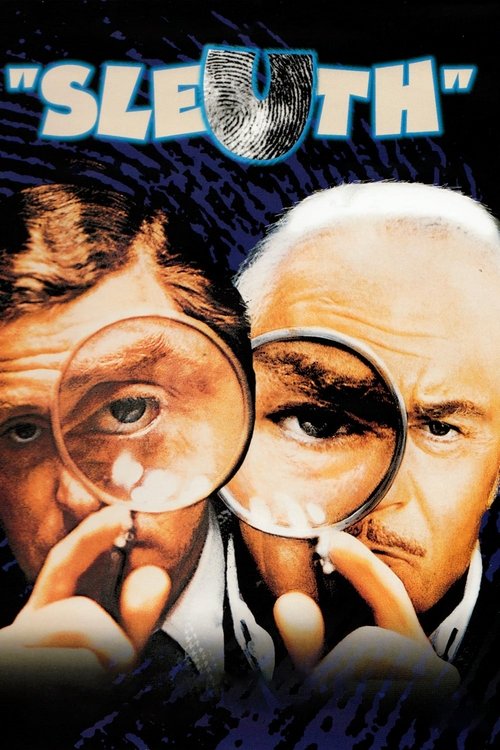
Sleuth
A man who loves games and theater invites his wife's lover to meet him, setting up a battle of wits with potentially deadly results.
Working with a small-scale budget of $3.5M, the film achieved a respectable showing with $5.8M in global revenue (+64% profit margin).
Nominated for 4 Oscars. 5 wins & 11 nominations
Plot Structure
Story beats plotted across runtime


Narrative Arc
Emotional journey through the story's key moments
Story Circle
Blueprint 15-beat structure
Arcplot Score Breakdown
Weighted: Precision (70%) + Arc (15%) + Theme (15%)
Sleuth (1972) reveals meticulously timed dramatic framework, characteristic of Joseph L. Mankiewicz's storytelling approach. This structural analysis examines how the film's 15-point plot structure maps to proven narrative frameworks across 2 hours and 18 minutes. With an Arcplot score of 7.2, the film balances conventional beats with creative variation.
Characters
Cast & narrative archetypes

Andrew Wyke
Milo Tindle
Main Cast & Characters
Andrew Wyke
Played by Laurence Olivier
A wealthy mystery writer who plays sadistic mind games with his wife's lover in an elaborate cat-and-mouse battle of wits.
Milo Tindle
Played by Michael Caine
A travel agent and hairdresser of Italian descent who becomes trapped in Wyke's deadly games of psychological manipulation.
Structural Analysis
The Status Quo at 1 minutes (1% through the runtime) establishes The camera prowls through Andrew Wyke's elaborate hedge maze and eccentric manor filled with games, automata, and detective memorabilia, establishing a world of wealthy gamesmanship and aristocratic obsession.. Structural examination shows that this early placement immediately immerses viewers in the story world.
The inciting incident occurs at 17 minutes when Andrew proposes his scheme: Milo should stage a robbery of Marguerite's jewels so Andrew can collect insurance money and Milo can sell the jewels to support Marguerite in the style she requires.. At 12% through the film, this Disruption aligns precisely with traditional story structure. This beat shifts the emotional landscape, launching the protagonist into the central conflict.
The First Threshold at 35 minutes marks the transition into Act II, occurring at 25% of the runtime. This indicates the protagonist's commitment to Milo dons the clown costume and commits to playing Andrew's game, breaking into the safe and taking the jewels, fully entering Andrew's world of games and deception., moving from reaction to action.
At 69 minutes, the Midpoint arrives at 50% of the runtime—precisely centered, creating perfect narrative symmetry. Structural examination shows that this crucial beat Andrew reveals the true game: there was never insurance money. He produces a gun and announces he will shoot Milo as a burglar caught in the act, humiliating and destroying the man who cuckolded him. Andrew fires., fundamentally raising what's at risk. The emotional intensity shifts, dividing the narrative into clear before-and-after phases.
The Collapse moment at 104 minutes (75% through) represents the emotional nadir. Here, Inspector Doppler reveals himself to be Milo Tindle in disguise, alive and vengeful. The blanks Andrew fired were Milo's first humiliation; now Milo has orchestrated Andrew's complete psychological destruction., shows the protagonist at their lowest point. This beat's placement in the final quarter sets up the climactic reversal.
The Second Threshold at 110 minutes initiates the final act resolution at 80% of the runtime. Andrew, now desperately playing Milo's game, must search his own home for planted evidence. The game-master has become the game-piece, forced to play by another's rules to save his life., demonstrating the transformation achieved throughout the journey.
Emotional Journey
Sleuth's emotional architecture traces a deliberate progression across 15 carefully calibrated beats.
Narrative Framework
This structural analysis employs proven narrative structure principles that track dramatic progression. By mapping Sleuth against these established plot points, we can identify how Joseph L. Mankiewicz utilizes or subverts traditional narrative conventions. The plot point approach reveals not only adherence to structural principles but also creative choices that distinguish Sleuth within the thriller genre.
Joseph L. Mankiewicz's Structural Approach
Among the 5 Joseph L. Mankiewicz films analyzed on Arcplot, the average structural score is 6.8, demonstrating varied approaches to story architecture. Sleuth represents one of the director's most structurally precise works. For comparative analysis, explore the complete Joseph L. Mankiewicz filmography.
Comparative Analysis
Additional thriller films include The Warriors, Thunderball and Rustom. For more Joseph L. Mankiewicz analyses, see Cleopatra, Suddenly, Last Summer and Guys and Dolls.
Plot Points by Act
Act I
SetupStatus Quo
The camera prowls through Andrew Wyke's elaborate hedge maze and eccentric manor filled with games, automata, and detective memorabilia, establishing a world of wealthy gamesmanship and aristocratic obsession.
Theme
Andrew tells Milo that the detective novelist's world is one where "games are everything" and that life is best lived as an elaborate contest of wits between worthy adversaries.
Worldbuilding
Andrew Wyke, a wealthy mystery writer, welcomes Milo Tindle, his wife Marguerite's lover, to his manor. Andrew reveals he knows of the affair and the class dynamics between them become apparent through their verbal sparring.
Disruption
Andrew proposes his scheme: Milo should stage a robbery of Marguerite's jewels so Andrew can collect insurance money and Milo can sell the jewels to support Marguerite in the style she requires.
Resistance
Andrew elaborates his plan with theatrical precision, showing Milo where the safe is hidden, providing the clown costume disguise, and walking through every detail. Milo hesitates but is seduced by the elegance of the game.
Act II
ConfrontationFirst Threshold
Milo dons the clown costume and commits to playing Andrew's game, breaking into the safe and taking the jewels, fully entering Andrew's world of games and deception.
Mirror World
As Milo plays the burglar role with increasing discomfort, the power dynamic shifts ominously. Andrew's manor itself becomes a character—the automata watching, the games taking on sinister meaning, reflecting the theme of dangerous play.
Premise
The elaborate burglary game unfolds with theatrical precision. Andrew directs Milo through climbing ladders, cracking safes, and wearing disguises, all while the verbal sparring intensifies with class-based insults and competitive one-upmanship.
Midpoint
Andrew reveals the true game: there was never insurance money. He produces a gun and announces he will shoot Milo as a burglar caught in the act, humiliating and destroying the man who cuckolded him. Andrew fires.
Opposition
After an intermission, a disguised Inspector Doppler arrives investigating Milo's disappearance. Andrew nervously tries to maintain composure as the detective finds mounting evidence of murder, turning Andrew's game against him.
Collapse
Inspector Doppler reveals himself to be Milo Tindle in disguise, alive and vengeful. The blanks Andrew fired were Milo's first humiliation; now Milo has orchestrated Andrew's complete psychological destruction.
Crisis
Milo reveals his counter-game: he has murdered Andrew's mistress Tea and planted evidence framing Andrew. Now Andrew must find the clues before police arrive, or face execution for a murder he didn't commit.
Act III
ResolutionSecond Threshold
Andrew, now desperately playing Milo's game, must search his own home for planted evidence. The game-master has become the game-piece, forced to play by another's rules to save his life.
Synthesis
Andrew frantically searches for the planted clues, solving Milo's puzzles, finding the evidence piece by piece. When he finally succeeds, Milo reveals this too was a game—Tea is alive. But Andrew cannot accept being defeated.
Transformation
Unable to accept that a social inferior has beaten him at his own game, Andrew shoots Milo for real. As Milo dies and police sirens approach, Andrew realizes he has destroyed himself—the ultimate game has consumed both players.