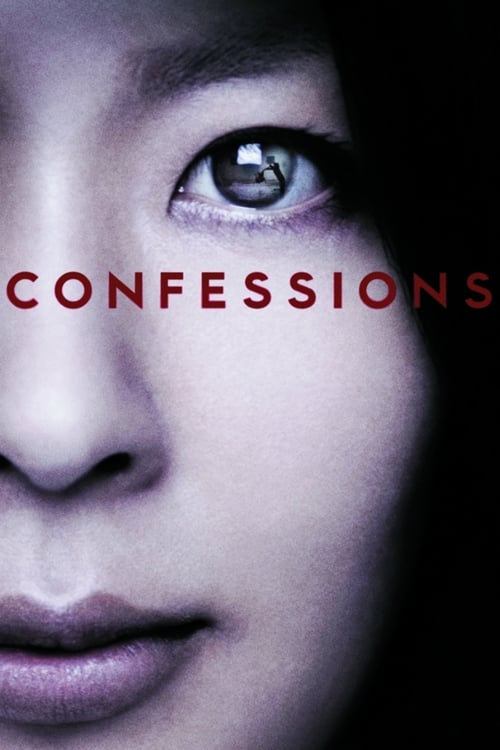
Confessions
Devastated at the death of her four-year-old daughter, a grieving middle school teacher is horrified to discover that her students aren't as innocent as she thinks.
The film earned $45.2M at the global box office.
9 wins & 17 nominations
Plot Structure
Story beats plotted across runtime


Narrative Arc
Emotional journey through the story's key moments
Story Circle
Blueprint 15-beat structure
Arcplot Score Breakdown
Weighted: Precision (70%) + Arc (15%) + Theme (15%)
Confessions (2010) exemplifies precise narrative design, characteristic of Tetsuya Nakashima's storytelling approach. This structural analysis examines how the film's 15-point plot structure maps to proven narrative frameworks across 1 hour and 47 minutes. With an Arcplot score of 7.3, the film balances conventional beats with creative variation.
Characters
Cast & narrative archetypes

Yuko Moriguchi
Shuya Watanabe
Naoki Shitamura
Mizuki Kitahara
Yoshiteru Terada
Sakuramiya
Main Cast & Characters
Yuko Moriguchi
Played by Takako Matsu
Middle school teacher who orchestrates elaborate revenge after her daughter's murder by two students.
Shuya Watanabe
Played by Kaoru Fujiwara
Intelligent student with a god complex who seeks his mother's attention through increasingly violent acts.
Naoki Shitamura
Played by Yukito Nishii
Mentally fragile student manipulated by Shuya, driven by desire for friendship and acceptance.
Mizuki Kitahara
Played by Ai Hashimoto
Student journalist who investigates the truth behind the classroom incident and develops feelings for Shuya.
Yoshiteru Terada
Played by Yoshino Kimura
Idealistic new homeroom teacher who believes in rehabilitation and opposes Moriguchi's methods.
Sakuramiya
Played by Takehiro Hira
Moriguchi's boyfriend and father of her murdered daughter, whose death catalyzes the revenge plot.
Structural Analysis
The Status Quo at 2 minutes (1% through the runtime) establishes Students in a middle school classroom at the end of term, displaying typical adolescent behavior - restless, talking, ignoring their teacher Moriguchi who stands quietly at the front.. Structural examination shows that this early placement immediately immerses viewers in the story world.
The inciting incident occurs at 13 minutes when Moriguchi reveals that she has put HIV-infected blood into the milk cartons of students A and B (Shuya and Naoki), executing her quiet revenge and disrupting their entire reality.. At 12% through the film, this Disruption aligns precisely with traditional story structure. This beat shifts the emotional landscape, launching the protagonist into the central conflict.
The First Threshold at 26 minutes marks the transition into Act II, occurring at 25% of the runtime. This illustrates the protagonist's commitment to Naoki's mother discovers his mental breakdown and takes him out of school; Shuya actively chooses to continue his pursuit of recognition, doubling down on his sociopathic tendencies rather than seeking redemption., moving from reaction to action.
At 54 minutes, the Midpoint arrives at 50% of the runtime—precisely centered, creating perfect narrative symmetry. The analysis reveals that this crucial beat Shuya's confession reveals the truth: he killed Manami deliberately to gain his mother's attention, not by accident. His complete lack of remorse and narcissistic worldview becomes fully apparent., fundamentally raising what's at risk. The emotional intensity shifts, dividing the narrative into clear before-and-after phases.
The Collapse moment at 81 minutes (75% through) represents the emotional nadir. Here, The bomb detonates in Shuya's mother's laboratory, killing her instead of the intended school victims. His desperate bid for maternal recognition results in matricide - ultimate psychological collapse., shows the protagonist at their lowest point. This beat's placement in the final quarter sets up the climactic reversal.
The Second Threshold at 86 minutes initiates the final act resolution at 80% of the runtime. Moriguchi's final confession to Shuya via phone: she switched the bomb's location, deliberately causing him to kill his mother. Her revenge is complete; she has made him feel the loss she felt., demonstrating the transformation achieved throughout the journey.
Emotional Journey
Confessions's emotional architecture traces a deliberate progression across 15 carefully calibrated beats.
Narrative Framework
This structural analysis employs proven narrative structure principles that track dramatic progression. By mapping Confessions against these established plot points, we can identify how Tetsuya Nakashima utilizes or subverts traditional narrative conventions. The plot point approach reveals not only adherence to structural principles but also creative choices that distinguish Confessions within the drama genre.
Comparative Analysis
Additional drama films include After Thomas, South Pacific and Dirty Dancing: Havana Nights.
Plot Points by Act
Act I
SetupStatus Quo
Students in a middle school classroom at the end of term, displaying typical adolescent behavior - restless, talking, ignoring their teacher Moriguchi who stands quietly at the front.
Theme
Moriguchi states: "I have something to confess." The theme of confession, truth, and the weight of revelation permeates the entire narrative structure.
Worldbuilding
Moriguchi establishes the world of her classroom, her daughter Manami's death ruled as an accident, and introduces the concept that she knows the truth about the two student murderers in the room.
Disruption
Moriguchi reveals that she has put HIV-infected blood into the milk cartons of students A and B (Shuya and Naoki), executing her quiet revenge and disrupting their entire reality.
Resistance
The narrative shifts perspectives through confessions: Naoki's deteriorating mental state, his germaphobia and paranoia consuming him, while Shuya remains seemingly unfazed, processing what this revenge means.
Act II
ConfrontationFirst Threshold
Naoki's mother discovers his mental breakdown and takes him out of school; Shuya actively chooses to continue his pursuit of recognition, doubling down on his sociopathic tendencies rather than seeking redemption.
Mirror World
New homeroom teacher Terada represents the idealistic approach to troubled youth - believing in rehabilitation and second chances, serving as thematic counterpoint to Moriguchi's vengeance.
Premise
Exploring the premise of cyclical revenge and damaged youth through multiple confession perspectives: Mizuki's obsession with Shuya, Shuya's relationship with his absent mother, and the unraveling psychology of all involved.
Midpoint
Shuya's confession reveals the truth: he killed Manami deliberately to gain his mother's attention, not by accident. His complete lack of remorse and narcissistic worldview becomes fully apparent.
Opposition
Shuya escalates his plans for recognition by building a bomb for the school fair, while Moriguchi tracks his movements. Mizuki tries to intervene. The opposing forces of vengeance, recognition, and redemption collide.
Collapse
The bomb detonates in Shuya's mother's laboratory, killing her instead of the intended school victims. His desperate bid for maternal recognition results in matricide - ultimate psychological collapse.
Crisis
Shuya processes the horror of killing his mother, while Moriguchi reveals she orchestrated this outcome. The dark truth that revenge has consumed everyone settles in.
Act III
ResolutionSecond Threshold
Moriguchi's final confession to Shuya via phone: she switched the bomb's location, deliberately causing him to kill his mother. Her revenge is complete; she has made him feel the loss she felt.
Synthesis
The aftermath plays out: Shuya's complete mental destruction, Moriguchi walking away from the revenge she's completed, and the final revelations about the HIV blood being a bluff - psychological torture was always the weapon.
Transformation
Shuya, utterly destroyed, screams in anguish while Moriguchi walks away emotionless. The transformation is complete: the quiet teacher has become an angel of vengeance, leaving only devastation behind.