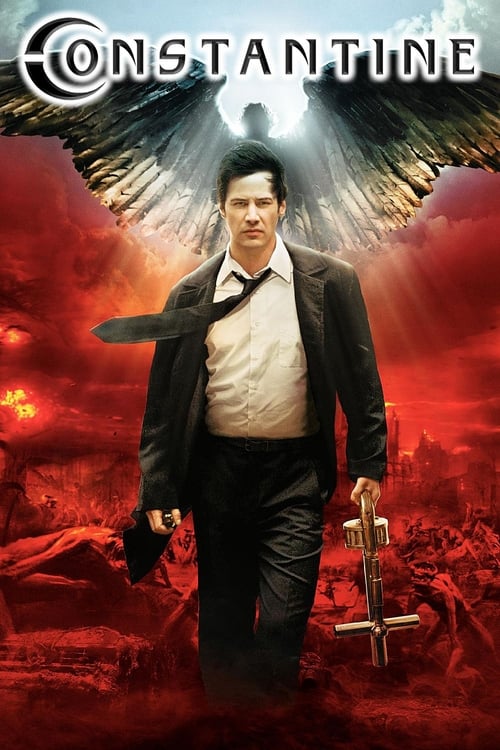
Constantine
John Constantine has literally been to Hell and back. When he teams up with a policewoman to solve the mysterious suicide of her twin sister, their investigation takes them through the world of demons and angels that exists beneath the landscape of contemporary Los Angeles.
Despite a significant budget of $100.0M, Constantine became a financial success, earning $230.9M worldwide—a 131% return.
2 wins & 11 nominations


Plot Structure
Story beats plotted across runtime


Narrative Arc
Emotional journey through the story's key moments
Story Circle
Blueprint 15-beat structure
Arcplot Score Breakdown
Weighted: Precision (70%) + Arc (15%) + Theme (15%)
Constantine (2005) exemplifies precise narrative design, characteristic of Francis Lawrence's storytelling approach. This structural analysis examines how the film's 15-point plot structure maps to proven narrative frameworks across 2 hours and 1 minutes. With an Arcplot score of 7.2, the film balances conventional beats with creative variation.
Characters
Cast & narrative archetypes

John Constantine
Angela Dodson
Gabriel
Lucifer
Balthazar
Midnite
Chas Kramer
Main Cast & Characters
John Constantine
Played by Keanu Reeves
A cynical demon hunter and occult detective battling lung cancer while trying to earn his way into Heaven after a previous suicide attempt damned him to Hell.
Angela Dodson
Played by Rachel Weisz
A devout LAPD detective investigating her twin sister's death who discovers a hidden world of angels and demons.
Gabriel
Played by Tilda Swinton
An androgynous archangel who has grown disillusioned with humanity and secretly orchestrates a demonic plot to bring Hell to Earth.
Lucifer
Played by Peter Stormare
The Devil himself, elegant and darkly charismatic, who maintains the balance between Heaven and Hell and has a personal interest in Constantine's soul.
Balthazar
Played by Gavin Rossdale
A half-breed demon who operates in the mortal world and serves as an informant and occasional adversary to Constantine.
Midnite
Played by Djimon Hounsou
A morally ambiguous voodoo priest and club owner who provides neutral ground for supernatural beings and reluctantly aids Constantine.
Chas Kramer
Played by Shia LaBeouf
Constantine's loyal taxi-driving apprentice and sidekick who aspires to be a demon hunter despite lacking supernatural abilities.
Structural Analysis
The Status Quo at 2 minutes (2% through the runtime) establishes Constantine performs a brutal exorcism on a possessed girl, revealing his world of demons and his weary, chain-smoking existence as a damned man desperately trying to buy his way into Heaven.. Of particular interest, this early placement immediately immerses viewers in the story world.
The inciting incident occurs at 15 minutes when Isabel Dodson, a devout Catholic, throws herself off the roof of Ravenscar psychiatric hospital. Her twin sister Angela, an LAPD detective, refuses to believe Isabel would commit suicide and damn her soul to Hell.. At 12% through the film, this Disruption aligns precisely with traditional story structure. This beat shifts the emotional landscape, launching the protagonist into the central conflict.
The First Threshold at 31 minutes marks the transition into Act II, occurring at 25% of the runtime. This indicates the protagonist's commitment to Constantine agrees to help Angela after she proves her latent psychic abilities by reading his past. He commits to investigating the demonic breach, knowingly entering a larger supernatural conflict that threatens the balance between realms., moving from reaction to action.
At 61 minutes, the Midpoint arrives at 50% of the runtime—precisely centered, creating perfect narrative symmetry. Notably, this crucial beat Constantine learns the terrible truth: the Spear of Destiny, combined with a powerful psychic and divine assistance, can bring Mammon to Earth. Angela is the psychic they need—she suppressed her abilities as a child when Isabel couldn't. The stakes escalate from personal investigation to preventing the apocalypse., fundamentally raising what's at risk. The emotional intensity shifts, dividing the narrative into clear before-and-after phases.
The Collapse moment at 90 minutes (75% through) represents the emotional nadir. Here, Constantine confronts Gabriel at Ravenscar but is too late—the ritual has begun. Gabriel effortlessly defeats him, revealing that God doesn't consider Constantine's demon-hunting worthy of salvation because his motives are selfish. Constantine's cancer-ravaged body fails him, and Chas is killed trying to help., reveals the protagonist at their lowest point. This beat's placement in the final quarter sets up the climactic reversal.
The Second Threshold at 98 minutes initiates the final act resolution at 81% of the runtime. Constantine slits his wrists to summon Lucifer himself—not to make a deal, but to delay Mammon's arrival. By sacrificing his life, he buys time for Angela and forces Lucifer to confront his son's betrayal. For the first time, Constantine acts selflessly., demonstrating the transformation achieved throughout the journey.
Emotional Journey
Constantine's emotional architecture traces a deliberate progression across 15 carefully calibrated beats.
Narrative Framework
This structural analysis employs a 15-point narrative structure framework that maps key story moments. By mapping Constantine against these established plot points, we can identify how Francis Lawrence utilizes or subverts traditional narrative conventions. The plot point approach reveals not only adherence to structural principles but also creative choices that distinguish Constantine within the fantasy genre.
Francis Lawrence's Structural Approach
Among the 8 Francis Lawrence films analyzed on Arcplot, the average structural score is 7.0, reflecting strong command of classical structure. Constantine represents one of the director's most structurally precise works. For comparative analysis, explore the complete Francis Lawrence filmography.
Comparative Analysis
Additional fantasy films include Thinner, Ella Enchanted and Conan the Barbarian. For more Francis Lawrence analyses, see The Hunger Games: Catching Fire, I Am Legend and Red Sparrow.
Plot Points by Act
Act I
SetupStatus Quo
Constantine performs a brutal exorcism on a possessed girl, revealing his world of demons and his weary, chain-smoking existence as a damned man desperately trying to buy his way into Heaven.
Theme
Father Hennessy tells Constantine that his exorcisms won't earn him redemption: "You're not trying to save souls, John. You're just trying to save yourself." True salvation requires selfless sacrifice, not self-serving deeds.
Worldbuilding
The rules of Constantine's world are established: the balance between Heaven and Hell, half-breed angels and demons influencing humans, Constantine's terminal lung cancer, his suicide as a teenager that damned him, and his desperate mission to deport enough demons to earn God's favor.
Disruption
Isabel Dodson, a devout Catholic, throws herself off the roof of Ravenscar psychiatric hospital. Her twin sister Angela, an LAPD detective, refuses to believe Isabel would commit suicide and damn her soul to Hell.
Resistance
Angela investigates her sister's death and seeks out Constantine after finding his name in Isabel's possessions. Constantine initially refuses to help, but a demon's direct attack on him—breaking the rules of the balance—forces him to reconsider. He visits Midnite's neutral-ground bar seeking answers.
Act II
ConfrontationFirst Threshold
Constantine agrees to help Angela after she proves her latent psychic abilities by reading his past. He commits to investigating the demonic breach, knowingly entering a larger supernatural conflict that threatens the balance between realms.
Mirror World
Angela becomes Constantine's partner in the investigation. Unlike Constantine's cynical self-interest, Angela acts from pure love for her sister. Her faith and selfless devotion contrast with his transactional approach to salvation, embodying the theme.
Premise
Constantine and Angela investigate the demonic incursion together. They discover soldier demons are crossing over, visit Hell to retrieve Isabel's soul, learn about the Spear of Destiny found in Mexico, and realize someone is trying to bring Mammon—Lucifer's son—into the mortal realm.
Midpoint
Constantine learns the terrible truth: the Spear of Destiny, combined with a powerful psychic and divine assistance, can bring Mammon to Earth. Angela is the psychic they need—she suppressed her abilities as a child when Isabel couldn't. The stakes escalate from personal investigation to preventing the apocalypse.
Opposition
Constantine races to protect Angela while forces align against him. Father Hennessy is murdered by half-breed demon Balthazar. Beeman is killed. Constantine's protégé Chas is devastated. Gabriel, the archangel, is revealed as the traitor helping Mammon—believing human suffering will make them worthy of God's love. Angela is kidnapped.
Collapse
Constantine confronts Gabriel at Ravenscar but is too late—the ritual has begun. Gabriel effortlessly defeats him, revealing that God doesn't consider Constantine's demon-hunting worthy of salvation because his motives are selfish. Constantine's cancer-ravaged body fails him, and Chas is killed trying to help.
Crisis
Beaten and dying, Constantine faces the truth: his lifelong fight was never about saving others but saving himself. With Angela possessed by Mammon, Chas dead, and Gabriel unstoppable, he has no weapons left. He must find another way—or accept total defeat.
Act III
ResolutionSecond Threshold
Constantine slits his wrists to summon Lucifer himself—not to make a deal, but to delay Mammon's arrival. By sacrificing his life, he buys time for Angela and forces Lucifer to confront his son's betrayal. For the first time, Constantine acts selflessly.
Synthesis
Lucifer arrives, furious that his son tried to usurp him. He drags Mammon back to Hell, neutralizes Gabriel by making her mortal, and pulls Isabel's soul from Hell per Constantine's dying wish. When Lucifer tries to claim Constantine's soul, he finds John ascending to Heaven—his sacrifice finally earned redemption. Lucifer heals Constantine out of spite, giving him a second chance.
Transformation
Constantine, now cancer-free and redeemed, refuses a cigarette and chews gum instead. At Chas's grave, he sees his friend has become an angel—reward for his sacrifice. Constantine walks away with Angela, transformed from a self-serving cynic into a man who found salvation through genuine selflessness.