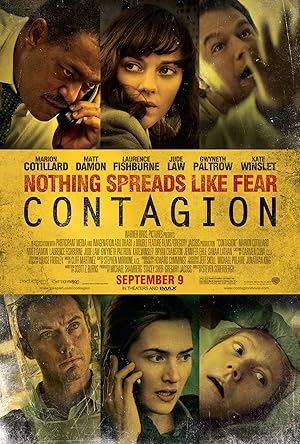
Contagion
Soon after her return from a business trip to Hong Kong, Beth Emhoff dies from what is a flu or some other type of infection. Her young son dies later the same day. Her husband Mitch however seems immune. Thus begins the spread of a deadly infection. For doctors and administrators at the U.S. Centers for Disease Control, several days pass before anyone realizes the extent or gravity of this new infection. They must first identify the type of virus in question and then find a means of combating it, a process that will likely take several months. As the contagion spreads to millions of people worldwide, societal order begins to break down as people panic.
Despite a moderate budget of $60.0M, Contagion became a solid performer, earning $137.6M worldwide—a 129% return.
2 wins & 14 nominations


Plot Structure
Story beats plotted across runtime


Narrative Arc
Emotional journey through the story's key moments
Story Circle
Blueprint 15-beat structure
Arcplot Score Breakdown
Weighted: Precision (70%) + Arc (15%) + Theme (15%)
Contagion (2011) exhibits deliberately positioned story structure, characteristic of Steven Soderbergh's storytelling approach. This structural analysis examines how the film's 15-point plot structure maps to proven narrative frameworks across 1 hour and 46 minutes. With an Arcplot score of 7.0, the film balances conventional beats with creative variation.
Characters
Cast & narrative archetypes

Dr. Ellis Cheever
Dr. Erin Mears
Mitch Emhoff
Dr. Leonora Orantes
Alan Krumwiede
Dr. Ally Hextall
Dr. Ian Sussman
Beth Emhoff
Main Cast & Characters
Dr. Ellis Cheever
Played by Laurence Fishburne
Deputy Director of the CDC who coordinates the federal response to the pandemic while dealing with public panic and misinformation.
Dr. Erin Mears
Played by Kate Winslet
CDC field investigator sent to Minneapolis to track the outbreak, dedicated and methodical in her approach to containing the virus.
Mitch Emhoff
Played by Matt Damon
A Minneapolis father who loses his wife and stepson to the virus, becomes immune and must protect his teenage daughter through the pandemic.
Dr. Leonora Orantes
Played by Marion Cotillard
World Health Organization epidemiologist investigating the origins of the virus in Hong Kong, caught between scientific duty and personal survival.
Alan Krumwiede
Played by Jude Law
Freelance journalist and conspiracy blogger who spreads misinformation about the virus and government response for personal gain.
Dr. Ally Hextall
Played by Jennifer Ehle
CDC scientist working tirelessly to develop a vaccine, driven by personal loss and dedication to saving lives.
Dr. Ian Sussman
Played by Elliott Gould
University researcher who identifies the virus structure and is willing to break protocol to fast-track solutions.
Beth Emhoff
Played by Gwyneth Paltrow
Patient zero who contracts the virus during a business trip to Hong Kong, triggering the global pandemic.
Structural Analysis
The Status Quo at 1 minutes (1% through the runtime) establishes Beth Emhoff at Chicago airport, sick and coughing, heading home to Minneapolis. Day 2 of the outbreak, though no one knows it yet. Normal life continues as an invisible threat spreads.. Significantly, this early placement immediately immerses viewers in the story world.
The inciting incident occurs at 13 minutes when Beth Emhoff dies suddenly from seizures. Her young son Clark dies the same day. Mitch is left bewildered and grief-stricken. What seemed like the flu has killed his wife and stepson within days, signaling something catastrophic.. At 13% through the film, this Disruption is delayed, allowing extended setup of the story world. This beat shifts the emotional landscape, launching the protagonist into the central conflict.
The First Threshold at 27 minutes marks the transition into Act II, occurring at 25% of the runtime. This reveals the protagonist's commitment to The virus is declared a pandemic. Society crosses the threshold into a new reality. Quarantines begin, schools close, and martial law is considered. All characters commit to their roles in this crisis: Cheever to containment, Mears to fieldwork, Hextall to finding a cure., moving from reaction to action.
At 53 minutes, the Midpoint arrives at 50% of the runtime—precisely centered, creating perfect narrative symmetry. Significantly, this crucial beat Dr. Erin Mears collapses from infection. The false victory of containing the outbreak is revealed as false—even the experts die. The stakes are raised. No one is safe. The virus doesn't discriminate, and the professionals are just as vulnerable as everyone else., fundamentally raising what's at risk. The emotional intensity shifts, dividing the narrative into clear before-and-after phases.
The Collapse moment at 80 minutes (75% through) represents the emotional nadir. Here, Dr. Erin Mears' body is buried in a mass grave, her ID bracelet thrown on top of her wrapped corpse. The dedicated public servant dies anonymously in the crisis she tried to prevent. The whiff of death: civilization's protectors are overwhelmed and forgotten., indicates the protagonist at their lowest point. This beat's placement in the final quarter sets up the climactic reversal.
The Second Threshold at 85 minutes initiates the final act resolution at 80% of the runtime. Dr. Hextall successfully creates a working vaccine and tests it on herself, proving its safety. The synthesis of science, sacrifice, and cooperation breaks through. The solution arrives not from one hero but from collective effort. Hope is reborn through rational action., demonstrating the transformation achieved throughout the journey.
Emotional Journey
Contagion's emotional architecture traces a deliberate progression across 15 carefully calibrated beats.
Narrative Framework
This structural analysis employs a 15-point narrative structure framework that maps key story moments. By mapping Contagion against these established plot points, we can identify how Steven Soderbergh utilizes or subverts traditional narrative conventions. The plot point approach reveals not only adherence to structural principles but also creative choices that distinguish Contagion within the drama genre.
Steven Soderbergh's Structural Approach
Among the 17 Steven Soderbergh films analyzed on Arcplot, the average structural score is 7.1, reflecting strong command of classical structure. Contagion takes a more unconventional approach compared to the director's typical style. For comparative analysis, explore the complete Steven Soderbergh filmography.
Comparative Analysis
Additional drama films include After Thomas, South Pacific and Dirty Dancing: Havana Nights. For more Steven Soderbergh analyses, see Ocean's Twelve, Ocean's Thirteen and Unsane.
Plot Points by Act
Act I
SetupStatus Quo
Beth Emhoff at Chicago airport, sick and coughing, heading home to Minneapolis. Day 2 of the outbreak, though no one knows it yet. Normal life continues as an invisible threat spreads.
Theme
Dr. Ellis Cheever states the theme when discussing containment: "We're not just fighting a virus, we're fighting fear and panic." The story explores how society responds to invisible threats and the breakdown of trust.
Worldbuilding
Introduction of multiple storylines: Beth's family in Minneapolis, CDC operations, WHO protocols, blogger Alan Krumwiede. Shows normal society, medical infrastructure, global connectivity, and various characters in their ordinary worlds before chaos.
Disruption
Beth Emhoff dies suddenly from seizures. Her young son Clark dies the same day. Mitch is left bewildered and grief-stricken. What seemed like the flu has killed his wife and stepson within days, signaling something catastrophic.
Resistance
CDC and WHO mobilize. Dr. Cheever sends Dr. Mears to Minneapolis. Dr. Orantes goes to Hong Kong. Scientists debate the virus. Mitch learns he's immune. Cases multiply globally. The world hesitates between denial and panic as institutions prepare for the worst.
Act II
ConfrontationFirst Threshold
The virus is declared a pandemic. Society crosses the threshold into a new reality. Quarantines begin, schools close, and martial law is considered. All characters commit to their roles in this crisis: Cheever to containment, Mears to fieldwork, Hextall to finding a cure.
Mirror World
Dr. Ally Hextall begins working on a vaccine, representing the thematic hope of science and cooperation. Her dedication to testing the vaccine on herself later embodies self-sacrifice for the greater good, mirroring the film's exploration of collective versus individual survival.
Premise
The promise of the premise: watching a pandemic unfold. Society deteriorates, supply chains break, looting begins. Mears struggles in Minneapolis. Orantes is kidnapped in China. Krumwiede spreads conspiracy theories. Cheever navigates politics. Mitch protects his daughter Jory in isolation.
Midpoint
Dr. Erin Mears collapses from infection. The false victory of containing the outbreak is revealed as false—even the experts die. The stakes are raised. No one is safe. The virus doesn't discriminate, and the professionals are just as vulnerable as everyone else.
Opposition
Complete social breakdown. Looting, violence, martial law. Mears dies alone in a makeshift morgue. The vaccine development faces setbacks. Krumwiede's misinformation causes forsythia runs. Orantes remains captive. Deaths mount globally. Authority collapses as fear wins.
Collapse
Dr. Erin Mears' body is buried in a mass grave, her ID bracelet thrown on top of her wrapped corpse. The dedicated public servant dies anonymously in the crisis she tried to prevent. The whiff of death: civilization's protectors are overwhelmed and forgotten.
Crisis
The darkest period. Society at its lowest point. Mitch and Jory survive in isolation, but the world outside is chaos. The question looms: will humanity survive? Will science prevail? Characters face despair as the death toll climbs and order disintegrates.
Act III
ResolutionSecond Threshold
Dr. Hextall successfully creates a working vaccine and tests it on herself, proving its safety. The synthesis of science, sacrifice, and cooperation breaks through. The solution arrives not from one hero but from collective effort. Hope is reborn through rational action.
Synthesis
The vaccine is mass-produced and distributed via lottery by birthdate. Order slowly returns. Krumwiede is exposed as a fraud. Orantes' village receives vaccines. Mitch allows Jory to go to prom. Society rebuilds with hard-won knowledge about preparedness, science, and interconnectedness.
Transformation
Jory attends prom with her boyfriend, a moment of normalcy and hope. Mitch watches from outside, transformed from helpless victim to protector who guided his daughter through apocalypse. Life continues, forever changed but resilient. The transformation: survival through science and sacrifice.