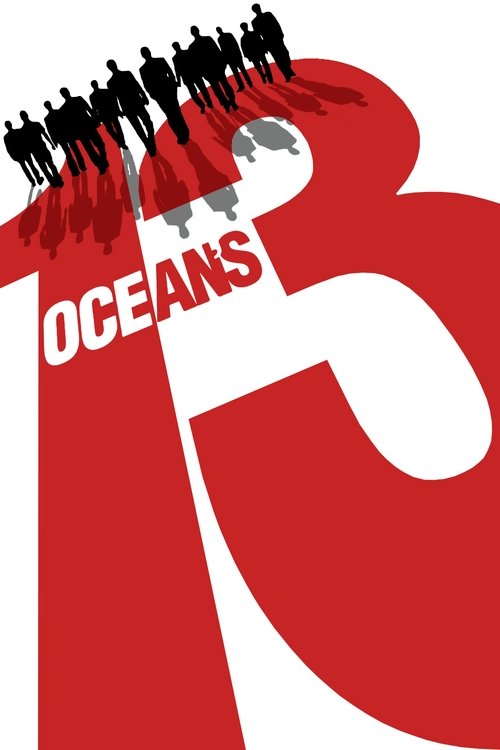
Ocean's Thirteen
Danny Ocean's team of criminals are back and composing a plan more personal than ever. When ruthless casino owner Willy Bank doublecrosses Reuben Tishkoff, causing a heart attack, Danny Ocean vows that he and his team will do anything to bring down Willy Bank along with everything he's got. Even if it means asking for help from an enemy.
Despite a significant budget of $85.0M, Ocean's Thirteen became a commercial success, earning $311.3M worldwide—a 266% return.
1 win & 5 nominations


Plot Structure
Story beats plotted across runtime


Narrative Arc
Emotional journey through the story's key moments
Story Circle
Blueprint 15-beat structure
Arcplot Score Breakdown
Weighted: Precision (70%) + Arc (15%) + Theme (15%)
Ocean's Thirteen (2007) exhibits carefully calibrated dramatic framework, characteristic of Steven Soderbergh's storytelling approach. This structural analysis examines how the film's 15-point plot structure maps to proven narrative frameworks across 2 hours and 2 minutes. With an Arcplot score of 7.4, the film balances conventional beats with creative variation.
Characters
Cast & narrative archetypes

Danny Ocean
Rusty Ryan
Willy Bank
Linus Caldwell
Reuben Tishkoff
Terry Benedict
Abigail Sponder
Basher Tarr
Frank Catton
Virgil Malloy
Turk Malloy
Livingston Dell
Saul Bloom
Yen
Main Cast & Characters
Danny Ocean
Played by George Clooney
The mastermind leader of the heist crew who orchestrates an elaborate revenge scheme against Willy Bank after Bank betrays Reuben Tishkoff.
Rusty Ryan
Played by Brad Pitt
Danny's right-hand man and co-strategist who helps plan and execute the casino heist with cool-headed precision.
Willy Bank
Played by Al Pacino
A ruthless casino mogul who betrays Reuben Tishkoff, triggering the crew's vendetta against his new casino, The Bank.
Linus Caldwell
Played by Matt Damon
An ambitious young pickpocket and con artist eager to prove himself by taking on a larger role in the heist.
Reuben Tishkoff
Played by Elliott Gould
A longtime friend and financial backer of the crew who suffers a heart attack after being betrayed by Willy Bank.
Terry Benedict
Played by Andy Garcia
Former adversary of the Ocean crew who reluctantly becomes an ally when given the opportunity to take down Willy Bank.
Abigail Sponder
Played by Ellen Barkin
Willy Bank's right-hand woman and casino executive who manages operations at The Bank with cold efficiency.
Basher Tarr
Played by Don Cheadle
The crew's explosives and demolitions expert who helps sabotage the casino's security systems.
Frank Catton
Played by Bernie Mac
A member of the crew who works undercover within the casino to facilitate the heist.
Virgil Malloy
Played by Casey Affleck
One half of the bickering Malloy brothers who provides mechanical expertise for the crew's schemes.
Turk Malloy
Played by Scott Caan
The other Malloy brother who works alongside Virgil providing technical and mechanical support.
Livingston Dell
Played by Eddie Jemison
The crew's tech and surveillance expert who handles electronic countermeasures and hacking.
Saul Bloom
Played by Carl Reiner
An older con artist and disguise expert who plays a key role in deceiving the casino.
Yen
Played by Shaobo Qin
An acrobatic specialist from China who handles physically demanding aspects of the heist.
Structural Analysis
The Status Quo at 2 minutes (2% through the runtime) establishes The crew is living separate, post-heist lives. Danny Ocean receives an urgent call from Rusty about Reuben. Establishes the family bond among thieves.. Of particular interest, this early placement immediately immerses viewers in the story world.
The inciting incident occurs at 14 minutes when Reuben lies catatonic in bed, broken by Bank's betrayal. The doctors say he's lost the will to live. Danny and Rusty realize revenge is the only way to save their friend.. At 11% through the film, this Disruption aligns precisely with traditional story structure. This beat shifts the emotional landscape, launching the protagonist into the central conflict.
The First Threshold at 30 minutes marks the transition into Act II, occurring at 25% of the runtime. This reveals the protagonist's commitment to Danny commits the full crew to the "Bank Job" - they will rig his new casino to pay out millions on opening night, ensuring he never receives the Five Diamond Award he craves. Everyone is in., moving from reaction to action.
At 62 minutes, the Midpoint arrives at 51% of the runtime—precisely centered, creating perfect narrative symmetry. The analysis reveals that this crucial beat False defeat: Bank unveils his new unbeatable security system - "The Greco Player Tracker" with biometric software that can identify card counters and cheaters. Their plan seems impossible now., fundamentally raising what's at risk. The emotional intensity shifts, dividing the narrative into clear before-and-after phases.
The Collapse moment at 90 minutes (74% through) represents the emotional nadir. Here, Bank discovers their plan. Roman (the inside man) is exposed and beaten. The rigged dice are found. Toulour fails his part of the job. On opening night, everything falls apart., indicates the protagonist at their lowest point. This beat's placement in the final quarter sets up the climactic reversal.
The Second Threshold at 96 minutes initiates the final act resolution at 79% of the runtime. Danny reveals the real plan was always a backup strategy - they've been magnetizing the dice legitimately, and rigged the earthquake to affect Sponder's hotel room. The pieces were always in place., demonstrating the transformation achieved throughout the journey.
Emotional Journey
Ocean's Thirteen's emotional architecture traces a deliberate progression across 15 carefully calibrated beats.
Narrative Framework
This structural analysis employs structural analysis methodology used to understand storytelling architecture. By mapping Ocean's Thirteen against these established plot points, we can identify how Steven Soderbergh utilizes or subverts traditional narrative conventions. The plot point approach reveals not only adherence to structural principles but also creative choices that distinguish Ocean's Thirteen within the crime genre.
Steven Soderbergh's Structural Approach
Among the 17 Steven Soderbergh films analyzed on Arcplot, the average structural score is 7.1, reflecting strong command of classical structure. Ocean's Thirteen represents one of the director's most structurally precise works. For comparative analysis, explore the complete Steven Soderbergh filmography.
Comparative Analysis
Additional crime films include The Bad Guys, Rustom and The Whole Ten Yards. For more Steven Soderbergh analyses, see Ocean's Twelve, Contagion and Unsane.
Plot Points by Act
Act I
SetupStatus Quo
The crew is living separate, post-heist lives. Danny Ocean receives an urgent call from Rusty about Reuben. Establishes the family bond among thieves.
Theme
Rusty tells Danny, "You know what this is about - one of our own." The theme: loyalty to your crew above all else, even when the odds are impossible.
Worldbuilding
Reuben's partnership with Willy Bank is revealed. Bank's ruthless business practices and ego are established. Reuben suffers a heart attack after being betrayed and cut out of their casino deal.
Disruption
Reuben lies catatonic in bed, broken by Bank's betrayal. The doctors say he's lost the will to live. Danny and Rusty realize revenge is the only way to save their friend.
Resistance
Danny and Rusty debate whether to take on Bank. They realize they can't just rob him - they need to destroy his dream on opening night. The crew reassembles, each debating whether to join this personal, non-profit mission.
Act II
ConfrontationFirst Threshold
Danny commits the full crew to the "Bank Job" - they will rig his new casino to pay out millions on opening night, ensuring he never receives the Five Diamond Award he craves. Everyone is in.
Mirror World
Abigail Sponder, the Five Diamond reviewer, is introduced. She represents integrity and standards - a mirror to Bank's corruption. Her approval becomes the key to destroying Bank's dream.
Premise
The crew executes elaborate preparation: infiltrating the casino, building a custom dice-rigging machine, creating earthquakes with a tunnel boring device, and planning to manipulate Sponder's review. Classic Ocean's heist fun.
Midpoint
False defeat: Bank unveils his new unbeatable security system - "The Greco Player Tracker" with biometric software that can identify card counters and cheaters. Their plan seems impossible now.
Opposition
The team scrambles for solutions. They need more money and manpower. This forces Danny to break his vow and ask Terry Benedict (their old enemy) for help. Bank tightens security. Everything gets harder.
Collapse
Bank discovers their plan. Roman (the inside man) is exposed and beaten. The rigged dice are found. Toulour fails his part of the job. On opening night, everything falls apart.
Crisis
The team regroups in darkness. They've lost their equipment, their inside man, and their plan. Danny must find another way with almost no time left before the Five Diamond Award is given.
Act III
ResolutionSecond Threshold
Danny reveals the real plan was always a backup strategy - they've been magnetizing the dice legitimately, and rigged the earthquake to affect Sponder's hotel room. The pieces were always in place.
Synthesis
Opening night execution: the magnetized dice cause massive payouts, Sponder experiences the "earthquake" and rates Bank poorly, the crew wins millions, and Bank is publicly humiliated. Reuben watches the triumph from his bed.
Transformation
Reuben stands at the airport, healthy and smiling, reunited with his crew. Where he was broken and alone in bed at the start, he's now restored by his family's loyalty. Bank is left alone in his failed casino.