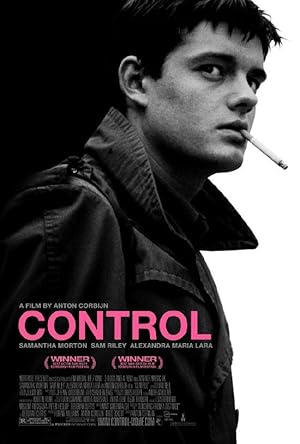
Control
Ian Curtis is a quiet and rather sad lad who works for an employment agency and sings in a band called Warsaw. He meets a girl named Debbie whom he promptly marries and his band, of which the name in the meantime has been changed to Joy Division, gets more and more successful. Even though Debbie and he become parents, their relationship is going downhill rapidly and Ian starts an affair with Belgium Annik whom he met after one of the gigs and he's almost never at home. Ian also suffers from epilepsy and has no-good medication for it. He doesn't know how to handle the feelings he has for Debbie and Annik and the pressure the popularity of Joy Division and the energy performing costs him.
Working with a tight budget of $5.0M, the film achieved a respectable showing with $8.2M in global revenue (+64% profit margin).
1 BAFTA Award31 wins & 35 nominations


Plot Structure
Story beats plotted across runtime


Narrative Arc
Emotional journey through the story's key moments
Story Circle
Blueprint 15-beat structure
Arcplot Score Breakdown
Weighted: Precision (70%) + Arc (15%) + Theme (15%)
Control (2007) reveals deliberately positioned plot construction, characteristic of Anton Corbijn's storytelling approach. This structural analysis examines how the film's 15-point plot structure maps to proven narrative frameworks across 2 hours and 1 minutes. With an Arcplot score of 6.6, the film balances conventional beats with creative variation.
Characters
Cast & narrative archetypes

Ian Curtis
Deborah Curtis
Annik Honoré
Bernard Sumner
Peter Hook
Stephen Morris
Rob Gretton
Main Cast & Characters
Ian Curtis
Played by Sam Riley
Lead singer of Joy Division who struggles with epilepsy, depression, and conflicting relationships while pursuing his music career.
Deborah Curtis
Played by Samantha Morton
Ian's loyal wife who tries to maintain their marriage and family while watching his deterioration and infidelity.
Annik Honoré
Played by Alexandra Maria Lara
Belgian journalist who becomes Ian's mistress, representing escape and artistic understanding.
Bernard Sumner
Played by James Anthony Pearson
Joy Division guitarist and Ian's bandmate, later co-founder of New Order.
Peter Hook
Played by Joe Anderson
Joy Division bassist and founding member of the band.
Stephen Morris
Played by Harry Treadaway
Joy Division drummer who joins the band during their evolution.
Rob Gretton
Played by Toby Kebbell
Joy Division's devoted manager who believes in the band and supports them through challenges.
Structural Analysis
The Status Quo at 1 minutes (1% through the runtime) establishes Young Ian Curtis stands alone on a railway bridge in Macclesfield, an isolated dreamer in working-class England. He's reading poetry, disconnected from the mundane world around him, establishing his artistic sensitivity and yearning for something more.. The analysis reveals that this early placement immediately immerses viewers in the story world.
The inciting incident occurs at 14 minutes when Ian sees the Sex Pistols perform at the Lesser Free Trade Hall in Manchester. The raw, confrontational energy of punk rock ignites something in him—this is the catalyst that shows him an escape route from his ordinary life through music.. At 12% through the film, this Disruption aligns precisely with traditional story structure. This beat shifts the emotional landscape, launching the protagonist into the central conflict.
The First Threshold at 29 minutes marks the transition into Act II, occurring at 24% of the runtime. This illustrates the protagonist's commitment to Joy Division records their first proper sessions and signs with Factory Records. Ian makes the active choice to fully commit to being a frontman, developing his distinctive performance style. He crosses into the world of being a serious artist, not just a hobbyist., moving from reaction to action.
At 61 minutes, the Midpoint arrives at 50% of the runtime—precisely centered, creating perfect narrative symmetry. Of particular interest, this crucial beat Ian has a major epileptic seizure on stage during a performance. This false defeat raises the stakes dramatically—his health is deteriorating, the medication affects his mood and creativity, and he can no longer ignore that success is coming at a devastating personal cost., fundamentally raising what's at risk. The emotional intensity shifts, dividing the narrative into clear before-and-after phases.
The Collapse moment at 89 minutes (74% through) represents the emotional nadir. Here, Deborah tells Ian their marriage is over and she wants a divorce. Ian realizes he's lost his family, Annik can't commit to him fully, and he faces the American tour he dreads. He's completely alone, with no path forward that doesn't involve unbearable pain or compromise., shows the protagonist at their lowest point. This beat's placement in the final quarter sets up the climactic reversal.
The Second Threshold at 98 minutes initiates the final act resolution at 81% of the runtime. The night before Joy Division's American tour, Ian makes his final choice. After failed attempts to connect with both Deborah and Annik, he returns alone to the house. His decision is made—not to synthesis or growth, but to the ultimate escape from irreconcilable contradictions., demonstrating the transformation achieved throughout the journey.
Emotional Journey
Control's emotional architecture traces a deliberate progression across 15 carefully calibrated beats.
Narrative Framework
This structural analysis employs proven narrative structure principles that track dramatic progression. By mapping Control against these established plot points, we can identify how Anton Corbijn utilizes or subverts traditional narrative conventions. The plot point approach reveals not only adherence to structural principles but also creative choices that distinguish Control within the biography genre.
Anton Corbijn's Structural Approach
Among the 3 Anton Corbijn films analyzed on Arcplot, the average structural score is 6.6, demonstrating varied approaches to story architecture. Control takes a more unconventional approach compared to the director's typical style. For comparative analysis, explore the complete Anton Corbijn filmography.
Comparative Analysis
Additional biography films include After Thomas, Taking Woodstock and The Fire Inside. For more Anton Corbijn analyses, see The American, A Most Wanted Man.
Plot Points by Act
Act I
SetupStatus Quo
Young Ian Curtis stands alone on a railway bridge in Macclesfield, an isolated dreamer in working-class England. He's reading poetry, disconnected from the mundane world around him, establishing his artistic sensitivity and yearning for something more.
Theme
Deborah tells Ian about her dreams and future plans. The conversation subtly establishes the film's central conflict: the tension between romantic/domestic commitment and artistic ambition, between what others expect of you and who you truly are.
Worldbuilding
Ian's ordinary world: his romance with Deborah, his mundane job at the employment exchange, his love of music (Bowie, Iggy Pop), and the gray industrial landscape of Macclesfield. He marries Deborah young, and their daughter Natalie is born. Ian feels trapped between duty and desire.
Disruption
Ian sees the Sex Pistols perform at the Lesser Free Trade Hall in Manchester. The raw, confrontational energy of punk rock ignites something in him—this is the catalyst that shows him an escape route from his ordinary life through music.
Resistance
Ian debates whether to pursue music seriously. He forms Warsaw (later Joy Division) with Bernard, Peter, and Stephen. He struggles between his responsibilities as a husband and father and his growing obsession with the band. Deborah is supportive but worried.
Act II
ConfrontationFirst Threshold
Joy Division records their first proper sessions and signs with Factory Records. Ian makes the active choice to fully commit to being a frontman, developing his distinctive performance style. He crosses into the world of being a serious artist, not just a hobbyist.
Mirror World
Ian meets Annik Honoré, a Belgian music journalist, after a gig. She represents everything Deborah is not: sophistication, European culture, the artistic world Ian craves. This relationship will force Ian to confront what he truly wants versus what he's committed to.
Premise
The promise of the premise: Joy Division's rise to success. Recording "Unknown Pleasures," performing intense shows, Ian's charismatic stage presence, growing recognition. The band experiences the thrill of making important art, but Ian's epilepsy emerges and his double life (Deborah vs. Annik) intensifies.
Midpoint
Ian has a major epileptic seizure on stage during a performance. This false defeat raises the stakes dramatically—his health is deteriorating, the medication affects his mood and creativity, and he can no longer ignore that success is coming at a devastating personal cost.
Opposition
Everything closes in: Ian's seizures worsen, Deborah discovers his affair with Annik, the band plans an American tour that terrifies him, medication leaves him numb, his marriage crumbles. He's caught between two women, two lives, unable to reconcile his artistic identity with his domestic responsibilities.
Collapse
Deborah tells Ian their marriage is over and she wants a divorce. Ian realizes he's lost his family, Annik can't commit to him fully, and he faces the American tour he dreads. He's completely alone, with no path forward that doesn't involve unbearable pain or compromise.
Crisis
Ian's dark night: he wanders through his final days, withdrawn and isolated. He watches "Stroszek" (a Herzog film about alienation and suicide), listens to Iggy Pop's "The Idiot," drinks heavily. He contemplates his impossible situation with no way to reconcile the life he's built with who he is.
Act III
ResolutionSecond Threshold
The night before Joy Division's American tour, Ian makes his final choice. After failed attempts to connect with both Deborah and Annik, he returns alone to the house. His decision is made—not to synthesis or growth, but to the ultimate escape from irreconcilable contradictions.
Synthesis
Ian's final night: May 18, 1980. He writes a note, listens to "The Idiot," smokes, and hangs himself in the kitchen of his Macclesfield home. At 23, he resolves the conflict between art and life by ending both. The band members discover his death the next morning.
Transformation
The closing image mirrors the opening: the same railway bridge where young Ian once stood full of dreams. Now it's empty, a haunting reminder of potential unfulfilled. The transformation is tragic—the dreamer became an artist, but couldn't survive the weight of his own sensitivity.